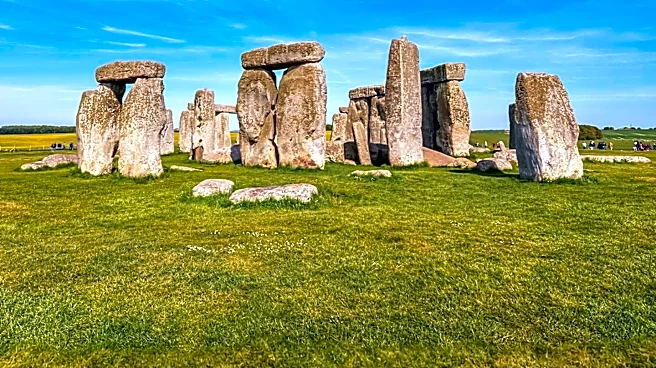







Stonehenge, a prehistoric World Heritage Site nestled in Wiltshire, England, has captivated imaginations for millennia. This iconic megalithic monument, constructed between 3100 BC and 1550 BC, is not merely an ancient ruin but a living landmark that continues to draw global attention. As part of a larger UNESCO World Heritage Site that also includes Avebury and associated archaeological locations, Stonehenge represents a profound connection to our
ancient past. Today, it stands as a major tourist attraction, welcoming approximately one million visitors annually who come to marvel at its enduring mystery and impressive scale.
A Magnet for Millions: The Visitor Experience
Stonehenge's allure is undeniable, attracting a vast number of visitors each year. This steady stream of tourists underscores its status as a globally recognized symbol of ancient history and human endeavor. The site offers a unique opportunity to witness firsthand the monumental achievements of prehistoric societies. Visitors can walk around the perimeter of the stone circles, observing the massive sarsen and bluestones, and contemplating the immense effort and ingenuity required to construct such a complex structure without modern technology. The experience provides a tangible link to the past, allowing individuals to connect with the ancient builders and their world.
The surrounding landscape, part of the larger World Heritage Site, also contributes to the visitor experience. This area is considered one of the most archaeologically rich megalithic structures in Europe, containing numerous other Neolithic and Bronze Age finds. The site is managed by English Heritage, with much of the surrounding land owned and managed by the National Trust, which spearheads grass regeneration schemes. A new visitor facility has been established, working in conjunction with the Salisbury Museum and the Wiltshire Heritage Museum, to enhance the educational and interpretive aspects of a visit, providing context and deeper understanding of Stonehenge and its historical significance.
Enduring Mystery and Modern Preservation
Despite centuries of study, Stonehenge retains much of its mystery, which only adds to its appeal. The exact purpose of the monument—whether it was a temple, an astronomical observatory, a burial ground, or a combination of these—continues to be debated by archaeologists and historians. This ongoing enigma fuels public fascination and scholarly research, ensuring Stonehenge remains a dynamic subject of inquiry. The site's alignment with the solstices, for instance, suggests a sophisticated understanding of celestial movements, hinting at its potential role in ancient rituals or calendrical systems.
In the modern era, significant efforts are dedicated to the preservation and understanding of Stonehenge. The land immediately around Stonehenge was acquired for the nation in 1918, and the area received UNESCO World Heritage status in 1986. This designation highlights its outstanding universal value and the commitment to protect it for future generations. The management of the site involves balancing public access with conservation needs, ensuring that this ancient marvel can continue to inspire and educate visitors while being safeguarded against the ravages of time and human impact. The continuous care and study of Stonehenge ensure its legacy as a timeless landmark endures.