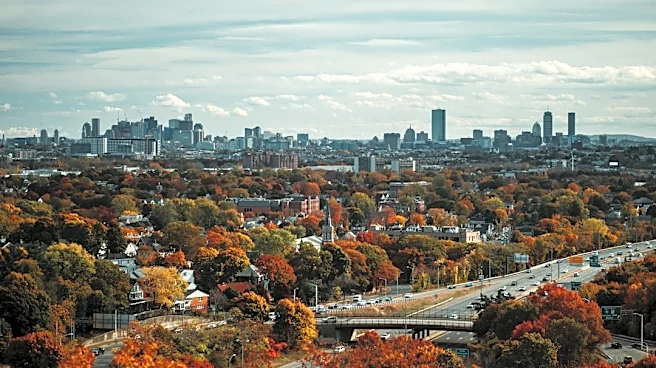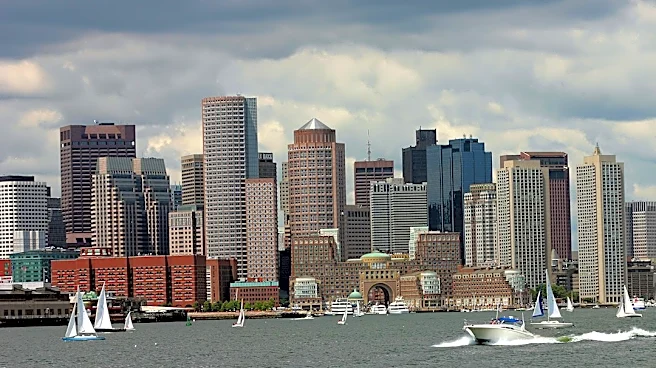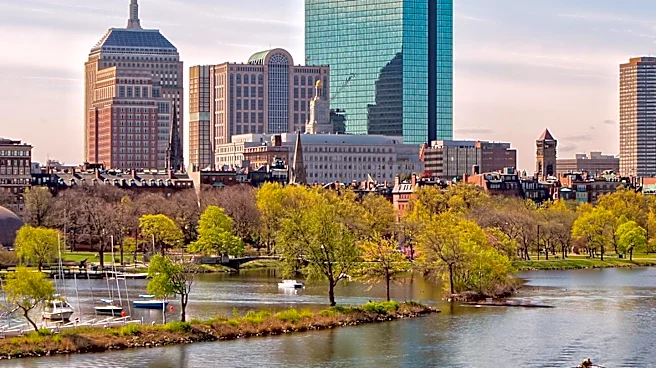

Boston, the capital and largest city in Massachusetts, is renowned not only for its historical significance but also for its excellence in education and its remarkable physical evolution. Situated in the northeast
of the United States and bisected by the Charles River, Boston has cultivated a reputation as a leading center for learning, home to world-class institutions like Harvard University and the Massachusetts Institute of Technology (MIT). Beyond its academic prowess, the city's very landscape has been dramatically altered over centuries through ambitious land reclamation projects, transforming its geography and enabling its growth as a modern economic powerhouse.
Academic Excellence: A Cornerstone of Boston's Identity
From its earliest days, Boston has prioritized education, a value deeply rooted in its Puritan founding. The influence of Puritan ethics and their focus on learning shaped the city's early history, leading to the establishment of America's first public school, Boston Latin School, in 1635. This foundational commitment to education laid the groundwork for Boston's future as an intellectual hub.
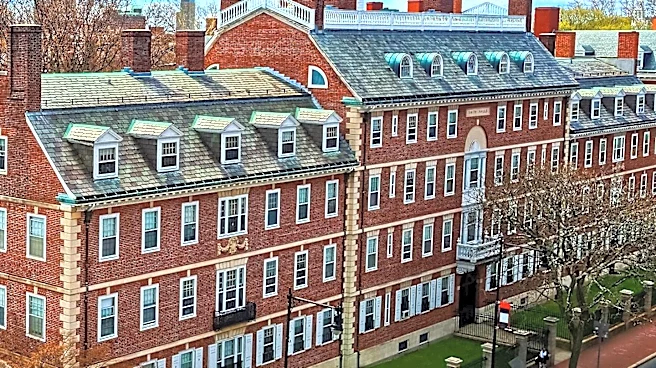
Today, Boston is globally recognized for its concentration of prestigious universities and colleges. Institutions such as Harvard University and the Massachusetts Institute of Technology (MIT), though technically located in the neighboring city of Cambridge, are intrinsically linked to Boston's identity as a center of higher learning and innovation. This academic ecosystem attracts students and researchers from around the world, contributing to the city's vibrant intellectual and cultural landscape and fostering advancements in various fields.
Economic Shifts: From Maritime Trade to Industrial Might
Boston's economy has undergone significant transformations throughout its history. Initially, its prime oceanfront location made it a bustling port, heavily involved in shipping and fishing during the colonial era. It was a key stop on the Caribbean trade route, facilitating the import of molasses and contributing to local culinary traditions. For a time, Boston was the largest town in the Thirteen Colonies, a testament to its early economic prominence.
Following the American Revolution, Boston's strong seafaring tradition helped it become one of the nation's busiest ports for both domestic and international trade. However, events like the Embargo Act of 1807 and the War of 1812 temporarily disrupted foreign trade. In response, Boston's merchants diversified their investments, leading to a shift towards manufacturing. By the mid-19th century, industrial manufacturing surpassed international trade in economic importance. The city's small rivers facilitated the transport of goods and spurred the proliferation of mills and factories, a trend further supported by the development of a dense railroad network, solidifying the region's industrial and commercial strength.
Reshaping the City: The Impact of Land Reclamation
One of the most striking aspects of Boston's development is its dramatic geographical transformation through land reclamation. Between 1631 and 1890, the city's area tripled as marshes, mud flats, and gaps between wharves along the waterfront were filled in. This monumental undertaking fundamentally reshaped Boston's physical landscape.
Significant parts of what are now prominent areas, including the South End, the West End, the Financial District, and Chinatown, were created through these reclamation projects in the middle of the 19th century. This expansion allowed for the growth of the city's population and infrastructure, accommodating its evolving economic and social needs. Even in the 20th century, urban renewal projects continued to alter the city, such as the clearance of Scollay Square for the Government Center, and the redevelopment of the Columbia Point public housing complex into the mixed-income Harbor Point Apartments, demonstrating a continuous process of adaptation and rebuilding.