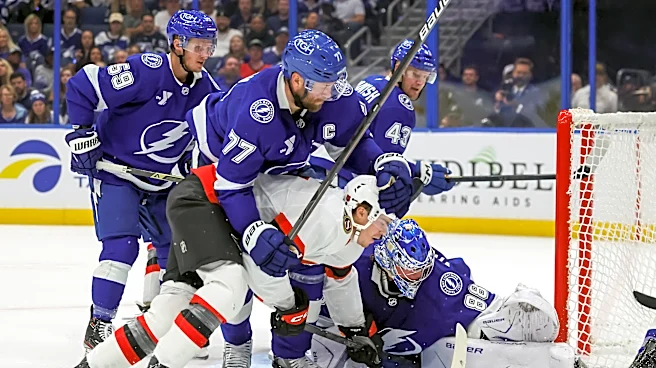









The 2021 Stanley Cup Final was a remarkable event in the history of the National Hockey League (NHL), not only because of the teams involved but also due to the unique circumstances surrounding it. The series featured the Tampa Bay Lightning and the Montreal Canadiens, with the Lightning emerging victorious. This final was distinct in several ways, from its timing to the format changes necessitated by the COVID-19 pandemic.
Timing and Format Changes
The 2021 Stanley Cup Final
was held later than usual, with games taking place from June 28 to July 7, marking the first time the final games were played in July. This shift was a direct result of the COVID-19 pandemic, which had delayed the start of the regular season and shortened its length. The pandemic also led to significant changes in the playoff format. The NHL temporarily realigned into four divisions without conferences, grouping all Canadian teams into one division due to cross-border travel restrictions.
This realignment led to a divisional-based postseason format, with intra-divisional matchups in the first two rounds. The four divisional champions were then re-seeded based on their regular season points for the semifinals, with the winners advancing to the Stanley Cup Final. This format allowed for a unique matchup between the Lightning and the Canadiens, which would not have been possible under the traditional conference-based playoff system.
Historical Significance
The 2021 Stanley Cup Final was significant for several historical reasons. It was the first final since 2009 to be played entirely in the Eastern Time Zone and the first since 2011 to feature a Canadian-based team. The matchup also set a record for the highest combined seed between the two teams in a Stanley Cup Final, with a total of 26 (Tampa Bay 8th, Montreal 18th). This broke the previous record of 23, set in the 1991 Stanley Cup Final.
The series was also notable for the Tampa Bay Lightning, who won their second consecutive Stanley Cup and the third in franchise history. Their victory solidified their status as a dominant team in the NHL, having successfully defended their title from the previous season.
Impact of the Pandemic
The COVID-19 pandemic had a profound impact on the 2021 Stanley Cup Final, influencing not only the timing and format but also the atmosphere of the games. The pandemic forced the NHL to adapt quickly, implementing changes to ensure the safety of players and staff while maintaining the integrity of the competition. These adaptations included the temporary realignment of divisions and the reseeding of teams for the semifinals.
Despite these challenges, the 2021 Stanley Cup Final was a testament to the resilience and adaptability of the NHL. It showcased the league's ability to navigate unprecedented circumstances while delivering an exciting and competitive championship series. The unique aspects of this final will be remembered as a significant chapter in the history of the NHL.