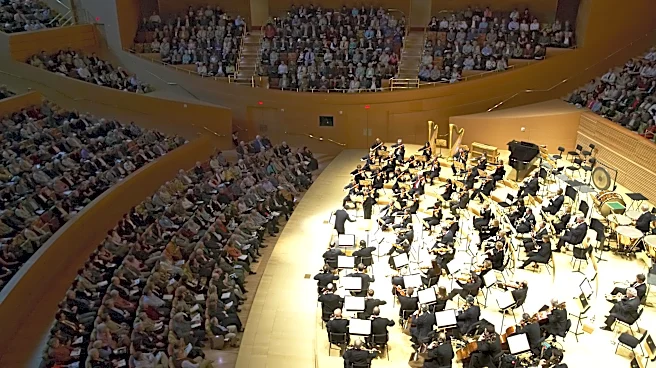









William Grant Still, a prolific American composer, concluded his symphonic works with Symphony No. 5, also known as "Western Hemisphere." Composed in 1945 and later revised in 1970, this four-movement piece offers a profound musical reflection on the Americas. Still himself articulated a grand vision for this symphony, seeing it as an expression of the natural and human resources across the entire Western Hemisphere, encompassing Latin America, Canada,
and the islands of the Western Seas. His composition aimed to capture the essence of these lands and their people, striving to convert ideals of freedom, friendship, and shared resources into musical reality.
The Composer's Intent: A New Day Dawns
Still's own description of Symphony No. 5 reveals a deep philosophical and historical perspective. He envisioned a narrative arc spanning from the end of an old eternity to the dawn of a new one. In his words, a mighty civilization had risen, reached its peak, and then declined, with the past being swept away in darkness. This imagery sets the stage for the emergence of the Western Hemisphere from the Atlantic, imbued with unique virtues by a "Great Intelligence" that controls their destiny. These virtues, Still believed, would find their counterparts in the characters of the future inhabitants.
These inhabitants, the people of the Americas, were destined to make these lands an abode of freedoms, friendship, and the sharing of both material resources and intellectual and spiritual achievements. Still explicitly included "fellow-Americans in Latin America, Canada, and the islands of the Western Seas" in this vision, emphasizing a collective effort to realize these ideals. This broad, inclusive perspective highlights the symphony's ambition to represent a unified spirit across diverse nations.
Musical Expression of Pan-American Ideals
The symphony's thematic content, as interpreted by reviewers, directly reflects Still's stated intentions. One reviewer noted that the symphony "expresses the composer's thoughts on the natural and human resources of all of the countries of the Americas." This suggests that the music itself is crafted to evoke the landscapes, cultures, and shared aspirations of the continent. The four movements likely explore different facets of this overarching theme, moving through various moods and musical textures to paint a comprehensive picture.
Still's choice to name the symphony "Western Hemisphere" underscores its geographical and cultural scope. It is not merely a piece about one nation or region, but a broader statement about the interconnectedness and potential of the entire continent. The revision in 1970, twenty-five years after its initial composition, indicates Still's continued engagement with these themes and perhaps a refinement of his musical expression to better convey his enduring vision for the Americas.
William Grant Still's Symphonic Legacy
Symphony No. 5 holds a significant place within William Grant Still's body of work, being his final symphony among a total of five. His symphonic output demonstrates a consistent engagement with large-scale musical forms and often, as seen in Symphony No. 5, with profound thematic content. The fact that he chose to conclude his symphonic journey with such a grand and inclusive statement about the Western Hemisphere speaks volumes about his artistic priorities and his desire to contribute to a sense of unity and shared purpose among the peoples of the Americas. This symphony stands as a testament to his vision of a future built on freedom, friendship, and collaboration.