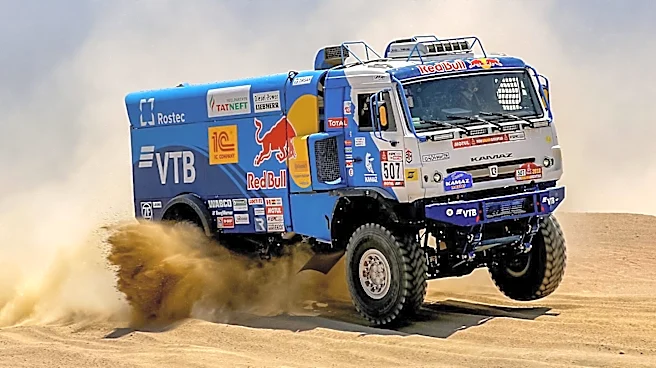




The FIA European Truck Racing Championship, a motorsport series featuring semi-tractors, has a rich history dating back to its inception in 1985. Over the decades, the championship has undergone significant transformations, particularly in its class structures and technical regulations, reflecting an ongoing effort to balance competition, safety, and cost. What began as a multi-class event has evolved into a streamlined championship, showcasing highly
tuned tractor units in thrilling road races across Europe.
Early Days and Multi-Class Competition
The inaugural edition of the European Truck Racing Championship in 1985 established a foundational structure that divided competitors into three distinct classes: A, B, and C. This classification system was primarily based on the mass and engine displacement of the racing trucks. This early approach allowed for a broader range of vehicles to participate, fostering initial growth and interest in the nascent sport. The diversity in truck specifications across these classes likely contributed to varied racing dynamics and strategies in the championship's formative years.
As the sport matured, the championship continued to refine its structure. From 1994 to 2005, the series adopted a two-class system, featuring "Super-Race-Trucks" and "Race-Trucks." This period marked a significant phase in the championship's development, as it moved towards more specialized categories. The distinction between these two classes likely reflected differences in performance capabilities and technical modifications, allowing for intense competition within each category while still offering a tiered structure for teams and drivers.
Streamlining for Cost and Safety
A pivotal change occurred in 2006 when the "Super-Race-Trucks" class was discontinued. This decision was made with the explicit goals of reducing overall costs associated with participating in the championship and, importantly, managing the speeds of the racing trucks. The elimination of the higher-performance class aimed to create a more accessible and safer racing environment, ensuring the long-term viability and appeal of the sport. It was at this point that the championship adopted its current name, the FIA European Truck Racing Championship, signaling a new era of unified competition.
This streamlining meant that all participating trucks would now adhere to a more standardized set of regulations, focusing on a single class of highly tuned tractor units. This shift not only helped in controlling expenses for teams but also contributed to closer racing, as the performance gap between competitors was narrowed. The emphasis on safety is also evident in the design requirements for these trucks, which include roll-bars within the cabins to prevent crushing in severe accidents and a maximum height of 2.5 meters to reduce the risk of rollovers and enhance performance.
Modern Specifications and Enduring Venues
Today, the trucks competing in the FIA European Truck Racing Championship are derived from production models, weighing an average of 5,000 kg. Their engines, also derived from series production, are supercharged and can have a maximum displacement of 13,000 cubic centimeters, producing around 1,100 horsepower at just over 1,000 revolutions per minute. A key safety regulation is that all trucks are electronically limited to a top speed of 160 km/h, a stark contrast to some other truck racing series where vehicles can reach speeds of 250 km/h. These powerful machines are equipped with twelve-speed gearboxes, further highlighting their sophisticated engineering.
The championship continues to visit historic circuits that have been part of its legacy for many years. Notable tracks include the Nürburgring, Misano World Circuit Marco Simoncelli, and Nogaro. These venues have witnessed countless thrilling races and remain integral to the championship's identity, providing challenging layouts for the powerful racing trucks and exciting spectacles for fans.