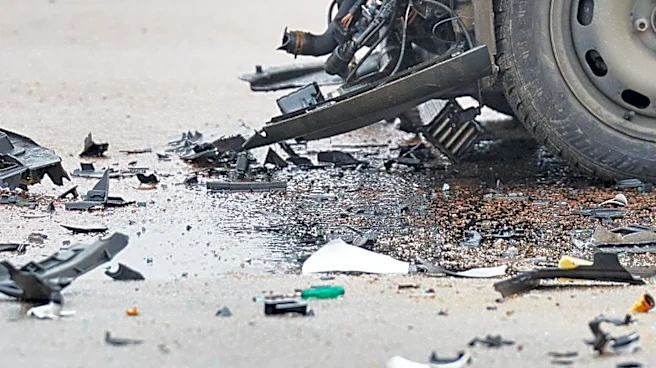









Multiple-vehicle collisions, often referred to as pileups or chain-reaction crashes, are complex and dangerous incidents that can involve dozens or even hundreds of vehicles. These events typically occur when initial collisions create hazards that subsequent drivers cannot avoid, leading to a cascading series of impacts. Factors such as high traffic speeds, heavy traffic volumes, and unexpected road conditions significantly increase the likelihood
and severity of these crashes. The consequences can range from numerous injuries to significant fatalities, often leading to widespread road closures and substantial property damage.
How Collisions Escalate
Chain-reaction crashes can begin in various ways, even under seemingly good visibility. One common scenario involves drivers encountering unexpected road hazards, such as black ice, as they navigate a curve or crest a hill. When the lead vehicle reacts to such a hazard, subsequent vehicles may not have enough time or space to react safely, especially if they are following too closely or traveling at high speeds. This initial impact can then create debris, disabled vehicles, and sudden braking, which further complicates the situation for oncoming traffic.Another way these collisions escalate is when a third vehicle is simply too close to an initial two-vehicle crash to avoid becoming involved. On roads with high traffic speeds, if one car suddenly halts due to a problem, vehicles behind it may be unable to stop in time, leading to a rear-end collision. Given the high traffic volumes often present on these roads, more cars are then forced to brake sharply, skid, or swerve into other lanes, drawing more vehicles into the unfolding chaos and creating a chain reaction effect.
Environmental and Traffic Factors
Environmental conditions play a critical role in the occurrence and scale of multiple-vehicle collisions. Poor visibility due to fog, heavy snow, or whiteout conditions is a frequent contributor. For instance, a 1965 incident on the Santa Ana Freeway in Los Angeles involved over 100 cars in both directions due to a fog bank, resulting in 28 injuries. Similarly, dense fog caused a 200-vehicle accident on Interstate 10 in Mobile, Alabama, in 1995, leading to one death and 90 injuries. Whiteout snow squalls have also been responsible for major pileups, such as a 2004 incident on Interstate 80 in Pennsylvania involving around 50 vehicles, which resulted in six fatalities.Icy road conditions are another significant environmental factor. The Pennsylvania Turnpike experienced a massive pileup in 2014 involving up to 105 vehicles due to icy conditions from a winter storm, causing 30 injuries. Black ice, which is often invisible, can be particularly treacherous, as seen in a 2009 incident on the M27 motorway in England where severe black ice contributed to multiple pileups. These conditions reduce traction and increase stopping distances, making it extremely difficult for drivers to maintain control and avoid collisions.
Notable Incidents and Their Impact
Throughout history, several multiple-vehicle collisions have stood out due to their tragic scale and subsequent influence on road safety regulations. The Beaune coach crash in France on July 31, 1982, is considered the most fatal multiple-vehicle road collision in France, claiming 53 lives, including 46 children. This devastating event led to significant legal changes in France, such as reduced maximum speed limits for coaches and all vehicles in rainy conditions, a ban on transporting groups of children during busy summer weekends, and the mandatory installation of mechanical speed-limitation devices on heavy vehicles.In the United States, incidents like the 2015 pileup on Interstate 94 near Galesburg, Michigan, involved nearly 200 vehicles, including 76 semi-trucks, during a heavy snowstorm. This crash resulted in one fatality and the explosion of fireworks carried by one of the trucks. These major incidents underscore the extreme dangers posed by unexpected hazards and high-speed, high-volume traffic conditions, often prompting reviews of road safety measures and emergency response protocols to prevent future tragedies.