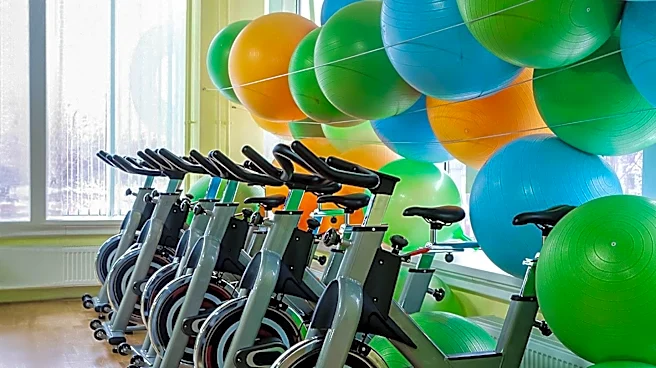





Indoor cycling, commonly known as spinning, has become a cornerstone of group fitness, offering a dynamic and adaptable workout experience. These classes are meticulously structured to provide a comprehensive exercise regimen, focusing on endurance, strength, high-intensity intervals, and recovery. Beyond the physical exertion, modern indoor cycling classes are designed to be engaging and motivating, led by instructors who blend music, coaching, and visualization
to create an immersive environment. This structured approach, combined with the ability for individual intensity control, makes indoor cycling a highly effective and accessible form of exercise for a wide range of participants.
Class Content and Goal Setting
A typical indoor cycling class is led by an instructor who guides participants through routines simulating various outdoor cycling conditions, such as hill climbs, sprints, and interval training. These routines are crafted to challenge riders and improve different aspects of their fitness. Instructors utilize music, motivational cues, visualization techniques, and enthusiastic coaching to lead students through a ride that aligns with their individual fitness levels and goals. Many instructors lead what is known as an interval ride, which incorporates a pattern of sprints, runs, climbs, and jumps within a single session.In the early 2000s, "terrain-based" classes were introduced, designed to simulate outdoor conditions more closely, including elements like wind resistance. These classes aim to enhance a rider's outdoor cycling skills and boost endurance, all while delivering an intense cardiovascular workout. Participants are encouraged to set personal goals based on their heart rate, which can be monitored manually or with a heart rate monitor. They simulate variations in terrain by adjusting resistance and cadence, allowing them to maintain a moderate, aerobic intensity (50-85% of max heart rate) or push into higher anaerobic intervals (85-92%). This personalized approach ensures that each participant can tailor the workout to their specific needs while still being part of a cohesive group.
Modulating Workout Intensity and Physical Benefits
One of the significant advantages of indoor cycling is the individual control over intensity. Each participant can precisely adjust their effort level to suit their ability or fitness, allowing for heterogeneous groups to exercise together effectively. Instructors often advise a perceived exertion scale, typically from 1 (no exertion) to 10 (maximum exertion), empowering riders to dictate their own challenge. The instructor provides active encouragement and practical advice throughout the class, fostering a supportive environment.The difficulty of an indoor cycling workout is primarily modulated in two ways: by varying the resistance on the flywheel and by changing the cadence (pedaling speed). Resistance is controlled by a knob, wheel, or lever that tightens a brake mechanism on the flywheel. This can range from completely loose, offering minimal resistance, to so tight that pedaling becomes impossible. Riders who cannot match the instructor's called-out resistance are encouraged to ride at a level that feels both comfortable and challenging. Pedaling at a higher rate expends more energy than at a lower rate with the same resistance, making cadence a crucial factor. Correct cadence ranges from 80 to 110 RPM for seated flat, standing flat, and jumps, and 60 to 80 RPM for seated and standing climbs. Sprints are typically performed under hill resistance, building cadence up to 110 RPM, and are most effective when seated to maintain posture control.
Beyond the cardiovascular benefits, indoor cycling offers substantial physical advantages. On average, a 60-minute session can burn between 300 and 500 calories. It also significantly strengthens the muscles of the lower body, toning the quadriceps and hamstrings, and engaging the back and hips. Unlike many weight-bearing exercises, indoor cycling achieves these benefits without placing the same strain on joints, making it a lower-impact option. The combination of calorie expenditure, muscle strengthening, and joint-friendly exercise makes indoor cycling a holistic fitness solution.