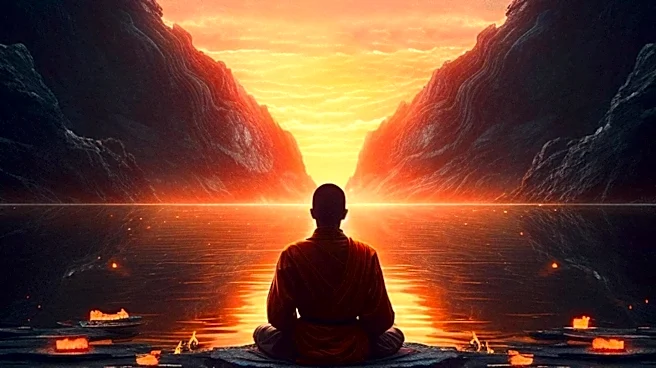





Jain meditation, or dhyana, encompasses a rich array of practices designed to foster introspection, achieve equanimity, and ultimately lead to liberation. At its core, Jain meditation aims to help practitioners reach and remain in a pure state of soul, understood as pure consciousness, free from attachment or aversion. The goal is to become a knower-seer (gyata-drashta) of body, thoughts, and emotions, grounded in the awareness of the soul's pure nature.
While Jainism considers yoga and dhyana as necessary, the tradition has developed specific techniques and classifications to guide practitioners on this spiritual journey.
The Foundational Role of Samayika and Kayotsarga
One of the most essential practices in Jainism is Samayika, which translates to equanimity. According to scholars, Samayika is more than just meditation; for a Jain householder, it represents the voluntary ritual practice of "assuming temporary ascetic status." It is the second siksavrata, or ritual restraint, and is considered the principal concept of Jainism, forming the first of the six avashyak (duties) for both monks and householders. Mendicants typically practice the Samayika ritual at least three times a day, while laypersons integrate it with other ritual practices like Puja and charity work. The practice involves specific steps, including taking a vow, sitting in a particular posture, and focusing on the self, often through chanting or silent reflection.
Another fundamental practice, particularly emphasized in early texts, is Kayotsarga, meaning "giving up the body." This practice involves standing motionless, signifying a detachment from the physical body and its sensations. By remaining unaffected by physical surroundings and emotions, practitioners aim to achieve tranquility and purity of mind. Kayotsarga is seen as an activity that leads to a state of motionlessness, an inactivity of body, speech, and mind, which is considered essential for eliminating karma. Mahavira himself is said to have practiced Kayotsarga when he attained liberation, sometimes standing for extended periods, even sixteen days and nights, facing various directions. This intense physical stillness is a powerful symbol of non-possession and detachment, crucial for spiritual advancement in Jainism.
Diverse Dhyana Techniques and Contemplations
Jain meditation includes a variety of dhyana techniques, each with a specific focus. These include pindastha-dhyana, padastha-dhyana, rupastha-dhyana, rupatita-dhyana, and savirya-dhyana. In padastha dhyana, for instance, practitioners concentrate on a mantra, which can be a combination of core letters or words related to a deity or specific themes. Chanting these mantras, either loudly or silently, is a regular practice for Jain followers. The Jnanarnava, an important Jain text, further elaborates on these, classifying meditation into pindastha (five forms of contemplation), padastha (mantric syllables), rupastha (meditating on divine qualities of Arihants), and rupatita (meditation on the attributes of Siddhatman).
Beyond these, contemplation (anupreksha) plays a significant role. The Uttaradhyayana-sutra, one of the four mulasutras important for early Jain meditation, systematically presents four types of meditative practices: dhyana, abandonment of the body (kayotsarga), contemplation (anupreksha), and reflection (bhavana). Specific contemplation techniques include agnya vichaya, where one contemplates seven facts: life and non-life, the inflow, bondage, stoppage, and removal of karmas, and the final accomplishment of liberation. Apaya vichaya involves contemplating incorrect insights to develop right insight. Vipaka vichaya focuses on reflecting on the eight basic types of karma, and sansathan vichaya encourages thinking about the vastness of the universe and the soul's loneliness. These diverse methods provide a comprehensive framework for self-observation and spiritual growth within the Jain tradition.
Modern Interpretations and the Pursuit of Higher Consciousness
The 20th century witnessed the emergence of new, modernist forms of Jain dhyana, reflecting a renewed effort to make these ancient practices relevant. One such development is Samikshana-dhyana, introduced in 1981 by Acarya Nanalala. The primary objective of Samikshana-dhyana is to experience higher consciousness within the self and achieve liberation during one's lifetime. This practice is divided into two main categories: introspection of the passions (kashaya samikshana) and samata-samikshana. The latter includes introspection of the senses (indriya samikshana), introspection of the vow (vrata samikshana), introspection of karma (karma samikshana), and introspection of the Self (atma samikshana), among others. These modern approaches demonstrate a continuous evolution in Jain meditation, emphasizing self-awareness and a direct path to spiritual freedom.