





Fayetteville, North Carolina, played a significant role in the early history of the United States, particularly as the host city for the convention that ratified the U.S. Constitution for the state. In November 1789, 271 delegates gathered in Fayetteville for this momentous occasion, which ultimately led to North Carolina becoming the twelfth state to approve the new federal framework. The choice of Fayetteville as the convention's location was not
arbitrary; it reflected the city's aspirations and its position within the state's political landscape at the time. The events of the Fayetteville Convention are intertwined with the city's own development and its temporary prominence as a center of state governance.
The State House: A Symbol of Ambition
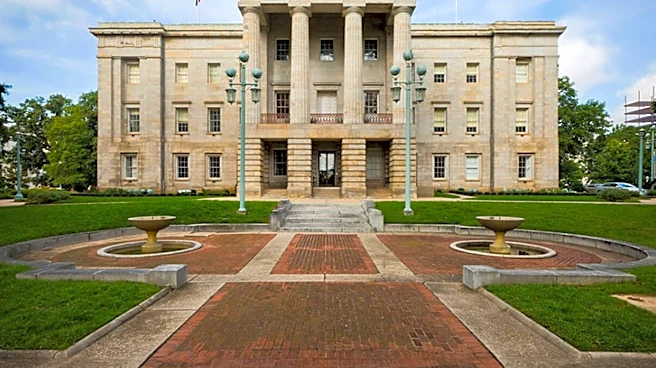
The Fayetteville Convention was held at the State House, a substantial brick building constructed in 1788. This impressive structure was built in anticipation of Fayetteville becoming the permanent capital of North Carolina. The decision to erect such a significant building underscored the city's ambition and the belief among some state leaders that Fayetteville was destined to be the seat of government. The State House served as a fitting venue for the critical debates and decisions that would shape North Carolina's future within the Union. Its construction and use for the convention highlight a period when Fayetteville was at the forefront of state politics.
For a brief period, the State House in Fayetteville did indeed host the North Carolina General Assembly, which met in the building in 1789, 1790, and 1793. These legislative sessions, alongside the constitutional convention, cemented the building's importance in the state's early history. However, despite these initial successes and the grand aspirations, Fayetteville's tenure as a potential capital was short-lived. The capital eventually moved permanently to Raleigh, North Carolina, in 1794, shifting the center of political power away from Fayetteville.
The City's Enduring Legacy and Transformation
The State House, a witness to North Carolina's ratification of the Constitution, met an unfortunate end. In 1831, a large fire swept through Fayetteville, destroying the State House along with most of the city. This event marked a physical transformation for Fayetteville, but its historical significance as the site of the ratification convention remained. The Market House was subsequently built on the site of the former State House in 1832, serving as a new landmark for the city and a reminder of its past.
The Fayetteville Convention brought together prominent figures from across North Carolina, including Governor Samuel Johnston, who presided over the proceedings. Delegates like William Richardson Davie played crucial roles in the debates, ultimately leading to the 195 to 77 vote in favor of ratification. Even after the vote, the convention continued to address state concerns, unanimously approving eight additional amendments proposed by James Galloway, which were to be presented to Congress. These actions, taken within the walls of Fayetteville's State House, underscore the city's central, albeit temporary, role in shaping the foundational documents of the United States and North Carolina's place within the new nation.