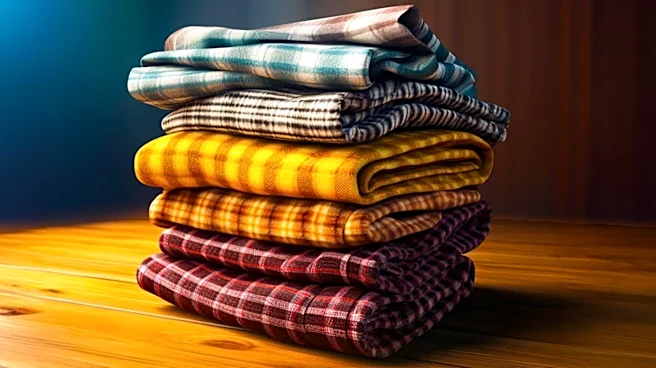





Tartan, a patterned cloth consisting of crossing horizontal and vertical bands in multiple colors, has a rich history that spans centuries. Known as plaid in American English, tartan is most strongly associated with Scotland, where it has been used for traditional clothing like the kilt. This article explores the historical evolution of tartan, tracing its origins from ancient times to its modern-day significance.
Ancient Beginnings
The earliest known tartan-like textiles
date back to the late Bronze Age and early Iron Age in Central Europe, particularly among the Hallstatt culture. These ancient people produced textiles with patterns similar to tartan, using natural-colored and dyed wool. The tradition of creating tartan-like patterns continued in various parts of Northern Europe, including Jutland and Sweden.
In Britain, the oldest surviving sample of tartan is the Falkirk tartan, dating back to Roman Britain around the 3rd century AD. This fragment, found in an earthenware pot filled with silver coins, is more akin to tweed in its weaving style but represents the early use of check patterns in the British Isles.
Tartan in Scotland
Tartan became most closely associated with Scotland, where it was used for centuries in traditional Highland dress. By the 16th century, tartan was a staple of Scottish clothing, worn by both the nobility and commoners. The patterns and colors of tartans were initially derived from local natural dyes, which have since been replaced by artificial ones.
The use of tartan in Scotland was not limited to clothing; it also served institutional roles, including military uniforms and organizational branding. The idea of clan tartans, where specific patterns are linked to Scottish clans, emerged in the 19th century, although the notion of clan-specific tartans is largely a modern invention.
Modern Tartan
Today, tartan is a symbol of Scottish heritage and culture, recognized worldwide. The Scottish Register of Tartans, established in 2009, serves as a definitive resource for preserving tartan designs, including their thread counts. This register includes historical tartans as well as modern ones, which are often considered intellectual property of particular individuals and organizations.
Tartan has also found its way into fashion and design, with various tartans created for aesthetic reasons rather than clan affiliation. The versatility and enduring appeal of tartan continue to make it a popular choice in clothing and accessories, both in Scotland and beyond.