






Kraków, a city with roots stretching back to the 7th century, has consistently played a pivotal role in Polish history, evolving from a royal capital to a modern economic and cultural center. Situated on the Vistula river in the Lesser Poland region, its journey is marked by periods of immense power, resilience in the face of adversity, and continuous adaptation. From 1038 to 1596, Kraków served as the capital of Poland, a period that profoundly shaped
its identity and laid the groundwork for its lasting significance. Today, it stands as the capital of the Lesser Poland Voivodeship, boasting an urban population of 810,590 as of June 2025, and continues to be a dynamic force in the region.
A Seat of Power and Influence
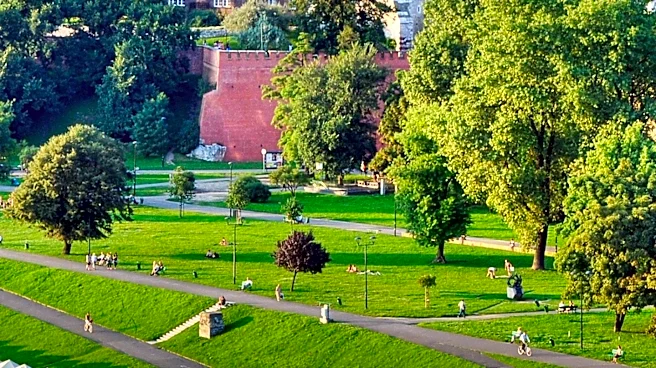
Kraków's political importance began early, becoming the capital of Poland in 1038. This status brought with it considerable influence and development. The city flourished as a member of the Hanseatic League, an alliance of trading cities that contributed to its economic prosperity and elevated its standing as a major European metropolis. The Main Square, established in the 13th century, became a central hub for commerce and civic life, reflecting the city's organized growth and strategic importance. The presence of the Wawel Castle, the traditional seat of Polish kings, further underscored Kraków's role as a center of royal power and governance.Even after the capital moved to Warsaw in 1596, Kraków maintained a degree of political significance. It served as the capital of the Grand Duchy of Kraków from 1846 to 1918 and was the capital of Kraków Voivodeship from the 14th century until 1999. This long history of administrative and political leadership has ingrained a sense of enduring importance within the city's fabric.
Resilience Through Conflict and Change
Kraków's history is also a narrative of resilience. The city faced destruction during the Mongol invasion in 1241 but was subsequently rebuilt with a new, organized urban plan. While it experienced periods of decline in the 17th and 18th centuries due to wars and plagues, its core structures and cultural institutions largely survived. Notably, during World War II, Kraków was spared the widespread destruction that befell many other Polish cities, though its population suffered greatly under occupation, particularly the Jewish community.Following the war, Kraków's population quadrupled, signaling a period of recovery and growth. The collapse of the Soviet Empire and Poland's subsequent entry into the European Union ushered in a new era of economic transformation. Kraków has since become a crucial center for IT offshoring, attracting major multinational companies like IBM, General Electric, Motorola, and Sabre Holdings. This modern economic role, combined with its rich historical and cultural heritage, demonstrates Kraków's remarkable ability to adapt and thrive, solidifying its position as a vital and evolving European city.