







Quilting, the art of stitching together layers of fabric, has a rich history that spans centuries. Originally a practical technique for insulation, quilting has evolved into a popular art form celebrated for its aesthetic qualities. This transformation reflects changes in technology, culture, and artistic expression, making quilting a fascinating subject for exploration.
Early Quilting Practices
The origins of quilting can be traced back to ancient times, with the earliest
known quilted garment depicted on a carved ivory figure from ancient Egypt's First Dynasty. Quilting techniques have been used for millennia to create clothing and furnishings across various cultures. In Europe, quilting became part of the needlework tradition around the fifth century, with early objects containing Egyptian cotton, suggesting trade routes facilitated the spread of quilting techniques.
Quilting gained prominence in Europe during the twelfth century, following the Crusaders' return from the Middle East. The medieval quilted gambeson and arming doublet were garments worn under armor, eventually evolving into the quilted doublet worn by European men from the fourteenth to seventeenth centuries. The Tristan quilt, made in late-fourteenth century Italy, is the earliest known surviving European bed quilt, showcasing scenes from the legend of Tristan.
Quilting in America
Quilting became a significant cultural practice in America, with distinct styles emerging among different communities. African-American quilts, Amish quilts, Native American quilts, and Hawaiian quilting each developed unique characteristics reflecting their cultural heritage. Quilting circles and bees became important social gatherings, fostering community bonds and sometimes taking on political significance, such as during the abolition movement.
The patchwork quilt, a distinct expression of nineteenth-century America, evolved into a representative folk art. Quilts often reflected a mosaic of a woman's life, incorporating swatches from memorable events like wedding gowns or baptismal garments. The Amish are renowned for their geometric patchwork designs, which serve both practical and decorative purposes.
Modern Quilting and Artistic Quilts
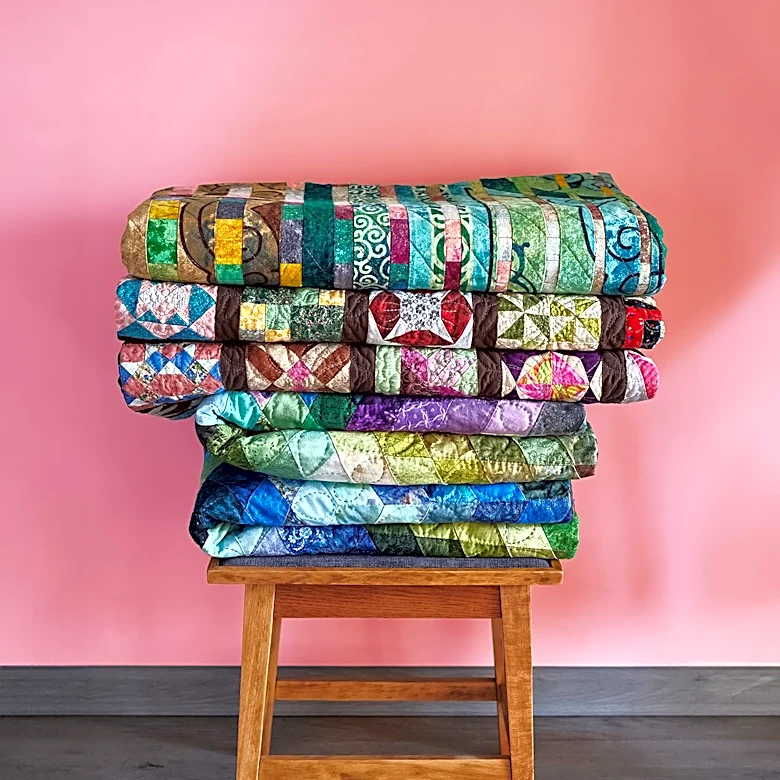
In the late twentieth century, quilting shifted from functional to artistic expression, with art quilts gaining popularity for their aesthetic qualities. Modern quilting emerged in the early twenty-first century, characterized by bold colors, high contrast, and minimalism. The Modern Quilt Guild, founded in 2009, fosters modern quilting through workshops and conventions like QuiltCon.
Contemporary quilting incorporates experimental materials and techniques, challenging traditional notions of quilting. Advances in technology, such as long-arm quilting machines and computer programs, have widened the gap between contemporary and traditional quilting, allowing for greater creativity and innovation in the art form.