







Hurricane Nicole, a sprawling late-season Category 1 hurricane in November 2022, left a trail of significant damage and indirect fatalities across multiple regions. As the fourteenth named storm and eighth hurricane of the 2022 Atlantic hurricane season, Nicole's journey began as a subtropical cyclone and evolved into a powerful tropical system. Its wide-ranging impact, from the Greater Antilles to the Southeastern United States, underscores the destructive
potential of even moderately strong hurricanes, especially when they are large in size.
Formation and Early Path
Nicole's origins can be traced back to November 7, 2022, when it formed as a subtropical cyclone from a non-tropical area of low pressure near the Greater Antilles. The system quickly transitioned into a tropical cyclone the following day. Its early path saw it move towards the Bahamas, where it made landfall on November 9, first on Great Abaco and then on Grand Bahama. During these landfalls, Nicole strengthened into a Category 1 hurricane, reaching its peak intensity with sustained winds of 75 mph and a minimum central pressure of 980 mbar.
This strengthening, however, was not sustained, as an intrusion of dry air disrupted the storm's core convection, preventing further intensification. Despite this, Nicole's interaction with an anticyclone caused its tropical storm wind field in the northern quadrant to expand significantly, reaching over 400 nautical miles from its center in the northeastern quadrant by November 10. This large wind field was a key factor in the widespread nature of its impacts, affecting a broad area even before its direct landfalls in Florida.
Landfalls and Widespread Damage in Florida
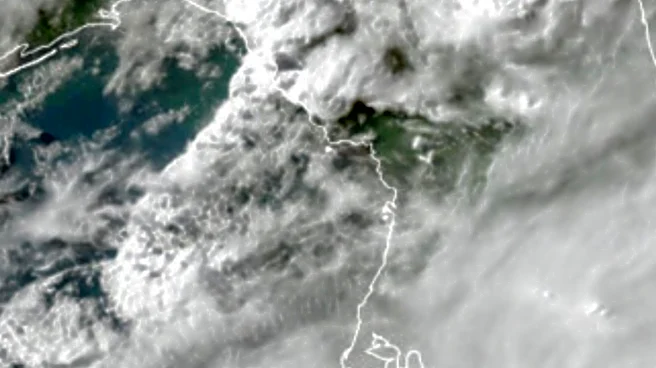
On November 10, Nicole made its first Florida landfall south of Vero Beach, on North Hutchinson Island, as a Category 1 hurricane with sustained winds of 75 mph. Although the National Hurricane Center noted uncertainty about the minimum pressure, they confirmed it made landfall as a hurricane. However, hurricane-force winds were primarily in the northeastern eyewall and likely did not reach the Florida coast as the storm weakened to a tropical storm shortly after landfall.
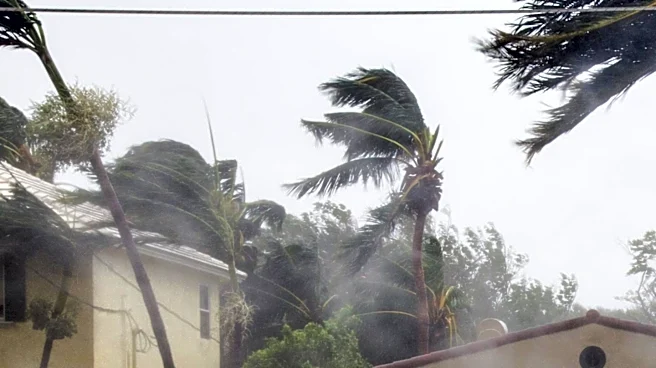
Nicole continued its path across the Florida peninsula, weakening but remaining well organized. It then briefly emerged over the Gulf of Mexico near Homosassa before making a second landfall at Cedar Key in Florida's Big Bend region with sustained winds of 45 mph. Its final landfall occurred at the mouth of the Aucilla River. The storm's large size produced widespread heavy rainfall and strong winds across central and northern Florida and southeast Georgia, leading to power outages and significant damage. Days of strong onshore wind flow on Florida's east coast caused severe beach erosion, particularly in Volusia, St. Johns, and Flagler counties.
Fatalities and Dissipation
Overall, Hurricane Nicole was connected to 11 indirect fatalities. Six of these deaths occurred in the Dominican Republic, and five were reported in Florida. The total damage caused by the storm was estimated at $1 billion. After its final landfall, Nicole weakened to a depression as it moved into southwest Georgia. It then traversed western Georgia, turning northward between an Atlantic high and a mid-latitude trough and cold front. The storm eventually degenerated into a remnant low over extreme western North Carolina and eastern Tennessee before being absorbed into the mid-latitude system, marking the end of its destructive journey.