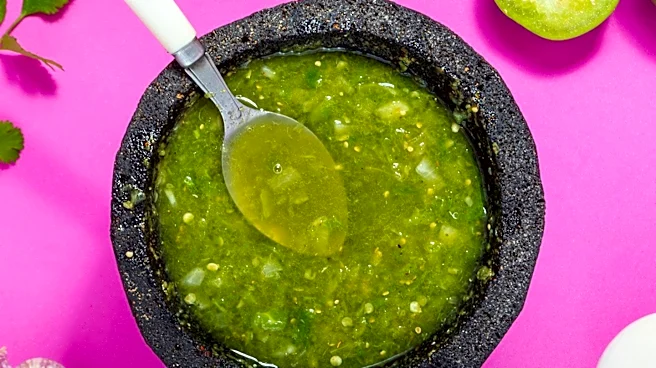








Salsa verde, literally meaning 'green sauce,' is a vibrant and spicy staple in Mexican cuisine, deeply rooted in history. This distinctive green sauce, primarily made from tomatillos and green chili peppers, boasts an ancient lineage that stretches back to the Aztec Empire. Its historical presence was even documented by the Spanish physician Francisco Hernández, highlighting its long-standing importance. Unlike the various parsley-based green sauces
found in medieval European culinary traditions, Mexican salsa verde has always maintained its unique identity, characterized by its core ingredients and preparation methods that have evolved over centuries while retaining its fundamental character.
Ancient Origins and Distinct Identity
The origins of salsa verde are firmly planted in pre-Columbian Mexico, specifically within the Aztec Empire. This historical depth sets it apart from other green sauces found globally. The documentation by Francisco Hernández provides a valuable historical marker, confirming its existence and use during that era. This ancient heritage underscores salsa verde's role not just as a condiment, but as a food item with significant cultural continuity.Its distinction from European green sauces is a key aspect of its identity. While many cultures have green sauces, the Mexican version's reliance on tomatillos and specific chili peppers creates a flavor profile that is uniquely its own. This differentiation emphasizes the indigenous culinary traditions from which it sprang, showcasing a distinct approach to flavor and ingredient use that predates European influence in the Americas.
The Art of Preparation: From Molcajete to Modern Blenders
The preparation of salsa verde has seen both traditional and modern approaches. Historically, and still in many traditional settings, a molcajete is used for grinding the ingredients. This ancient tool, a type of mortar and pestle, allows for a specific texture and flavor development that many connoisseurs cherish. The manual grinding process can release flavors differently than mechanical methods, contributing to the sauce's overall character.In contemporary kitchens, blenders have become a common tool for preparing salsa verde, offering convenience and speed. Regardless of the grinding method, the core process involves combining tomatillos and chili peppers, often with other aromatics. The choice of tool can influence the final texture, from a coarser, more rustic consistency achieved with a molcajete to a smoother blend from a blender, allowing for versatility in preparation.
Culinary Versatility and Regional Variations
Salsa verde is celebrated for its versatility in the cuisines of Mexico and the Southwestern United States. It is a common accompaniment to a wide array of dishes, enhancing flavors with its characteristic tang and heat. Popular pairings include classic Mexican and Tex-Mex dishes such as enchiladas, where it often serves as a primary sauce, and chicharrón, providing a bright counterpoint to the rich pork rinds.Regional variations further illustrate the sauce's adaptability. A notable example is the version typical of New Mexico, which diverges significantly from the tomatillo-based standard. In New Mexico, salsa verde primarily consists of green chile rather than tomatillos, reflecting the strong culinary tradition of green chile cultivation and consumption in that region. This regional adaptation highlights how a core concept can evolve to incorporate local ingredients and preferences, creating distinct yet related culinary experiences.