





Ronald Reagan's 1980 presidential campaign was marked by a strong focus on economic revival and a strategic approach to challenging the incumbent, Jimmy Carter. Reagan, an adherent of supply-side economics, promised to stimulate economic growth through incentives for production, such as adjusting income tax and capital gains tax rates. His campaign aimed to restore economic health across all sectors of the population, a message that resonated with
many Americans during a period of economic uncertainty.
Supply-Side Economics and Military Strength
Reagan's economic philosophy, supply-side economics, was central to his campaign. This theory posits that economic growth is best achieved by encouraging the production of goods and services, often through tax cuts. He promised an economic revival that would benefit everyone, a stark contrast to the prevailing economic conditions. Beyond economics, Reagan also pledged to restore the nation's military strength, a promise made at a time when a significant portion of Americans felt defense spending was too low. He also aimed to end what he called "trust me government" and implement his supply-side economic policy to bring about economic recovery.
At a rally in New York on August 5, Reagan proposed a youth differential in the minimum wage law. This initiative was designed to encourage businesses to hire unskilled and unemployed black youths. In an appeal to black voters, he stated his belief that his vision for America aligned with the desires of the overwhelming majority of black Americans. These proposals highlighted his multifaceted approach to addressing national issues, combining economic theory with social considerations.
Campaign Launch and Financial Battles
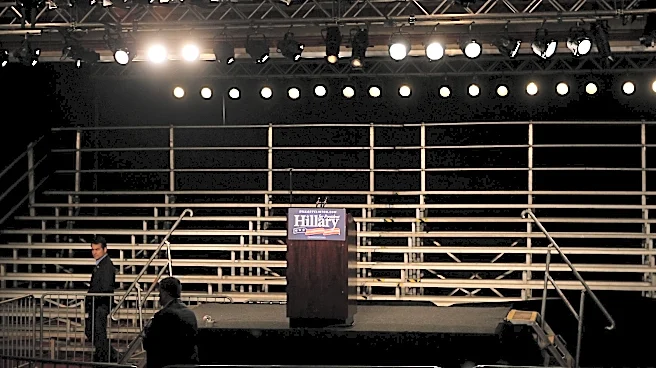
Reagan officially began his campaign with a rally in Texas on July 19, alongside his running mate, George H.W. Bush. It was at this event that he unveiled the campaign slogan, "We can make America great again." This slogan encapsulated his message of national renewal and optimism. However, the campaign faced immediate challenges, including an attempt by the Carter campaign to deny Reagan $29.4 million in federal campaign funds, which was the legal limit for campaign spending.
Carter's team argued that Reagan was ineligible for these funds because independent groups with well-known Republican members had donated up to $60 million to his campaign. Despite this challenge, the Federal Election Commission unanimously rejected Carter's plea and approved the payment to Reagan. This financial dispute occurred while President Carter's brother, Billy Carter, was under investigation for receiving funds from Libya, adding another layer of political intrigue to the election cycle. By late July, Reagan began to lead Carter in polls, with his lead reaching 45 percent to Carter's 39 percent and Anderson's 14 percent by early August.
Debates and Defining Moments
The League of Women Voters played a significant role in organizing presidential debates during the 1980 election. They announced plans for three presidential debates and one vice presidential debate, with the condition that John Anderson would be included if he achieved an average of 15 percent support in major national opinion polls. Carter and his advisors were firm in their refusal to allow Anderson to participate in a three-way debate, believing Anderson would draw more votes from Carter than from Reagan. The Reagan campaign, in turn, refused to debate without Carter.
After extensive negotiations, the League held a debate between Reagan and Anderson on September 21, 1980, as Carter continued to decline participation. During this debate, Anderson criticized Carter's absence, and Reagan emphasized the agreement between himself and Anderson on many issues. Reagan reiterated his pledge to balance the federal budget, aiming for 1982 or 1983. A week before election day, the League of Women Voters organized a debate between President Carter and Reagan, with John Anderson excluded due to his polling numbers. This debate, moderated by Howard K. Smith, covered topics such as the Iranian hostage crisis and nuclear arms treaties. A memorable moment occurred when Carter pressed Reagan on his past statements regarding Social Security, to which Reagan famously replied, "There you go again," a phrase that became a defining moment of the election.