



Kepler-452b, often referred to as Earth's cousin, is a fascinating exoplanet candidate discovered by the Kepler space telescope. Located approximately 1,800 light-years away in the constellation of Cygnus, this planet has captured the interest of scientists due to its potential similarities to Earth. Despite being a disputed candidate, Kepler-452b offers intriguing insights into the possibilities of habitable worlds beyond our solar system.
Physical Characteristics
Kepler-452b
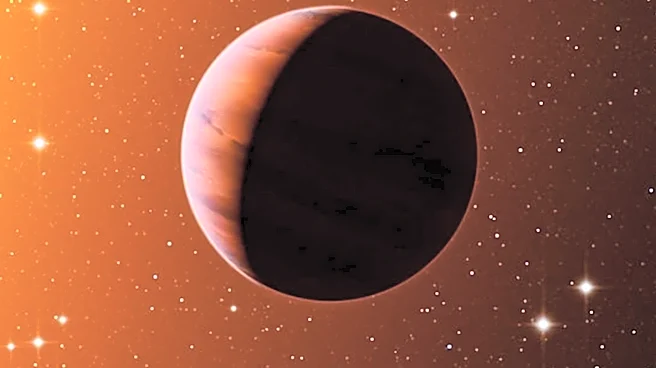
is classified as a super-Earth, with a radius about 1.63 times that of Earth, making it approximately 63% larger. Its mass is estimated to be at least three times that of Earth, although these calculations are rough estimates. The planet's surface gravity is nearly twice that of Earth's, which suggests that if it is a terrestrial planet, it might have many active volcanoes due to its higher mass and density. The clouds on Kepler-452b are likely thick and misty, covering much of the surface as viewed from space.
The planet's equilibrium temperature is around 265 K, which is slightly warmer than Earth's. This temperature, combined with its location within the habitable zone of its parent star, raises questions about its potential to support life. However, the increased stellar radiation it receives compared to Earth could lead to a runaway greenhouse effect, similar to what is observed on Venus.
Orbital Characteristics
Kepler-452b orbits its host star, Kepler-452, at a distance of about 1.04 AU, which is nearly the same as Earth's distance from the Sun. Its orbital period is roughly 385 days, indicating a year slightly longer than Earth's. The star itself is a G-type, similar to our Sun, but is 20% more luminous, 3.7% more massive, and 11% larger. Kepler-452 is approximately six billion years old, making it 1.5 billion years older than the Sun.
The planet's orbit is likely circular and not tidally locked, which means it experiences a day-night cycle similar to Earth. From the surface of Kepler-452b, its star would appear almost identical to the Sun as viewed from Earth, providing a familiar sky for any potential inhabitants.
Potential Habitability
The habitability of Kepler-452b remains uncertain. While it lies within the habitable zone, the increased energy it receives from its star could push it towards a runaway greenhouse effect. If Kepler-452b is indeed a rocky planet, its larger size might allow it to retain oceans for a longer period, potentially delaying the onset of such an effect.
The planet's higher mass could also extend the carbonate-silicate cycle, which is crucial for maintaining a stable climate. This cycle might be buffered by increased volcanic activity, allowing any potential life forms to thrive for another 500 to 900 million years before the habitable zone moves beyond Kepler-452b's orbit.
Kepler-452b's discovery has sparked interest in the search for habitable exoplanets, highlighting the complexities and possibilities of life beyond Earth. As technology advances, future missions may provide more definitive answers about this intriguing world.