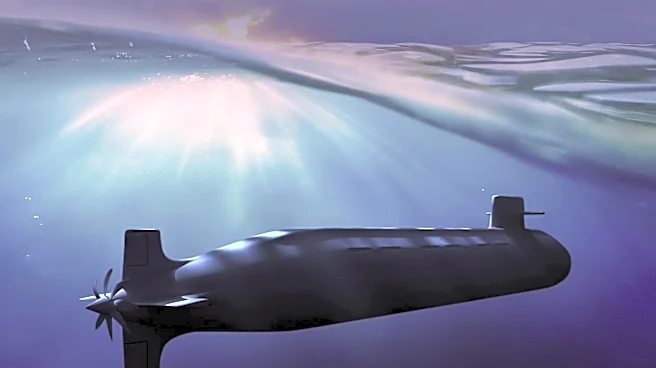






The German submarine U-156 played a central role in the Attack on Orleans on July 21, 1918. Commanded by Kapitänleutnant Richard Feldt, the U-156 was part of the German U-boat campaign during World War I. This article explores the actions of U-156 during the attack and its significance in the broader context of the war.
U-156's Mission and Actions
On the morning of July 21, 1918, U-156 was operating off the coast of Orleans, Massachusetts. The submarine's mission was possibly
to cut the trans-Atlantic submarine communications cable from Orleans to Brest, France. While in the area, Feldt became aware of a convoy consisting of the tugboat Perth Amboy, three barges, and the schooner Lansford.
U-156 engaged the convoy by firing its deck guns, heavily damaging the Perth Amboy and sinking the Lansford and the three barges. It was claimed that U-156 fired two torpedoes, but these were likely shells that missed their target or were warning shots. The submarine's actions were part of a broader strategy to disrupt Allied shipping and communications during the war.
The Impact of U-156's Attack
The attack by U-156 had a significant impact, as it marked the first time since 1848 that foreign artillery fire landed on U.S. soil. Several shells fired by the submarine missed their intended maritime targets and landed near the town of Orleans. Although there were no valuable targets in the area, the shells gave the impression of a deliberate attack on the town.
The attack caused no casualties, but it highlighted the vulnerability of the U.S. coastline to enemy action. It also demonstrated the reach of the German U-boat campaign, which aimed to disrupt Allied shipping and create a sense of insecurity among the Allies.
The Aftermath and Legacy
After firing 147 shells during the hour-long engagement, U-156 submerged and left the area. The attack is commemorated with a sign above the beach, marking the location where the shells struck. This event is remembered as the only instance of enemy fire on U.S. soil during World War I.
The actions of U-156 during the Attack on Orleans serve as a reminder of the global nature of World War I and the strategic importance of submarine warfare. The attack also underscored the need for improved coastal defenses and the role of the U.S. Coast Guard in protecting American shores. Today, the legacy of U-156 and the Attack on Orleans remains an intriguing chapter in the history of the war.