



The Beatles' 1965 US tour was a monumental undertaking, not just for its cultural impact but also for the logistical and technical challenges it presented. At the height of Beatlemania, the band performed in massive venues, necessitating specific equipment and intricate planning. The tour, which ran from August 15 to August 31, 1965, showcased the band's musical prowess while simultaneously highlighting the limitations of live sound technology at the time,
especially when faced with the deafening roar of their fans.
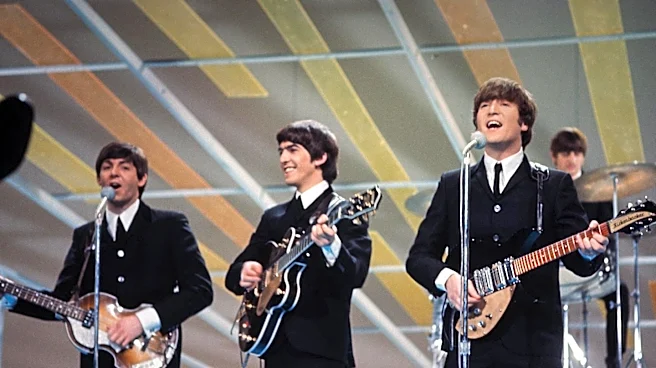
Each member of The Beatles relied on specific instruments that were integral to their sound. John Lennon primarily used a 1964 Rickenbacker 325 semi-hollow electric guitar, with a 1964 Gibson J-160E electro-acoustic guitar serving as a backup. He also occasionally played a Vox Continental electric organ. Paul McCartney's signature sound was delivered through his 1962 Hofner Violin hollow-body bass, complemented by a 1961 Hofner Violin hollow-body bass as a spare. George Harrison's arsenal included a 1963 Gretsch Tennessean hollow-body electric guitar, a 1963 Rickenbacker 360/12 thinline electric guitar, and a 1963 Gretsch Country Gentleman hollow-body electric guitar as a backup. Ringo Starr anchored the rhythm section with his 4-piece Ludwig drum kit, featuring a 22-inch height and a bass drum head adorned with a number 5 drop-T logo. These instruments were crucial to recreating their studio sound in a live setting, despite the challenging acoustics of large stadiums.
The Challenge of Sound and Amplification
One of the most significant technical hurdles during the 1965 tour was achieving adequate sound amplification. Performing in vast outdoor stadiums and arenas meant that the band's sound was often completely overwhelmed by the incessant screaming of their fans. Even specially designed 100-watt Vox amplifiers, provided for the tour, proved insufficient. At the Shea Stadium concert, for instance, the band's sound was so drowned out that neither the musicians nor the audience could clearly hear the music. This led to a situation where the band relied on makeshift amplification systems, and even then, the sound was described as "wild" and twice as deafening as any previous show.
The inability to hear themselves play posed a considerable challenge for The Beatles. John Lennon famously resorted to playing the keyboard with his elbows during "I'm Down" at Shea Stadium, a moment of levity born from the frustration of the chaotic sound environment. The sound issues were so severe that for the documentary