




The bond between humans and dogs is one of the most enduring and profound interspecies relationships on Earth. As the first domesticated species, dogs have been intertwined with human history for over 17,000 years, profoundly influencing the course of early human development and the rise of civilization. This unique partnership, which began with wolves and hunter-gatherers during the Late Pleistocene, was not merely a one-sided process of human control.
Instead, it was a dynamic co-evolutionary journey where both species adapted, physically and psychologically, to life with the other. This deep connection has led to dogs being affectionately known as "man's best friend," a title earned through millennia of shared existence and mutual benefit.
A Symbiotic Beginning: Mutual Advantages for Survival
The initial stages of dog domestication were likely driven by mutual advantages for both early humans and wolves. During the Last Glacial Maximum, when hunter-gatherers preyed on megafauna, proto-dogs could have benefited from carcasses left by early hunters, assisted in capturing prey, or provided defense against large competing predators at kill sites. Wolves, in turn, were probably drawn to human campfires by the scent of cooked meat and discarded refuse. This attraction led to a loose association, with wolves eventually considering human camps as part of their territory, where their warning growls could alert humans to approaching outsiders.
This partnership offered significant survival benefits. Humans and wolves were both persistent pack hunters of large prey, often competing in overlapping territories. By teaming up, they could increase hunting success and provide mutual defense. For humans, who are limited in their ability to metabolize large amounts of protein, the fat and grease from game meat, particularly from limbs and crania, would have been highly prized during harsh winters when plant foods were scarce. Wolves, as carnivores, could thrive on protein. The excess animal calories from successful hunts could feed both proto-dogs and humans without direct competition, fostering a collaborative relationship that laid the groundwork for domestication.
Psychological Convergence: Dogs Becoming More Human-Like
One of the most fascinating aspects of the human-dog relationship is the phenomenon of psychological convergence. This means that dogs have independently evolved to be cognitively more similar to humans than humans are to their closest genetic relatives, like chimpanzees. Dogs have developed specialized skills for interpreting human social and communicative behaviors, skills that appear more flexible and human-like than those of other primates. This suggests that both *Canis familiaris* and *Homo sapiens* may have evolved similar social-communicative abilities, specifically adapted for interactions with human beings.
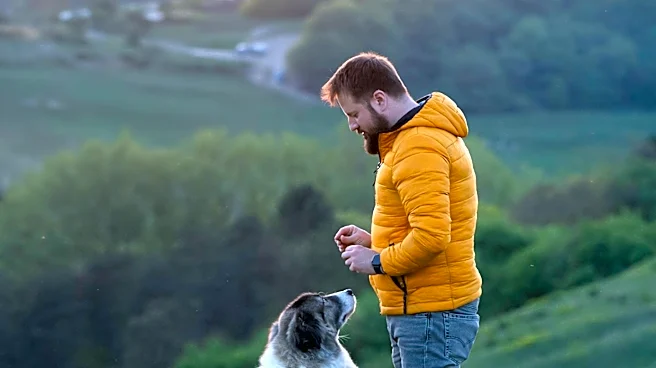
Evidence of this convergence is abundant. Dogs can follow human pointing gestures, discriminate emotional expressions on human faces, and most people can discern a dog's emotional state (alone, approached by a stranger, playing, aggressive) from its bark. Furthermore, humans can even estimate a dog's size from its growl. This deep understanding extends to emotional bonds; studies show that extended eye contact between dogs and their owners increases oxytocin levels in both, a hormone known for its role in maternal bonding, which likely supported the co-evolution of human-dog attachment.
Genetic Adaptations and Shared Vulnerabilities
The co-evolutionary journey has left its mark on the genomes of both species. The dog genome, when compared to the wolf genome, shows signs of positive selection in genes related to brain function, behavior, and lipid metabolism. The ability to process lipids indicates a dietary adaptation that was crucial when proto-dogs scavenged alongside hunter-gatherers, consuming the increased lipid content from early dog diets. This unique dietary pressure likely evolved from both the quantity of food consumed and the shifting composition of tissues available after humans had taken the most desirable parts of a carcass.
Beyond diet, there's an extensive list of genes showing signatures of parallel evolution in dogs and humans, leading to studies on the co-evolution of gene function. Hundreds of genes under positive selection in dogs overlap with similar patterns in humans, affecting traits from digestion and neurological processes to certain cancers. For instance, genes acting on the serotonergic system in the brain suggest co-evolution has led to less aggressive behavior in crowded environments. Interestingly, dogs also suffer from many of the same common diseases as humans, including cancer, diabetes, heart disease, and neurological disorders, with similar underlying pathologies and responses to treatment, further highlighting their shared evolutionary path.
Behavioral Shifts and the Domestication Syndrome
Unlike other domesticated species primarily selected for production traits, dogs were initially selected for their behaviors. Genetic studies have identified key gene variations between wolves and dogs that are unlikely to be solely the result of natural evolution, indicating selection for both morphology and behavior during domestication. Genes affecting the adrenaline and noradrenaline biosynthesis pathway, crucial for emotional processing and the fight-or-flight response, show evidence of recurrent selection. This suggests that the reduced fear and aggression observed in dogs compared to wolves may stem from changes in this pathway, leading to tameness and enhanced emotional processing abilities.
The key phase in domestication appears to involve changes in social behavior and corresponding oxytocin receptor genes and neural-related genes. Behavioral differences may also be linked to structural variations in genes associated with human Williams-Beuren syndrome, which causes increased hyper-sociability—a trait that would have been highly advantageous during domestication. This suite of changes, often referred to as domestication syndrome, includes not only behavioral shifts but also physiological and morphological alterations, all driven by the unique, long-term partnership between humans and their canine companions.