







Automation bias, the human tendency to favor automated suggestions even when contradictory information exists, poses significant challenges across numerous critical sectors. This bias is not merely a theoretical concept but a practical concern with potentially severe consequences in fields where precision and human oversight are paramount. Intensive care units, nuclear power plants, and aircraft cockpits are just a few examples of environments where the increasing
integration of computerized systems and decision aids, while intended to reduce human error, can inadvertently foster automation bias.
This overreliance on automated systems can lead to what is known as "automation misuse," where users fail to adequately monitor systems or use them inappropriately. Such misuse can result in errors of omission, where automated systems fail to detect problems that humans then miss, or errors of commission, where humans blindly follow incorrect automated directives. Understanding how automation bias manifests in specific industries is crucial for mitigating its risks and ensuring safety and effectiveness.
Aviation: The Sky's Complex Challenge
Discussions surrounding automation bias initially focused heavily on the aviation industry. Automated aids have become increasingly integral to cockpits, managing tasks such as determining fuel-efficient routes, navigation, and diagnosing system malfunctions. However, this reliance can lead to less attentive and vigilant information seeking and processing by pilots. In some instances, pilots may place more confidence in misinformation provided by flight computers than in their own skills and judgment.
A key factor in aviation-related automation bias is how pilots perceive their responsibility for tasks handled by automated aids. Research has shown that the presence of a second crewmember in the cockpit does not necessarily reduce automation bias. A 1994 study comparing low and high levels of automation (LOA) on pilot performance found that pilots working with high LOA spent less time independently reflecting on flight decisions. Another study revealed that all pilots given false automated alerts to shut off an engine complied, despite later stating they would normally only reduce power to idle. Automation-related omission errors are particularly common during the cruise phase of flight. Historical incidents, such as a China Airlines flight where an autopilot masked an engine problem, or the 1983 shooting down of a Korean Airlines 747 due to reliance on improperly set automation, underscore the severe risks of automation bias in aviation.
Healthcare: Balancing Aid and Oversight
In healthcare, clinical decision support systems (CDSS) are designed to enhance clinical decision-making and improve patient outcomes. While CDSS can generally improve performance, they also introduce the risk of automation bias. Incorrect advice from these systems might cause users to change a correct decision they had made independently. Given the serious nature of potential consequences in healthcare, recognizing and addressing automation bias in clinical settings is especially important.
Sometimes, automation bias in healthcare can be a minor issue, with the benefits of CDSS outweighing the harm. Other times, it can be a major problem, making CDSS counterproductive. Studies suggest that older users may exhibit more automation bias, though this could be linked to experience rather than age. While inexperienced users often show the most performance improvement with CDSS, they are also more susceptible to automation bias. For example, one study found that CDSS improved clinicians' answers by 21%, but 7% of previously correct answers were incorrectly changed due to the system. Research on breast cancer diagnosis also found clear evidence of automation bias leading to omission errors, with cancers detected in only 21% of cases with automated aids that failed to identify the cancer, compared to 46% without such aids.
Military Operations: High Stakes and Critical Decisions
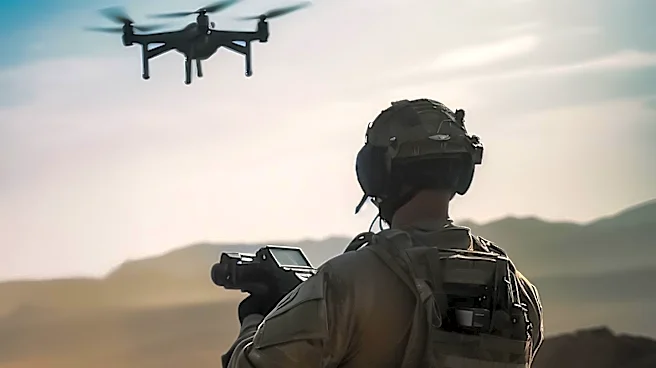
Automation bias is also a crucial consideration in military command-and-control operations, particularly with intelligent decision support systems. A 2004 study highlighted how automation bias effects have contributed to fatal military decisions, including friendly-fire incidents during the Iraq War. Researchers in this field are actively working to determine the appropriate level of automation for decision support systems to minimize such risks. The stakes in military contexts are exceptionally high, making the careful management of automation bias a matter of national security and human life.