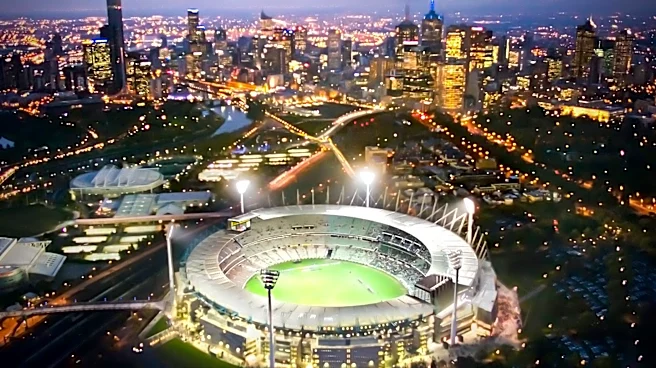






The 1956 Summer Olympics, held in Melbourne, Australia, were a significant global event, yet they unfolded against a backdrop of considerable political tension and logistical hurdles. The decision to host the Games in the Southern Hemisphere presented unique challenges, particularly concerning the reversal of seasons, which meant a November-December schedule. This timing was expected to inconvenience athletes from the Northern Hemisphere, who typically
rested during their winter months. Despite these concerns, Melbourne ultimately secured the hosting rights in 1949, winning by a single vote against Buenos Aires, Argentina.
Early Challenges and Skepticism
From the outset, many members of the International Olympic Committee (IOC) harbored skepticism about Melbourne's suitability as an Olympic host city. Beyond the seasonal issues, an early problem emerged with Australia's strict equine quarantine regulations, which made it impossible for the country to host the equestrian events. This led to the unprecedented decision to hold the equestrian competition separately in Stockholm, Sweden, five and a half months before the rest of the Games officially opened in Melbourne.
Further complicating preparations was internal bickering among Australian politicians regarding financing. This financial dispute delayed progress, though eventually, in March 1953, the State Government accepted a £2 million loan from the Commonwealth Government. This funding was crucial for building the Olympic Village in Heidelberg West, designed to accommodate up to 6,000 people. After the Olympics, these houses were repurposed for general public housing by the Housing Commission.
IOC Concerns and Construction Delays
IOC president Avery Brundage expressed significant doubts about Melbourne's readiness. At one point, he even suggested that Rome, slated to host the 1960 Games, was so far ahead in its preparations that it might serve as a replacement site for 1956. Brundage's concerns persisted as late as April 1955, following an inspection trip to the city. While construction was underway, aided by a $4.5 million federal loan to Victoria, it was behind schedule.
The construction of sporting venues was prioritized over the athlete's village. The village itself was envisioned as a new suburb, featuring semi-detached houses and flats. Notably, it was the first Olympic village designed to allow both sexes to cohabitate in the same buildings, rather than in gender-designated sections. Despite the initial delays and Brundage's lingering skepticism, by early 1956, it became clear that Melbourne would indeed be ready to host the Olympics.
Political Boycotts and Reduced Participation
The 1956 Games were significantly impacted by international political events, leading to several boycotts. In response to the Suez Crisis, which saw Egypt invaded by Israel, the United Kingdom, and France, Egypt, Iraq, Cambodia, and Lebanon announced their non-participation. Separately, the Netherlands, Spain, Switzerland, and Liechtenstein boycotted the event to protest the Soviet Union's suppression of the Hungarian Revolution. The People's Republic of China also chose to boycott because Taiwan was permitted to compete.
These boycotts, while not preventing the Games from proceeding, led to a sharp decrease in the number of athletes. Although 67 countries participated, nearly the same number as in 1952 (69), the total number of athletes dropped from 4,925 to 3,342. This figure does not include the 158 athletes from 29 countries who took part in the Stockholm equestrian competition. Despite these political undercurrents and reduced participation, the Games, once underway, were known as the "Friendly Games."
A Unified German Team and Cultural Events
Amidst the boycotts, there was also a notable display of unity: athletes from both East and West Germany competed together as a combined team. This unified German team participated in 1956, 1960, and 1964, before the arrangement was discontinued. Beyond the athletic competitions, Melbourne also hosted an Olympic Arts Festival, an arts festival held in conjunction with the Games, adding a cultural dimension to the international event.