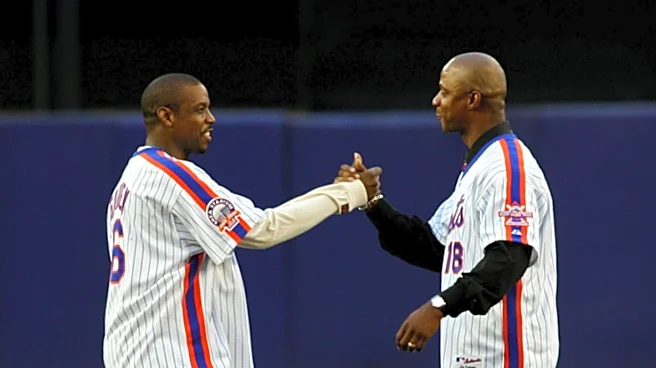





The 1969 New York Mets season stands as one of the most remarkable turnarounds in Major League Baseball history. Known affectionately as the "Amazin' Mets" or "Miracle Mets," this team, in its eighth season, defied all expectations to win the World Series against the Baltimore Orioles. Playing their home games at Shea Stadium and managed by Gil Hodges, the Mets transformed from a franchise synonymous with losing into champions, marking a significant
moment for an expansion team.
Prior to 1969, the Mets had never finished higher than ninth place in a ten-team league during their first seven seasons. Their inaugural year in 1962 saw them achieve a dismal 40–120 record, setting a 20th-century MLB record for most losses in a single season. Their .250 winning percentage in 1962 was only marginally better than the 1935 Boston Braves' .248. The team had never held a record above .500 after the ninth game of any season, making their 1969 triumph even more astonishing. They became the first expansion team to win the World Series, a testament to their incredible journey.
A New Era: Divisional Play and Early Struggles
The 1969 season introduced divisional baseball, a direct result of each league expanding from 10 to 12 teams. The American League welcomed the Kansas City Royals and Seattle Pilots, while the National League added the San Diego Padres and Montreal Expos. This new structure divided each league into East and West divisions, each with six teams. The winners of these divisions would then compete in a best-of-five playoff to determine who would represent their league in the World Series. The Mets were placed in the National League East, alongside established teams like the Chicago Cubs, Philadelphia Phillies, Pittsburgh Pirates, and St. Louis Cardinals, as well as the expansion Montreal Expos. For the first time since their inception in 1962, the Mets were guaranteed to finish no lower than sixth place. Despite this, New York Times journalist Joe Durso predicted the Mets would finish fourth in the East, ahead of only the Pirates and Expos.
The season began with a historic note on April 8, as the Mets and Expos played the first international baseball game in MLB history at Shea Stadium. Despite a crowd of 44,541 fans, the Mets continued their streak of Opening Day losses, making it eight consecutive. The Expos won an 11–10 slugfest, even after the Mets scored four runs with two outs in the bottom of the ninth. This early performance seemed to confirm the Mets' reputation for "lingering death," as one columnist described it.
The Improbable Surge and Championship Victory
After winning the next two games against the Expos, the Mets lost six of their following seven, bringing their record to 3–7. A 9–14 start was followed by a period where they won 9 of their next 13 games, including consecutive shutouts against the Cubs and Expos in late April. By May 21, when Tom Seaver shut out the Atlanta Braves 5–0, the Mets were 18–18, marking their best start in franchise history. However, this promising start was immediately followed by a five-game losing streak, including a 15–3 drubbing by the Braves and a three-game sweep by the Houston Astros, who outscored the Mets 18–4. By May 27, their record stood at 18–23.
Then, in late May, the Mets began an extraordinary club-record 11-game winning streak. This run included three walk-off victories and dominant pitching, with the staff yielding a stingy two runs per game. From their 42nd game onward, the Mets compiled an astonishing 82–39 record, a .678 winning percentage, including an incredible 38–11 in their last 49 games. Despite this surge, they still faced challenges, including two mid-season three-game sweeps by the Astros, who dominated them throughout the season, winning 10 of 12 games. They were also no-hit by Bob Moose of the Pittsburgh Pirates on September 20, just five days after becoming the first major league team to strike out 19 times in a nine-inning game (a game they still won 4–3 against the Cardinals' Steve Carlton). Trailing the Chicago Cubs by 10 games on August 14, the Mets won 14 of their last 17 games in August and 24 of 32 in September and October, ultimately surging past the Cubs to finish 100–62, eight games ahead. This 18-game turnaround, from 10 games behind to 8 games ahead, remains one of the largest in MLB history, culminating in their World Series triumph.