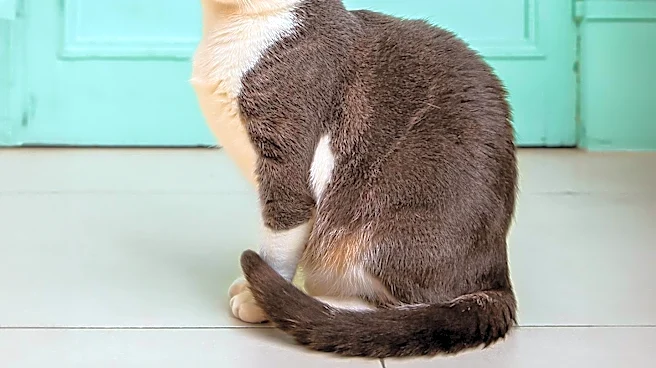






The Munchkin cat, a breed instantly recognizable by its remarkably short legs, has a history marked by both public fascination and significant ethical debate. First introduced to the general public in 1991, this breed quickly became a subject of discussion within the feline community. Its distinctive appearance stems from a specific genetic mutation, a form of chondrodysplasia, which results in disproportionately short limbs. While some find their
unique stature endearing, the breed's very existence has sparked widespread concern regarding animal welfare, leading to bans and non-recognition by numerous cat associations worldwide.
The Emergence and Early Reception of the Munchkin
The Munchkin cat made its debut to a national audience in 1991 at a televised cat show hosted by The International Cat Association (TICA) in Davis, Oklahoma. This introduction, however, did not immediately lead to official recognition. From the outset, critics voiced concerns, predicting that the breed might develop spinal, hip, and leg problems, drawing parallels to issues seen in some dachshunds. For many years following its public introduction, the Munchkin breed faced exclusion from feline competitions due to the controversial nature of its breeding. Despite these early reservations, the breed gained a notable advocate in Solveig Pflueger, a show judge, geneticist, and chairperson of TICA's Genetics Committee, who was also a Munchkin breeder herself.Pflueger played a crucial role in pushing for the breed's official recognition. Amidst considerable controversy, the Munchkin was eventually proposed as a new breed. Its official recognition by TICA in 1997 marked a significant turning point, yet it also intensified the debate. This recognition brought the breed further into the spotlight, but also amplified the concerns from critics regarding potential health and mobility issues associated with its genetic makeup. The name "Munchkin" itself draws from L. Frank Baum's diminutive inhabitants of Munchkin Country in "The Wonderful Wizard of Oz," a fitting, if somewhat ironic, nod to their characteristic short stature.
Genetic Basis and Associated Health Concerns
The defining characteristic of the Munchkin cat—its short legs—is a direct result of a genetic mutation known as chondrodysplasia. This condition affects cartilage and bone development, leading to the shortened limbs. While some proponents suggest that the shortness of their legs does not impede their ability to run and leap, other sources indicate that their jumping capabilities are indeed limited by their condition. Beyond mobility, Munchkin cats are known to have an increased incidence of certain health issues compared to other feline breeds. These include lordosis, an excessive inward curvature of the spine, and pectus excavatum, a condition characterized by a hollowed chest.Furthermore, Munchkin cats face a higher risk of developing severe osteoarthritis. This increased susceptibility is attributed to how their shorter limbs impact their activity levels and overall behavior. Diagnosing and assessing the severity of osteoarthritis in these cats often requires radiography. These health concerns are central to the ongoing debate and are the primary reasons why many pedigree cat associations globally have refused to recognize the Munchkin cat. The Féderation Internationale Féline, for instance, explicitly prohibits breeds based on dwarfism, citing the Munchkin as an example of unacceptable manipulation of "genetic disease."
Global Opposition and Breeding Bans
The welfare concerns surrounding the Munchkin cat have led to significant opposition and legal restrictions in various parts of the world. Several countries and territories have implemented outright prohibitions on breeding Munchkins. The European Union, for example, bans the breeding of dwarf cats under the broader European Convention for the Protection of Pet Animals. Specific nations have also taken action; the Netherlands prohibited the breeding of all animals with genetic defects in 2014. In Australia, both Victoria and the Australian Capital Territory government consider the Munchkin breed to be malformed animals, deeming their deliberate breeding unacceptable due to the associated genetic health problems.These bans extend beyond purebred Munchkins to include Munchkin cross-breeds, such as the Bambino, which have also faced legal restrictions. The Governing Council of the Cat Fancy (GCCF) is another prominent organization that has refused to recognize the breed due to welfare considerations. This widespread refusal of recognition and the implementation of breeding bans underscore the serious ethical questions that continue to surround the Munchkin cat, highlighting a global concern for animal welfare over aesthetic preferences driven by genetic mutations.