


Martinsville Speedway, a prominent fixture in American motorsports, boasts a rich history dating back to its opening in September 1947. Located in Ridgeway, Virginia, this oval short track has undergone significant transformations from its humble beginnings as a dirt oval to its current configuration as a unique asphalt and concrete surface. Its enduring relationship with NASCAR, which began with its first Cup Series races in 1949, has cemented its place
as a legendary venue in stock car racing.
From Dirt to Dual Surfaces: The Track's Paving Journey
Initially, Martinsville Speedway was a dirt oval, a common characteristic of early racing venues. This changed in 1955 when the track was paved with asphalt, a major upgrade that allowed for faster speeds and different racing dynamics. This initial paving was a significant step in modernizing the facility and aligning it with the evolving standards of NASCAR racing. The decision to pave the track was first discussed in 1953 by owner Henry Clay Earles, with official announcements made in June 1955, alongside plans for a concrete retaining wall and increased seating.
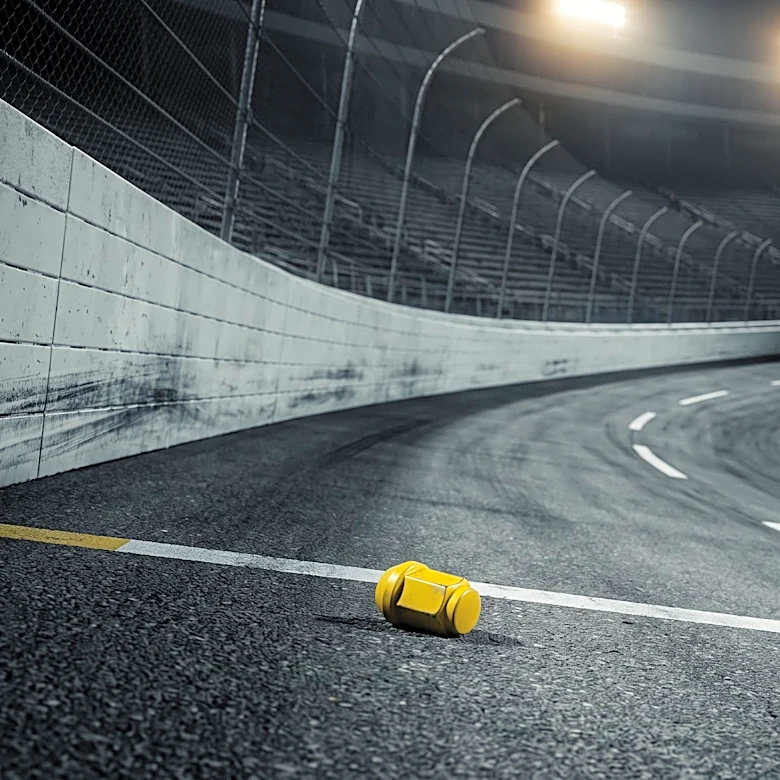
However, the evolution of the track's surface didn't stop there. After 21 years of consistent repaving, a unique modification was introduced: the lower lanes of the track's corners were paved with concrete. This dual-surface approach, with asphalt on the straights and upper lanes of the corners and concrete on the lower lanes, gives Martinsville Speedway its distinctive character. This combination of materials creates a challenging environment for drivers, demanding precise handling and strategic racing.
Expansion and Ownership Changes Through the Decades
Beyond its surface, Martinsville Speedway experienced consistent expansion throughout its history. Following the 1955 paving, seating capacity was significantly increased. A 1956 advertisement noted an expansion to 8,670 grandstand seats. The following year, the construction of the East Grandstand added 7,000 seats, bringing the total capacity to approximately 16,000. Further additions in the early to mid-1960s pushed the capacity to 21,000 by 1965. Amenities also improved, with a scaffold erected over the West Grandstand in 1960 and a new air-conditioned press box constructed in 1962.
Ownership of the speedway also saw changes over the years. Originally owned by Virginia businessman Henry Clay Earles, the France family purchased half interest in the track in 1950, solidifying its ties with NASCAR. Major expansion efforts continued into the 1990s, focusing on increasing seating capacity and renovating other facilities. In 2004, the International Speedway Corporation (ISC) acquired the track from the Earles and France families. Fifteen years later, NASCAR itself purchased the track after acquiring ISC, bringing Martinsville Speedway directly under the sanctioning body's ownership.
Track Configuration and Unique Features
In its current configuration, Martinsville Speedway measures 0.526 miles (0.847 km) in length. A defining characteristic of the track is its banking: 12 degrees in each of the four turns, with no banking on the straights. This design, combined with the dual asphalt and concrete surfaces, contributes to its reputation as a challenging short track. The track's length was officially changed from 0.5 miles to 0.526 miles in 1969, following NASCAR's implementation of a new track length measurement system.
Beyond the racing surface, Martinsville Speedway is also known for its unique concession item: the $2 "Martinsville hot dogs." These hot dogs, often served with mustard, chili, cole slaw, and onions, have been a staple since the track's early days. Supplied by Jesse Jones as of 2023, with a brief period from 2015 to 2018 by Valleydale Foods, these hot dogs have become an iconic part of the Martinsville Speedway experience, adding to the track's distinct cultural identity within NASCAR.