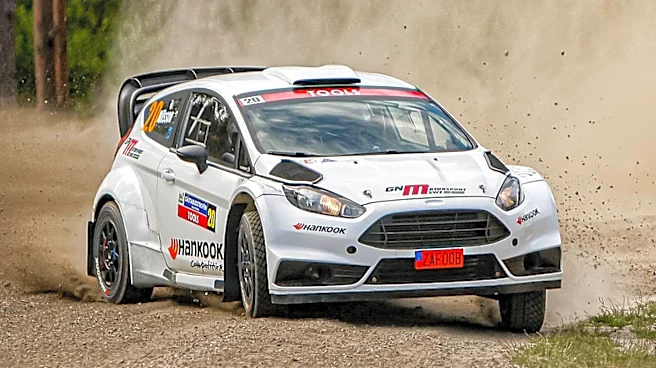




The Rally of Great Britain, a cornerstone event in the World Rally Championship, has undergone numerous transformations since its inception in 1932. These changes are not just about the competitive format but also extend to its very identity, reflected in its various names, the prominent sponsors it has attracted, and its evolving geographical footprint. From its early days as the Royal Automobile Club Rally to its current designation as the Wales
Rally of Great Britain, the event's nomenclature and operational base have mirrored the changing landscape of motorsport and commercial partnerships. Understanding these shifts provides insight into the rally's adaptability and its enduring presence on the international stage.
A Chronicle of Names: Reflecting Eras and Sponsors
The rally's official name has changed multiple times throughout its long history, each iteration often signaling a new era or a significant sponsorship deal. It began simply as the Royal Automobile Club (RAC) Rally in 1932. This name remained largely consistent until the late 1990s, becoming synonymous with the event for decades. Even when it was formally known as the RAC International Rally of Great Britain, it was commonly referred to as the RAC Rally up until its 53rd event in 1997.Following a restructuring of the RAC club and its commercial activities in 1998, the event shed its direct RAC identity. It then became known as the Rally of Great Britain or Rally GB. Title sponsorships further influenced its name. After Lombard's nineteen-year sponsorship concluded, the rally transitioned to the Network Q RAC Rally, and later, the Network Q Rally of Great Britain. Since 2003, with significant sponsorship from the Welsh Government, the event has been known as the Wales Rally GB, or formally, the Wales Rally of Great Britain, clearly indicating its primary operational region.
The Influence of Sponsorship: Commercial Partnerships and Event Identity
Sponsorship has played a crucial role not only in the financial viability of the Rally of Great Britain but also in shaping its public identity. For many years, the event ran without a title sponsor prominently featured in its name. However, this began to change in 1970 when the rally plates on all cars carried advertising for its newspaper sponsor, the Daily Mirror. By 1971, the event's full title officially became the Daily Mirror RAC International Rally of Great Britain.A more enduring partnership began in 1974 when finance company Lombard North Central took over title rights. The event became the Lombard RAC Rally, a name that became deeply ingrained with the rally for nearly two decades. These sponsorships provided essential funding, allowing the rally to grow in scale and professionalism. The subsequent partnerships with Network Q and the Welsh Government continued this trend, demonstrating how commercial backing directly influenced the event's branding and public perception, making sponsor names almost as recognizable as the rally itself.
Geographical Evolution: From Island-Wide Tour to Welsh Concentration
Geographically, the Rally of Great Britain has also seen significant shifts. The inaugural 1932 event featured multiple starting points across the island, with routes converging in Torquay. In its post-war return, the 1951 RAC International Rally of Great Britain toured the island, with a common itinerary around Scotland, Wales, and England after an initial gathering at Silverstone. For many years, the rally was truly a Great British event, with competitive stages spread across England, Scotland, and Wales.However, a major change occurred towards the end of the 1990s. The rally became more compact, and its operational base moved to Cardiff in 2000. Subsequently, competitive stage mileage became increasingly concentrated in Wales. Today, the event is primarily focused within Wales, with Deeside serving as its current headquarters. This geographical consolidation has led to its formal designation as the Wales Rally of Great Britain, reflecting its current primary location and the strong support from the Welsh Government.