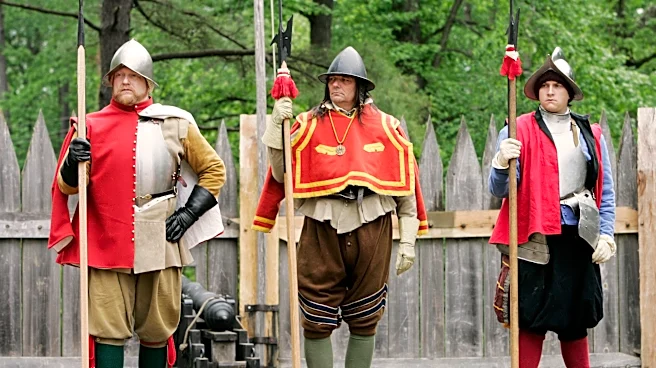









During the War of 1812, Fort Erie became a focal point of military strategy, particularly during the siege by British forces in 1814. The American defenders, under the command of Major General Jacob Brown and later Brigadier General Edmund P. Gaines, implemented a series of fortifications and defense strategies that played a crucial role in their successful defense of the fort.
Enhancing Fort Erie's Defenses
After capturing Fort Erie on July 3, 1814, American forces quickly set
about improving its defenses. The original British fort consisted of two two-story barrack buildings with fortified cannon bastions. However, the Americans recognized the need for additional fortifications to withstand a potential British siege.
Under Brown's direction, the Americans extended the earth wall to the south, creating a defensive line that stretched 800 meters to a rise known as Snake Hill. Here, they constructed a gun battery to bolster their firepower. To protect the north end of the position, an earth wall connected the northeast bastion of the fort to the lake, with another fortified gun emplacement known as the Douglass Battery.
Defensive Obstacles and Tactical Preparations
The Americans also employed various obstacles to hinder British attacks. Abatis, made of felled trees, were placed in front of the earth walls to slow down enemy advances. The dry ditch surrounding the fort was transformed into a formidable barrier, with a 9-foot high wooden wall in the center, angled outward and sharpened to prevent enemy soldiers from leaping into the ditch.
Inside the fort, the Americans took additional precautions to ensure their defenses were ready. Brigadier General Gaines ordered his men to stand to, keeping them prepared for any sudden British assault. He also instructed that the charges in all guns be drawn and replaced to prevent misfires due to damp powder, a common issue in the wet conditions of the siege.
The Impact of Fortifications on the Siege
The enhanced fortifications and strategic preparations proved vital during the British siege, which began on August 4, 1814. The British forces, led by Lieutenant General Gordon Drummond, launched several assaults on the fort, but the American defenses held firm. The combination of strong fortifications and effective use of artillery allowed the Americans to repel British attacks and maintain control of the fort.
The successful defense of Fort Erie demonstrated the importance of well-planned fortifications and tactical readiness in military engagements. The American forces' ability to withstand a prolonged siege against a larger British force highlighted their strategic acumen and contributed to their overall success in the Niagara campaign. Fort Erie's defense remains a testament to the effectiveness of military engineering and preparation in the face of adversity.