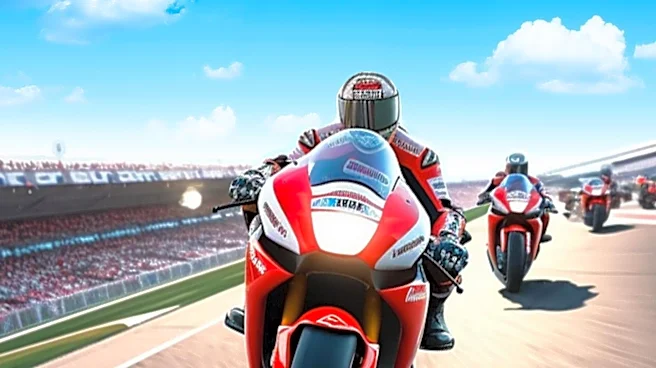






The Superbike World Championship, often abbreviated as SBK, stands as the premier international superbike racing series, officially established in 1988. Unlike its MotoGP counterpart, which features purpose-built machines, Superbike racing distinguishes itself by utilizing highly modified versions of motorcycles readily available for public sale. This foundational principle has shaped its identity and appeal, drawing riders from across the globe to compete
on permanent racing facilities. The championship's journey has been marked by significant rule changes, intense rivalries, and a continuous effort to balance competition with manufacturer involvement, making it a dynamic and evolving sport.
Early Years and the Rise of Dominance
The championship's inception in 1988 set the stage for a new era in motorcycle racing, focusing on production-based machines. This approach resonated particularly well in countries like Italy, largely due to the prominence of Ducati, and in the United Kingdom, where superbike racing quickly became the most popular form of motorcycle racing. The 1990s and early 2000s saw periods of remarkable dominance, notably by Carl Fogarty and Ducati. From 1993 to 1999, Fogarty secured a record four titles and finished as runner-up twice, all while riding factory Ducatis. Troy Corser also contributed to Ducati's success, winning the 1996 title and achieving runner-up status in 1995 on a Ducati.
This era of Ducati supremacy prompted other manufacturers to adapt. Honda, recognizing the advantage of 1,000 cc V-twin engines in the superbike formula, introduced its VTR1000 SPW in 2000. This strategic move paid off immediately, with Colin Edwards winning the championship in the bike's debut year. Ducati, however, quickly reclaimed the title in 2001 with Troy Bayliss, only for Colin Edwards to win it back in 2002 on the same VTR1000 SPW. The 2002 season was particularly memorable, featuring an impressive comeback by Edwards against Bayliss, culminating in the dramatic "Showdown at Imola," where both riders battled wheel-to-wheel in the final race. This period represented the zenith of the championship's popularity, enjoying global fan engagement and full factory support.
Navigating Rule Changes and Manufacturer Challenges
The landscape of the Superbike World Championship underwent significant shifts in the early 2000s due to rule modifications. In 2003, the FIM altered regulations to permit 1,000 cc machines, encompassing twins, triples, or four-cylinder engines. However, concurrent rule changes in MotoGP, allowing four-stroke engines, led Japanese manufacturers to redirect their resources, resulting in limited factory involvement in Superbike World Championship, with only Ducati and Suzuki maintaining significant presence. This situation led to the championship being derisively called "the Ducati Cup" in 2003, as factory Ducati Team's two Ducati 999s won all 24 races, with Neil Hodgson securing the title.
To foster a more competitive environment, organizers introduced further changes in 2004, most notably mandating Pirelli as the sole control tire supplier. This decision proved controversial, as many teams considered Pirelli tires to be inferior to those from Dunlop and Michelin, which they had previously used. The Motorcycle Sports Manufacturer Association (MSMA), comprising Aprilia, Ducati, Honda, Kawasaki, Suzuki, and Yamaha, initially announced a boycott, though Ducati was later permitted to participate. Despite these challenges, privateer teams running Japanese bikes, such as Ten Kate Honda with Chris Vermeulen, managed to contend for the title, which was ultimately won by James Toseland and Ducati. These periods highlight the championship's ongoing efforts to adapt its regulations to ensure competitive racing while managing the complex dynamics of manufacturer participation.
Adapting to Modern Racing Demands
Further rule adjustments continued to shape the championship in subsequent years. In 2008, Ducati's introduction of the 1098, powered by a 1,099 cc V-twin engine, prompted a request for rule changes to allow 1,200 cc V-twins to compete against 1,000 cc four-cylinder bikes. Ducati argued that they no longer produced a road-going 1,000 cc V-twin superbike and that making their 999 competitive was too costly. The FIM eventually agreed, setting a 1,200 cc displacement limit for twins, along with weight penalties and air restrictors, which could be adjusted during the season. This change also revised homologation requirements, increasing the minimum production number of bikes for manufacturers.
The 2011 season saw Ducati withdraw its factory team after 23 seasons, which had yielded 29 riders' and manufacturers' titles, opting instead to support privateer teams. The championship also saw technical regulations, such as the banning of Aprilia's gear-driven camshafts on its RSV4. Carlos Checa won his first championship that year, securing Ducati's 17th manufacturer title. In 2013, further refinements included reducing the number of riders per row on the starting grid from four to three and revising the Superpole knockout system. Crucially, pit stops with tire changes were introduced to manage races affected by variable weather conditions, demonstrating the championship's continuous adaptation to enhance safety and fairness in modern superbike racing.