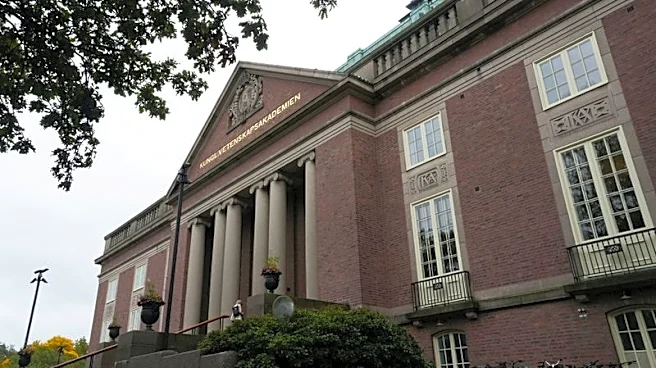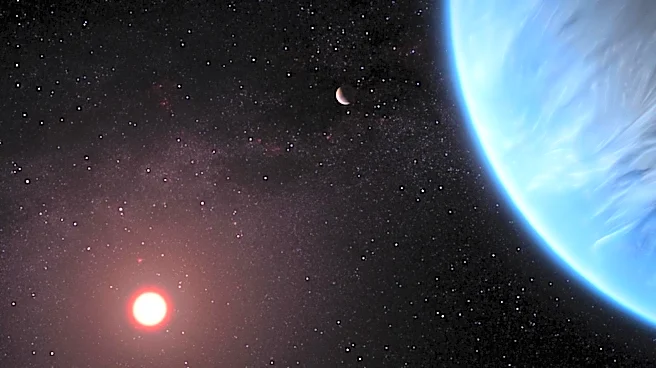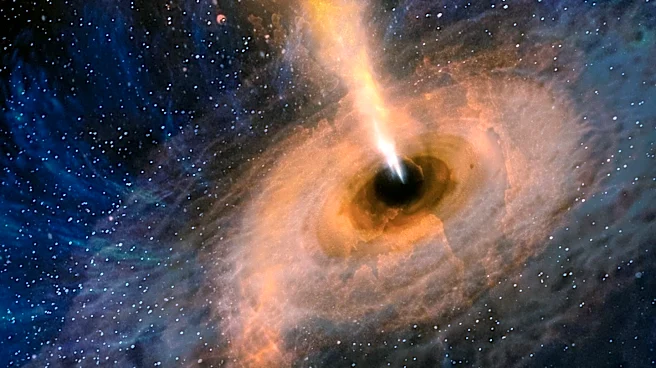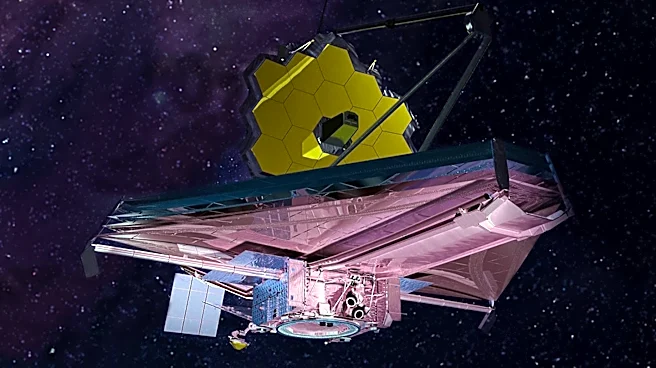





Robert Woodrow Wilson, an American astronomer, is renowned for his pivotal role in one of the most significant scientific discoveries of the 20th century: the detection of cosmic microwave background (CMB) radiation. This accidental yet profound finding, made in collaboration with Arno Penzias, provided crucial evidence supporting the Big Bang theory and reshaped our understanding of the universe's origins. Their work, recognized with the 1978 Nobel
Prize in Physics, stands as a testament to the unexpected paths scientific exploration can take.
An Unexplained Noise at Bell Labs
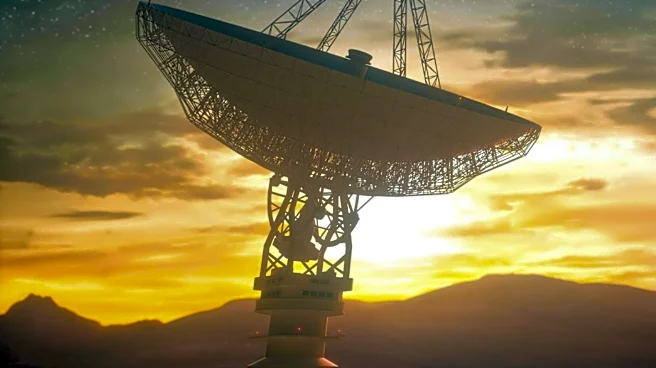
The story of the CMB discovery began at Bell Laboratories in Holmdel Township, New Jersey, where Wilson and Penzias were conducting tests and experiments using the Holmdel Horn Antenna. Their objective was to use the highly sensitive antenna for radio astronomy observations. However, they encountered a persistent and inexplicable source of noise in the atmosphere that interfered with their measurements. This noise was isotropic, meaning it came from all directions, and seemed to be independent of the time of day or year.
Eliminating Terrestrial Interference
Determined to identify and eliminate the source of this interference, Wilson and Penzias meticulously investigated every possible terrestrial explanation. They checked their equipment for malfunctions, recalibrated their instruments, and even went to the extent of physically removing pigeon droppings from inside the antenna, suspecting that biological contamination might be the cause. Despite these exhaustive efforts, the mysterious background noise remained. It was a uniform, low-level hiss that defied conventional explanation, leading them to consider extraterrestrial origins.
The Cosmic Connection and the Big Bang Theory
As they continued to grapple with the unexplained signal, Wilson and Penzias learned of theoretical work by other scientists, particularly those at Princeton University, who had predicted the existence of a faint background radiation as a remnant of the Big Bang. This radiation, they theorized, would be a uniform glow of microwaves permeating the entire universe, a "cosmic echo" from the universe's earliest moments. The persistent noise detected by Wilson and Penzias perfectly matched the characteristics of this predicted cosmic microwave background radiation.
A Nobel-Winning Confirmation
The identification of this noise as CMB was a monumental breakthrough. It provided strong observational evidence for the Big Bang theory, which posits that the universe originated from an extremely hot, dense state and has been expanding and cooling ever since. The CMB is essentially the afterglow of this initial explosion, cooled over billions of years to microwave temperatures. For their groundbreaking discovery, Robert Woodrow Wilson and Arno Penzias were jointly awarded the 1978 Nobel Prize in Physics, solidifying their place in the annals of scientific history and fundamentally altering humanity's view of the cosmos.