







Joseph A. Walker stands as a pivotal figure in the history of the X-15 program, a testament to human courage and engineering prowess in the early days of space exploration. As the pilot of X-15 Flight 91 on August 22, 1963, Walker achieved the highest altitude ever recorded by the X-15 aircraft, reaching 107.96 kilometers. This flight was not an isolated event but the culmination of his significant contributions, including a previous spaceflight just
a month prior. His work helped define the capabilities of spaceplanes and set records that endured for decades.
Consecutive Spaceflights and Reusability
Walker's involvement in the X-15 program was marked by a series of groundbreaking achievements. Notably, he was the pilot for both Flight 90 and Flight 91, the only two missions in the program to successfully fly above the Kármán line, the internationally recognized boundary of space. Flight 90, which occurred a month before Flight 91, also saw Walker piloting the same X-15 plane, number three, into sub-orbital space. This made Flight 91 the first internationally recognized spaceflight of a reused spacecraft, highlighting the early potential for vehicle reusability in space missions.
His ability to consistently push the limits of the X-15 aircraft demonstrated not only his exceptional piloting skills but also the robust design of the North American X-15. The concept of reusing a spacecraft for multiple missions was a forward-thinking idea, and Walker's successful consecutive flights provided tangible proof of its viability, paving the way for future reusable space vehicles.
The Final Flight and Enduring Records
Flight 91, while a monumental success, also marked Joseph A. Walker's final flight in the X-15 program. On this mission, he piloted the X-15 to its record-breaking altitude, remaining weightless for approximately five minutes. The entire mission, from air-launch over Smith Ranch Dry Lake, Nevada, to landing at Rogers Dry Lake, Edwards Air Force Base, California, lasted about 12 minutes. This flight solidified his place in history, not just for the altitude record, but also for his consistent performance in pushing the boundaries of human flight.
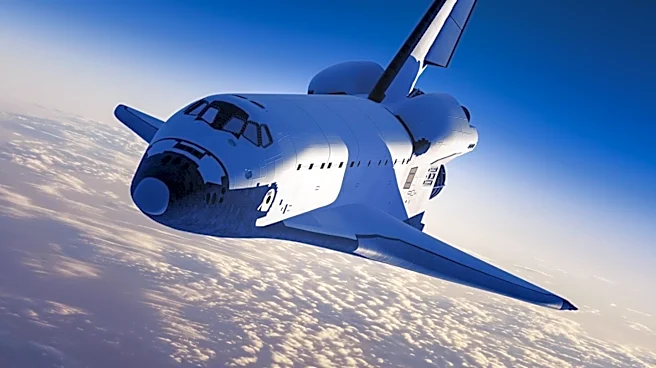
Walker's achievements in the X-15 program, particularly his two spaceflights, contributed invaluable data and experience to both the U.S. Air Force and NASA. The altitude record set during Flight 91 remained the highest achieved by a spaceplane until the Space Shuttle Columbia's flight in 1981, a testament to the pioneering nature of Walker's work and the X-15 program.