
The Las Vegas Motor Speedway, a prominent motorsport track in Nevada, boasts a rich history of transformation and expansion. Its origins trace back to the early 1970s, following the closure of the Stardust International Raceway in 1970. This led to the decision to construct a new automotive complex in Las Vegas, initially known as the Las Vegas Speedrome. What began as a modest facility has since evolved into a sprawling 490-hectare complex, housing
multiple circuits designed for various forms of motorsport, reflecting the dynamic growth of racing in the region.
Early Beginnings and Initial Growth
Opened in 1972, the Las Vegas Speedrome initially featured a road course and a dragstrip. This foundational setup provided a venue for early racing enthusiasts and laid the groundwork for future developments. The complex saw its first significant change in 1983 when Richie Clyne of the Imperial Palace acquired the circuit. Under Clyne's ownership, the facility began to expand, notably with the addition of a 3/8-mile short track in 1985. This period marked a rebranding of the complex, which was then renamed Las Vegas Speedway Park, signaling a new era of growth and diversification in its offerings.
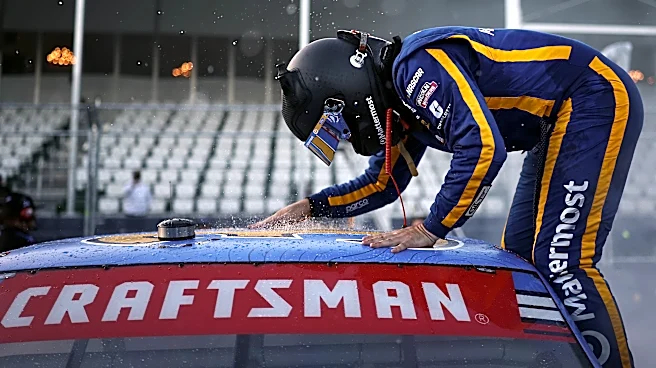
The momentum continued into the 1990s with a major investment in a new superspeedway. Costing $72 million, this impressive addition was inaugurated in September 1996. The first race on this new superspeedway was an IndyCar event held on September 15, won by Richie Hearn. Later that same year, in November, the track hosted a NASCAR Truck Series race, further cementing its status as a significant racing venue. These early events showcased the potential of the expanded facility to host major national racing series.
Major Acquisitions and Strategic Reconfigurations
A pivotal moment in the Speedway's history occurred in December 1998 when Speedway Motorsports, Inc., based in Charlotte, North Carolina, purchased the complex for a substantial sum of $215 million. This acquisition brought the Las Vegas Motor Speedway under the ownership of a major player in the motorsport industry, leading to further strategic developments. Chris Powell, a former publicist in motor sports, was appointed president and general manager, a role he continues to hold, overseeing the ongoing evolution of the facility.
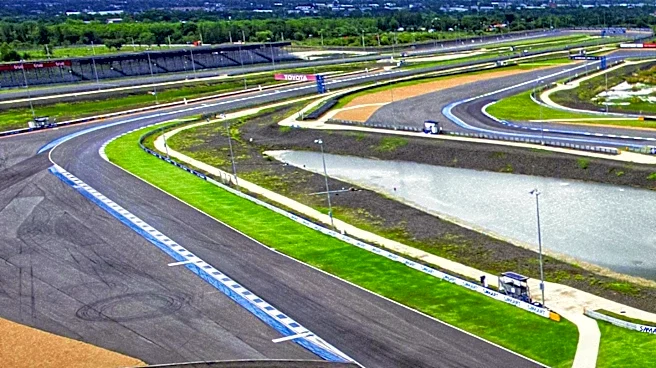
Following the acquisition, significant reconfigurations and additions were undertaken to enhance the Speedway's capabilities. The dragstrip, now known as The Strip at Las Vegas Motor Speedway, was relocated to its current position. Concurrently, a new 2.400-mile (3.862 km) road course was constructed, utilizing the former dragstrip and original road course areas. The 3/8-mile (608 m) oval was also rebuilt, featuring a new pit lane and a repositioned start/finish line, demonstrating a commitment to modernizing and optimizing the racing experience.
Modernization and Diversification of Events
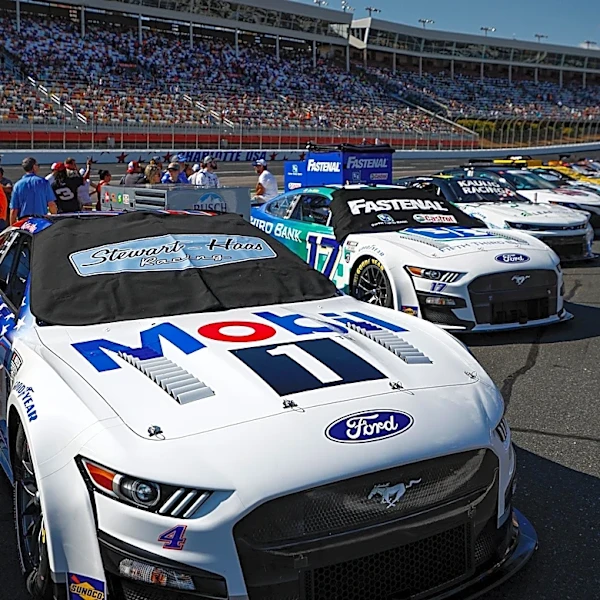
The early 2000s saw the Speedway continue to host high-profile events, including Champ Car races in 2004 and 2005, both won by Sébastien Bourdais. A major reconfiguration of the D-oval track took place in 2006 after the March NASCAR Cup Series race. The banking in the turns was significantly increased, ranging between 12 and 20 degrees, with a progressive incline that steepened towards the outside of the track. This change aimed to improve racing dynamics and excitement. Alongside track improvements, a new fan zone, the Neon Garage, was constructed, and a new press center was established. The pit lane was also moved closer to the grandstands, by 275 feet (83.82 m), enhancing spectator engagement.
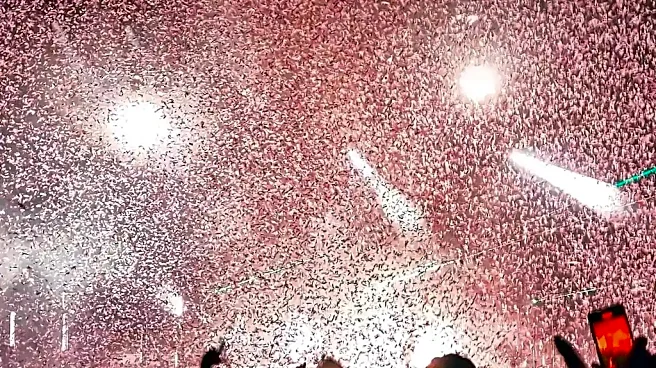
Further diversifying its offerings, a new quarter-mile (402 m) oval was built within the central area of the circuit to accommodate races for Legends Cars, Bandoleros, and Thunder Roadster vehicles. The newly reconfigured stock car track welcomed races again on August 8, 2006, with NASCAR Cup Series champion Kurt Busch being the first to test the new surface. Jeff Burton won the first Xfinity Series race on the new track, followed by Jimmie Johnson winning the first NASCAR Cup Series race. The Speedway also expanded beyond traditional racing, hosting the Electric Daisy Carnival (EDC) rave party starting in 2011, attracting hundreds of thousands of attendees and securing a 10-year agreement. In 2012, a third road course, designed by Romain Thievin, was added, featuring 11 turns and an 1,800-foot (548.6 m) straightaway, further solidifying the Las Vegas Motor Speedway as a versatile and continuously evolving entertainment and motorsport complex.