
August Vincent Theodore Spies was a prominent German-speaking anarchist, labor activist, and newspaper editor in America during the 1880s. Born on December 10, 1855, in the Electorate of Hesse, Germany,
Spies became a central figure in the Haymarket affair, a pivotal event in American labor history. He was ultimately found guilty of conspiracy to commit murder following the bomb attack on police at Haymarket Square and was one of four individuals executed in its aftermath. His life and death became symbolic of the intense labor struggles of the era.
Spies's Role in the Labor Movement and Haymarket Rally
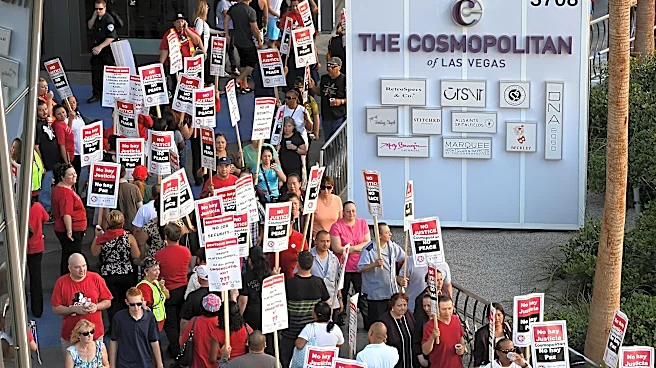
Spies was deeply involved in the labor movement, advocating for workers' rights. On May 3, 1886, he addressed a rally outside the McCormick Harvesting Machine Plant, urging striking workers to "hold together, to stand by their union, or they would not succeed." While the general strike had largely remained nonviolent up to that point, gunfire erupted when workers confronted strikebreakers, resulting in fatalities. Spies expressed his indignation, believing this "butchering of people" was intended to undermine the eight-hour workday movement.
The following day, May 4, Spies spoke at the Haymarket Square rally. Although he had finished his speech and was still on stage when the bomb exploded, he was among the seven men arrested. Albert Parsons later turned himself in, bringing the total to eight defendants. Despite witnesses testifying that none of the eight men charged threw the bomb, all were found guilty, with seven sentenced to death and Oscar Neebe receiving a 15-year prison sentence.
The Trial and His Defense
Spies was tried for conspiracy in the murder of Officer Mathias Degan alongside seven other men. During the trial, the jury was permitted to consider articles written by the defendants supporting political violence, conversations about their desire for revolution, and other past materials as evidence. Spies confirmed receiving an 1884 letter from Johann Most, an anarchist author, which mentioned Most would proxy Spies 20 or 25 lbs. of "medicine," interpreted by prosecutors as code for dynamite. Spies, however, testified that he obtained dynamite out of curiosity, stating, "I wanted to experiment with dynamite just the same as I would take a revolver and go out and practice." He also claimed he kept explosives to impress reporters, who would then "write up some big sensational article."
Witness testimony during the trial also implicated Spies. Gottfried Waller, a fellow anarchist, testified that at a meeting, two of the "Monday Night Conspirators" agreed that the code word "Ruhe" would be published in the Arbeiter-Zeitung to call anarchists to arms. This word appeared in the newspaper's "Letterbox" section on May 4, and the Arbeiter Zeitung's bookkeeper, Theodore Fricke, testified that "Ruhe" was written in Spies's hand. Another witness, Malvern Thompson, claimed to have overheard Spies discussing "pistols" and "police" with Michael Schwab before the rally, and later saw Spies hand something to Rudolph Schnaubelt, the lead suspect as the bomb thrower. Harry Gilmer testified he saw Spies light the fuse for the bomb thrown by Schnaubelt. At his sentencing, Spies denounced the police and prosecution witnesses, alleging their testimony was bought.
Execution and Enduring Words
On November 11, 1887, August Spies was executed by hanging. As he faced his demise on the gallows, he uttered the memorable words, "The day will come when our silence will be more powerful than the voices you strangle today." These words are now engraved on the Haymarket Martyrs' Monument in Forest Home Cemetery in Forest Park, Illinois, where Spies and the other Haymarket martyrs are buried. His legacy, intertwined with the Haymarket affair, continues to be commemorated, notably through the selection of May 1 as International Workers' Day.