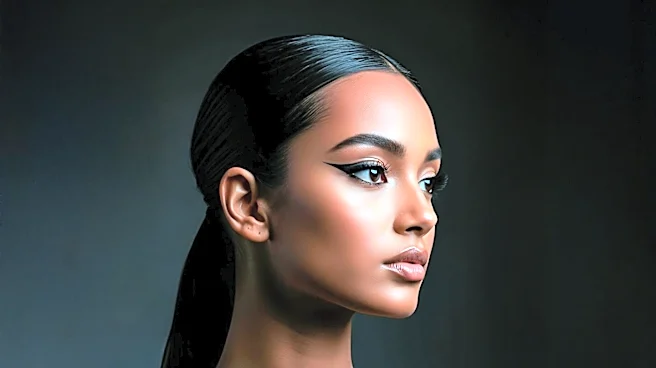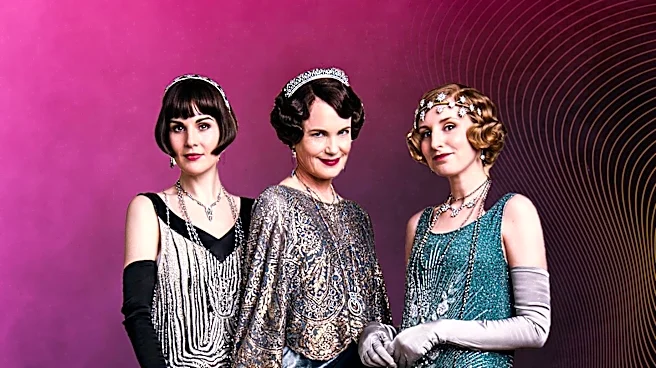








Hairstyling, often referred to as hairdressing when performed as an occupation, is a craft that involves arranging hair in specific ways, utilizing a variety of tools and techniques. From ancient methods of curling and braiding to modern clipper work and chemical treatments, the evolution of hairdressing reflects both technological advancements and changing aesthetic preferences. This practice extends beyond simple grooming, often incorporating accessories
like headbands or barrettes to hold hair in place, enhance its appearance, or conceal it with coverings such as a kippah, hijab, tam, or turban.
Ancient civilizations demonstrated sophisticated hairdressing techniques. In ancient times, women colored their hair, curled it, and pinned it up in diverse styles. To achieve waves and curls, they would apply wet clay, dry it in the sun, and then comb it out. Alternatively, a jelly made from quince seeds soaked in water was used. Various curling tongs and curling irons were also popular tools for styling hair, indicating an early understanding of heat-based styling. The oldest known depiction of hair styling, braiding, dates back approximately 30,000 years, highlighting the enduring nature of these fundamental techniques.
The Rise of Modern Styling Techniques and Tools
The 20th century brought significant innovations in hairdressing. After World War I, women adopted shorter styles like the bob, shingle, and crop. This era also saw the popularization of marcelling, a technique that created deep waves using heated scissor irons. Durable permanent waving became a sought-after, though expensive and time-consuming, process where hair was set in curlers and treated with steam or dry heat machines. Later, women straightened their hair using chemical processes, by ironing it at home with a clothes iron, or by rolling it up with large empty soda cans while wet, showcasing a range of methods from professional treatments to DIY solutions.
For men, the mid-20th century saw the widespread use of pomade, creams, and tonics to keep short, parted, or slicked-back hair in place. The military-inspired crewcut, which became popular during and after World War II, emphasized short, low-maintenance styles. The craft of cutting hair, particularly for men, involves precise techniques. A "regular haircut" in Western fashion typically features hair long enough to comb on top, with a defined or deconstructed side part, and back and sides that vary in length. This style is also known by names such as taper cut, standard haircut, short back and sides, businessman cut, and professional cut, reflecting regional variations in tapering.
The Art of the Regular Haircut: Edging, Siding, and Topping
The essential elements of a regular haircut are edging, siding, and topping. Edging defines the lower edge of hair growth around the ears and across the nape of the neck, typically done with clippers. Siding refers to the hair on the back and sides between the edge and the top, often cut using shears over comb. Topping involves designing the hair at the front and over the crown, frequently employing shears over finger methods to shorten, layer, and thin the hair. Barbers distinguish between a "two-line haircut," which is a standard taper cut outlined around the ears and down the sides of the neck, and a "one-line haircut," or block cut, where the nape outline is shaved to create an immediate transition between hair and skin.
Clippers are central to many modern haircuts, with different types like taper clippers, rotary clippers, and outliner/edger clippers used for specific tasks. Clipper guards, numbered in eighths of an inch, allow for precise control over hair length, with each number corresponding roughly to a week's growth of hair. For example, a #1 guard leaves 1/8 inch of hair, while a #2 guard leaves 2/8 inch. These tools and techniques demonstrate the meticulous nature of hairdressing, transforming hair into a carefully sculpted element of personal presentation.