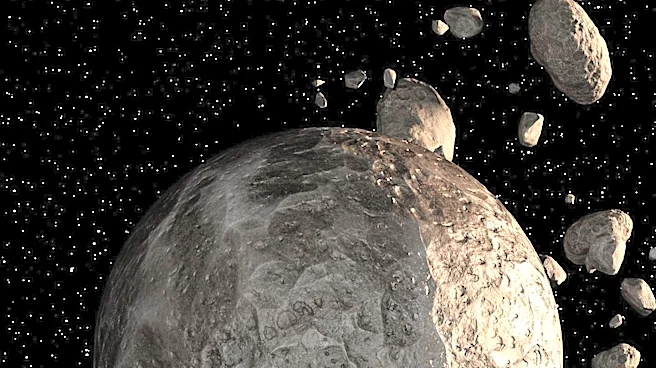





Eris, a dwarf planet in the scattered disc of the Solar System, is accompanied by its moon, Dysnomia. This celestial pair offers astronomers a unique opportunity to study the dynamics of a dwarf planet and its satellite. The discovery of Dysnomia not only provided insights into the characteristics of Eris but also contributed to our understanding of the formation and evolution of celestial bodies in the outer Solar System.
Discovery and Characteristics of Dysnomia
Dysnomia was discovered on
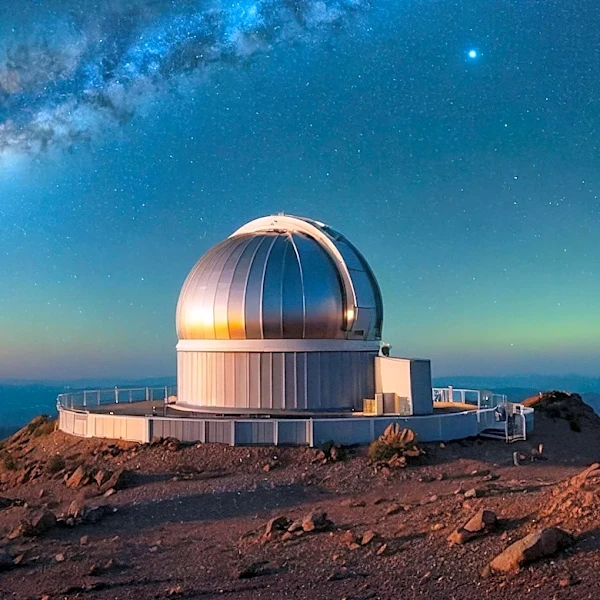
September 10, 2005, by the adaptive optics team at the Keck telescopes in Hawaii. The moon was identified during observations of the brightest Kuiper belt objects, including Eris. Initially, Dysnomia was nicknamed "Gabrielle," in keeping with the nickname "Xena" for Eris, before receiving its official name.
The name Dysnomia was chosen by Mike Brown, one of the discoverers, and it follows the tradition of naming moons after mythological figures associated with their primary bodies. Dysnomia, the daughter of Eris in mythology, was a fitting choice. The moon's orbit around Eris is nearly circular, with a low eccentricity, and it takes approximately 15.78 days to complete one orbit.
The Eris-Dysnomia System
The relationship between Eris and Dysnomia is particularly interesting because they are tidally locked to each other. This means that Dysnomia always shows the same face to Eris, and Eris rotates synchronously with Dysnomia's orbit. This double-synchronous rotation is a rare phenomenon, previously observed only in the Pluto-Charon system.
The orbit of Dysnomia has been used to determine the mass of Eris through Kepler's third law of planetary motion. Observations indicate that Eris is 1.27 times more massive than Pluto, making it one of the most massive known dwarf planets in the Solar System. The study of Dysnomia's orbit has also provided insights into the potential presence of additional satellites around Eris, although none have been confirmed.
Implications for Astronomy
The discovery and study of Dysnomia have significant implications for our understanding of the outer Solar System. The Eris-Dysnomia system serves as a natural laboratory for studying the dynamics of dwarf planets and their moons. It also highlights the importance of adaptive optics and advanced telescopes in uncovering the mysteries of distant celestial bodies.
By examining the interactions between Eris and Dysnomia, astronomers can gain insights into the processes that govern the formation and evolution of moons around dwarf planets. This knowledge contributes to a broader understanding of the complex and diverse nature of the Solar System.