



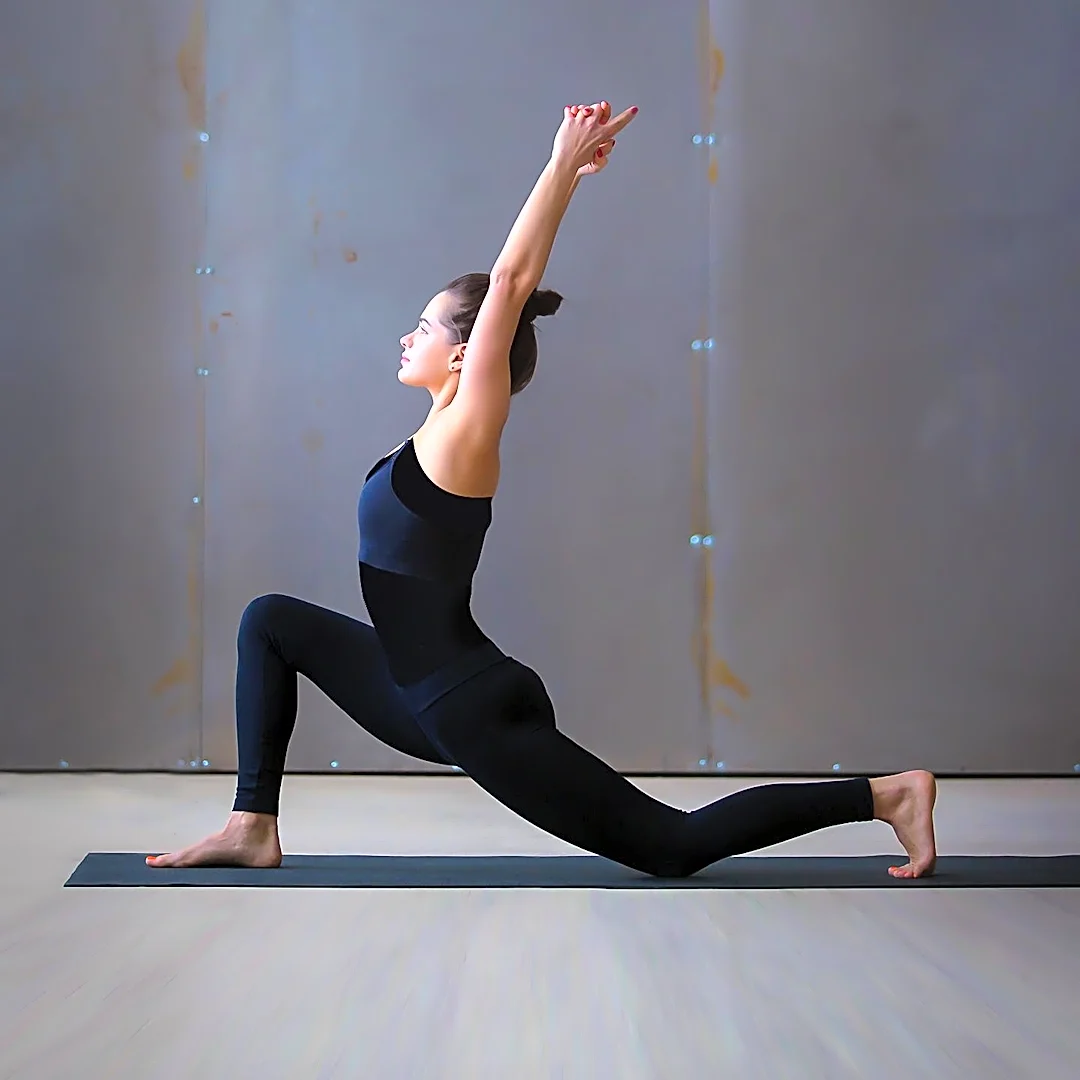




Yoga, as practiced today, is deeply rooted in ancient Indian traditions, and its postures, or asanas, are often identified by Sanskrit names. Understanding these Sanskrit terms can provide practitioners with a deeper connection to the practice, revealing the meaning, intention, and even the physical mechanics of each pose. The term "Ardha Hanumanasana," for instance, is more than just a label; it's a concise description of the pose itself. "Ardha"
means "half," immediately informing us that this is a half-split, a preparatory version of the full Hanumanasana. This linguistic precision is a hallmark of yoga's rich heritage and offers valuable insights into the practice.
The Significance of Sanskrit Prefixes
Sanskrit, an ancient Indo-Aryan language, serves as the foundational language for many yoga texts and the naming of asanas. A common feature in these names is the use of prefixes, which modify the meaning of a base pose. These prefixes are not arbitrary; they convey crucial information about the posture's orientation, intensity, or specific characteristics. For example, "Ardha" consistently denotes "half," as seen in Ardha Hanumanasana (half-split) or Ardha Chandrasana (half moon pose).
Other prefixes also carry specific meanings that guide practitioners. "Adho" signifies "downward," as in Adho Mukha Svanasana (downward-facing dog). "Urdhva" means "upward," found in Urdhva Mukha Svanasana (upward-facing dog). "Eka" translates to "one" or "single," indicating a one-legged variation. "Parivrtta" means "revolved" or "twisted," pointing to a rotational element in the pose. By learning these common prefixes, yoga students can often deduce the nature of a new pose even before seeing it demonstrated, enhancing their understanding and memory of the vast array of asanas.
Hanumanasana and its Cultural Context
The full split pose, Hanumanasana, from which Ardha Hanumanasana derives, is named after Hanuman, a central figure in the Hindu epic, the Ramayana. Hanuman is depicted as a divine vanara (a monkey-like humanoid) and a devoted attendant of Rama. He is celebrated for his immense strength, unwavering loyalty, and extraordinary feats, including a legendary leap across the ocean from India to Lanka. The pose Hanumanasana is said to embody this powerful leap, symbolizing courage, devotion, and the ability to overcome obstacles.
This cultural and mythological context adds a layer of depth to the physical practice. When a practitioner engages in Hanumanasana or its preparatory form, Ardha Hanumanasana, they are not just performing a physical stretch; they are also connecting to a rich narrative and the qualities associated with Hanuman. This integration of physical movement with cultural storytelling is a unique aspect of yoga, distinguishing it from mere exercise. The name itself serves as a reminder of the pose's origins and its deeper symbolic meaning.
Naming Conventions Across Yoga Styles
While Sanskrit provides a common linguistic framework, different yoga traditions sometimes adopt their own naming conventions or alternative terms for similar poses. This can lead to variations in how a pose like the front split is referred to. For instance, in Kripalu yoga, the pose known as Hanumanasana is often called the "Runner's Stretch." This name emphasizes the functional benefit of the pose, highlighting its utility for athletes by targeting muscles relevant to running.
Similarly, in Ashtanga Vinyasa Yoga, a front split is specifically named Samakonasana. These variations demonstrate the evolution and adaptation of yoga practices over time and across different schools. While the physical form of the pose may remain largely consistent, the names chosen by various traditions can reflect their particular focus—whether it's on mythological inspiration, functional benefits, or a specific lineage's terminology. Despite these differences, the underlying physical action of extending one leg forward and the other to the rear of the torso remains the core of the pose, regardless of its specific appellation.