
The domestic cat, often perceived as a creature of instinct, possesses a remarkable degree of intelligence, coupled with highly specialized sensory organs that allow it to navigate and interact with its
environment in sophisticated ways. Understanding the feline mind involves exploring its cognitive abilities, the intricate workings of its senses, and how these elements contribute to its learning and problem-solving skills. From their keen eyesight and hearing to their unique sense of taste and smell, cats are equipped with a sensory toolkit that shapes their behavior and survival strategies.
Cognitive Abilities and Brain Structure
Cat intelligence encompasses their capacity to solve problems, adapt to new surroundings, learn new behaviors, and effectively communicate their needs. Structurally, a cat's brain shares similarities with the human brain, notably containing approximately 250 million neurons within the cerebral cortex, the region responsible for complex processing. This neurological foundation supports their cognitive functions.
Felines exhibit neuroplasticity, meaning their brains can reorganize and adapt based on their experiences. They also possess well-developed memories, capable of retaining information for a decade or even longer. These memories are frequently intertwined with emotions, allowing cats to recall both positive and negative experiences associated with specific locations. While cats excel at observational learning and problem-solving, studies suggest they may struggle with understanding cause-and-effect relationships in the same way humans do. The study of cat intelligence primarily focuses on domesticated cats, whose exposure to challenges in urban environments has contributed to their cognitive development and adaptive behaviors. Selective breeding and genetic changes have also played a role in influencing their intelligence. Kittens learn essential survival skills by observing their mothers, while adult cats refine their abilities through trial and error.
The World Through Feline Senses
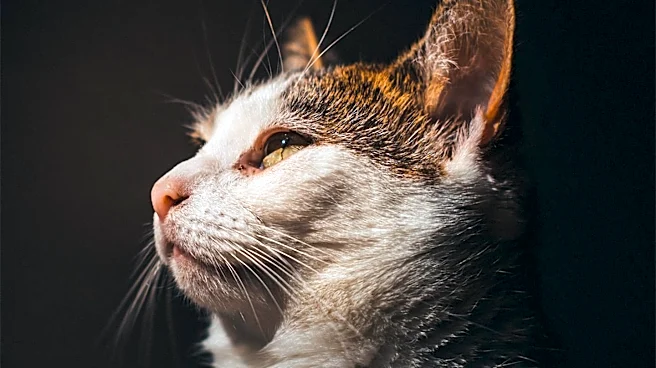
Cats possess an extraordinary array of senses that are far more developed than those of humans in many respects. Their night vision is particularly impressive, allowing them to see effectively in light levels one-sixth of what humans require. This is facilitated by a tapetum lucidum in their eyes, which reflects light back through the retina, enhancing sensitivity in dim conditions. Their large, slit pupils further aid in light gathering. While their color vision is limited, primarily optimized for blue and yellowish-green, their ability to detect middle wavelengths may be an adaptation to low light rather than true trichromatic vision.
Their hearing is equally remarkable, spanning a broad frequency range from 55 Hz to 79 kHz, significantly wider than the human range. Large, movable outer ears, or pinnae, amplify sounds and help them precisely locate the source of a noise. This enables them to detect ultrasound, including the high-pitched calls of rodent prey. Research indicates that cats also possess socio-spatial cognitive abilities, allowing them to construct mental maps of familiar individuals' locations based on their voices. Beyond sight and sound, cats have an acute sense of smell, supported by a well-developed olfactory bulb and a large olfactory mucosa. They also utilize a Jacobson's organ in their mouths for flehmening, a behavior that allows them to detect specific pheromones and aromas inaccessible to humans. Many cats respond strongly to plants containing nepetalactone, such as catnip, which they can detect at extremely low concentrations, with 70–80% of cats being affected by it.
Taste, Touch, and Environmental Interaction
While cats have fewer taste buds than humans, approximately 470 compared to over 9,000, their sense of taste is uniquely adapted to their carnivorous diet. Domestic and wild cats share a genetic mutation that prevents their sweet taste buds from binding to sugary molecules, rendering them unable to taste sweetness. However, they possess taste bud receptors specialized for acids, amino acids (constituents of protein), and bitter tastes. Interestingly, cats' taste buds can detect umami, though they do so differently from humans, sensing inosine monophosphate and histidine, which are particularly abundant in tuna. This specific combination, creating a strong umami synergy, is thought to be why cats find tuna so palatable.
Their sense of touch is also highly refined, primarily through dozens of movable whiskers, or vibrissae, prominently located on their faces. These whiskers provide crucial information about the width of gaps and the location of objects in the dark, both by direct contact and by sensing air currents. They also trigger protective blink reflexes to shield the eyes from harm. Cats also exhibit a distinct preference for food temperatures around 38 °C (100 °F), similar to a fresh kill. They may reject cold food, which could signal that the prey is long dead and potentially toxic or decomposing. These combined sensory and cognitive abilities allow cats to interact with their environment with remarkable precision and adaptability, making them highly effective predators and resilient companions.