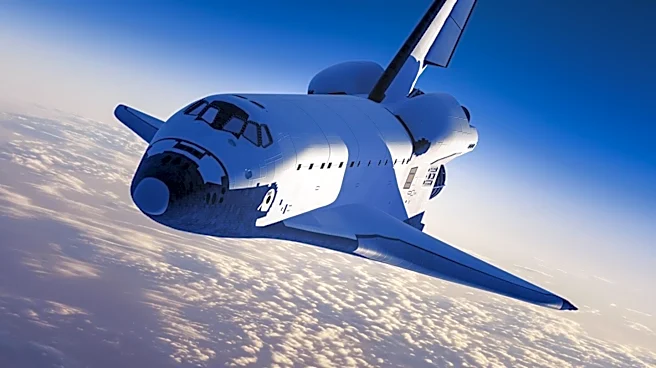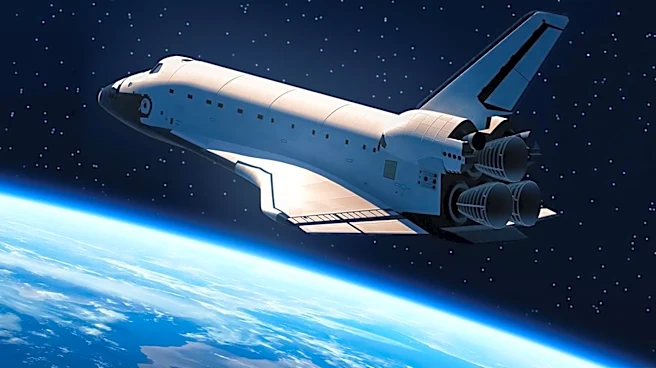


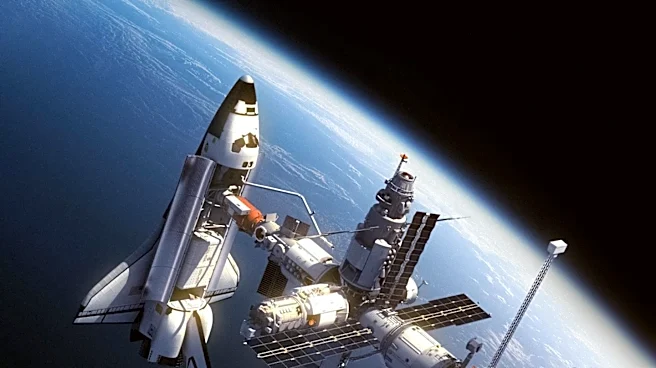


The STS-94 mission, flown by the Space Shuttle Columbia in July 1997, was a pivotal moment for microgravity research. This mission was a reflight of the earlier STS-83 mission, which was cut short due to technical issues. With a primary focus on microgravity experiments, STS-94 provided valuable insights into the behavior of materials and processes in space. This article explores the various experiments conducted during the mission and their significance.
The Microgravity Science Laboratory
At the heart of STS-94 was the Microgravity Science Laboratory (MSL), a collection of experiments housed in a European Spacelab Long Module. The MSL built on the foundation of previous microgravity missions, including the International Microgravity Laboratory and the United States Microgravity Laboratory missions. The goal was to conduct a series of experiments that would enhance our understanding of how materials behave in the absence of gravity.
The MSL featured 19 materials science investigations across four major facilities. These included the Large Isothermal Furnace, the EXpedite the PRocessing of Experiments to the Space Station (EXPRESS) Rack, the Electromagnetic Containerless Processing Facility (TEMPUS), and the Coarsening in Solid-Liquid Mixtures (CSLM) facility. Each facility was designed to explore different aspects of materials science, from diffusion processes to the behavior of liquid metals and alloys.
Key Experiments and Findings
One of the notable experiments conducted during STS-94 was the Droplet Combustion Experiment (DCE). This experiment aimed to investigate the fundamental combustion aspects of single, isolated droplets under varying pressures and oxygen concentrations. By studying droplets of different sizes, researchers gained insights into combustion processes that could improve efficiency in engines and inform fire safety measures.
Another significant experiment was the Laminar Soot Processes Experiment, housed in the Combustion Module-1 facility. This experiment focused on understanding the formation and behavior of soot in microgravity, which has implications for both environmental science and industrial applications. The findings from these experiments contributed to a broader understanding of combustion and material processes in space.
Impact and Future Implications
The data collected from the STS-94 mission has had a lasting impact on the field of microgravity research. By providing a controlled environment to study materials and processes, the mission offered insights that are applicable to both space exploration and terrestrial industries. The experiments conducted during STS-94 have informed the design of future space missions and contributed to advancements in materials science.
The success of STS-94 demonstrated the importance of microgravity research in expanding our knowledge of the universe. It highlighted the potential for space-based experiments to drive innovation and improve our understanding of fundamental scientific principles. As we continue to explore the possibilities of space, the legacy of STS-94 serves as a reminder of the value of perseverance and scientific inquiry.