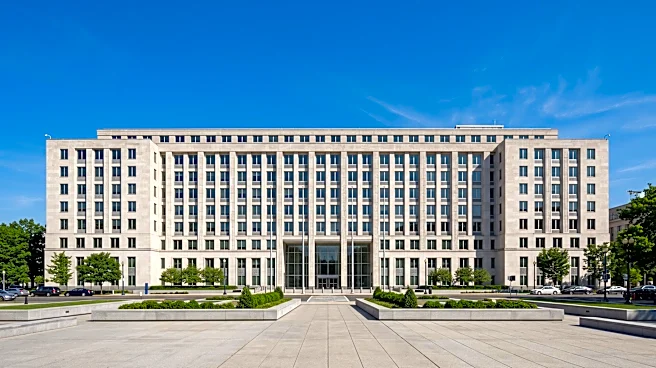








On July 23, 1940, the United States, through its acting Secretary of State Sumner Welles, issued a diplomatic statement that would shape its foreign policy for half a century. The Welles Declaration condemned the Soviet Union's forcible occupation and annexation of Estonia, Latvia, and Lithuania, firmly refusing to recognize these actions. This declaration was not merely a symbolic gesture; it established a consistent U.S. policy of non-recognition
that provided crucial support to the Baltic states during their long period under Soviet rule and beyond.
A Policy Forged in Crisis
The declaration emerged during a period of intense global upheaval, following the outbreak of World War II in September 1939. The Soviet invasion of the Baltic states in June 1940 was a direct consequence of the secret protocols within the 1939 Nazi-Soviet Pact, which outlined the partition of independent nations between Germany and the USSR. Despite the U.S. having pursued a non-interventionist policy since World War I, driven by a desire to avoid further European conflicts, the principle of rejecting territorial changes executed by force was paramount.
The Welles Declaration was an application of the 1932 Stimson Doctrine, which had previously criticized Japan's invasion of Manchuria. This doctrine served as a foundational basis for President Franklin Roosevelt's administration, which consistently opposed violent territorial expansion. While the Baltic region held limited strategic importance for the U.S., the presence of established diplomatic relationships and the administration's commitment to international principles necessitated a strong response, even as the U.S. and the United Kingdom anticipated their own future involvement in the broader war.
Practical Impact and Sustained Support
Despite the U.S. not engaging the Soviet Union militarily in the Baltic region, the Welles Declaration had significant practical implications. One of its most crucial effects was enabling the Baltic states to maintain independent diplomatic missions in the United States. These missions served as vital symbols of their continued sovereignty and provided a voice for their people on the international stage, even while their homelands were under occupation.
Furthermore, Executive Order 8484, issued in conjunction with the declaration, played a critical role in protecting Baltic financial assets. This measure prevented these assets from being seized or controlled by the Soviet Union, thereby preserving resources that could potentially aid in the future re-establishment of independent Baltic governments. The declaration's essence was not a fleeting policy; it was consistently supported by every subsequent U.S. president and reinforced through congressional resolutions, demonstrating a remarkable continuity in U.S. foreign policy.
Re-establishing Independence
The five-decade policy of non-recognition established by the Welles Declaration finally saw its ultimate vindication with the re-establishment of Baltic independence. In 1990 and 1991, Estonia, Latvia, and Lithuania regained their sovereignty, marking the end of the Soviet occupation. The consistent U.S. stance, rooted in the Welles Declaration, provided moral and diplomatic support throughout this long period, ensuring that the international community did not forget the illegal nature of the annexation.
The declaration's enduring legacy underscores the power of diplomatic principles, even in the face of overwhelming military force. It demonstrated that a nation could uphold its values and support the self-determination of others without direct military intervention, influencing the course of history and contributing to the eventual freedom of the Baltic states.