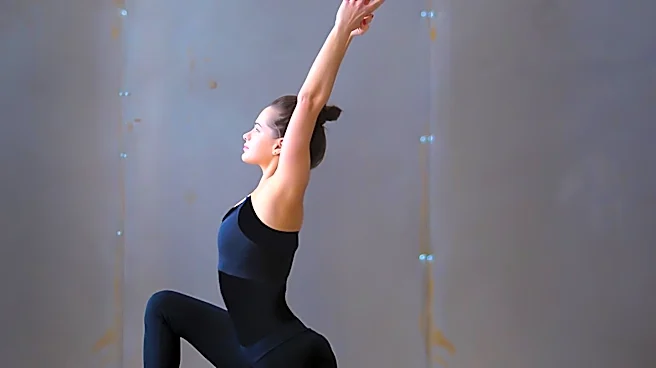



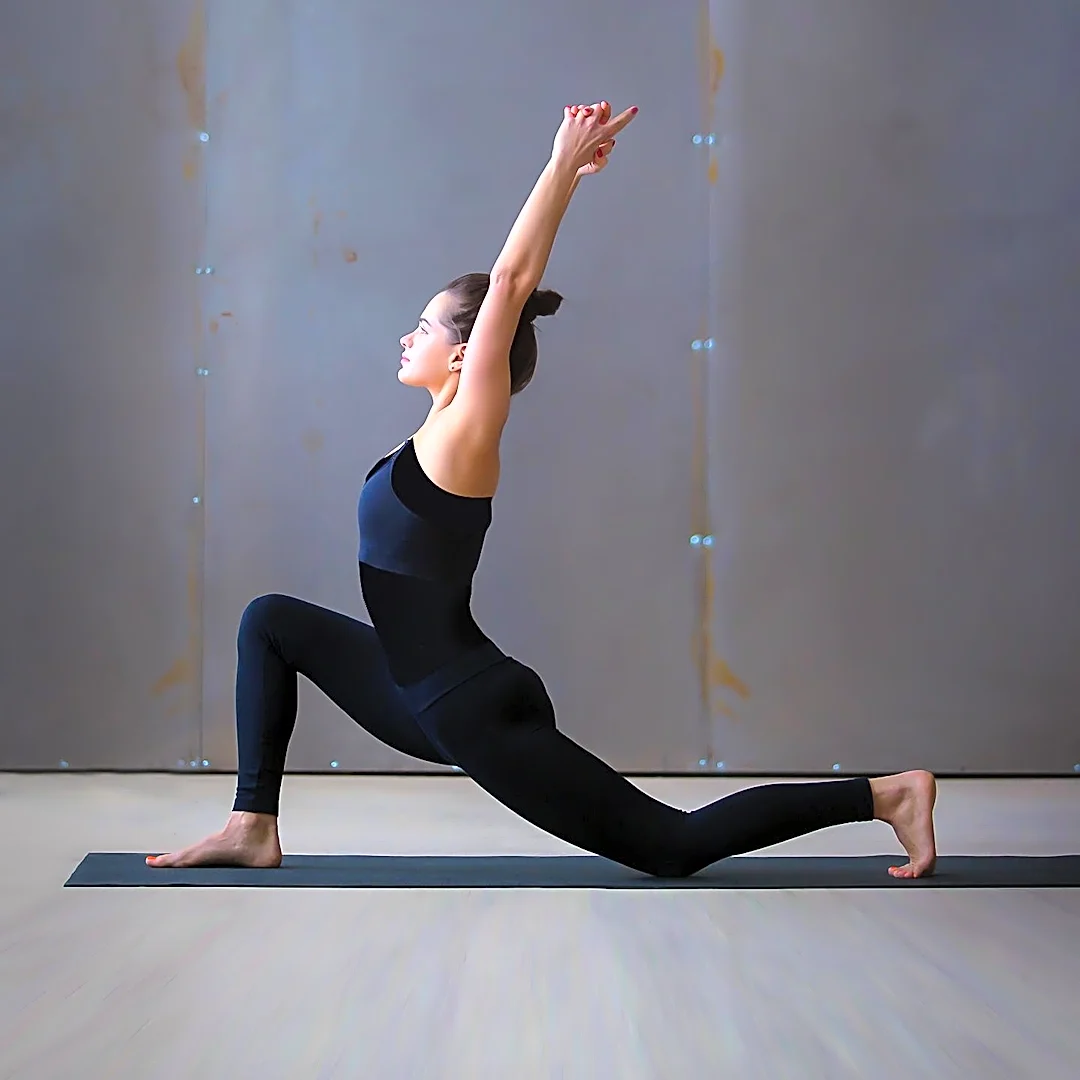

Anjaneyasana, often recognized as Crescent Moon Pose, Low Lunge, or Ashva Sanchalanasana (Equestrian Pose), is a fundamental back-bending asana within the realm of modern yoga as exercise. This pose involves a lunge position where the back knee is typically lowered to the ground, the back is arched, and the arms are raised and stretched overhead. It is a versatile posture with several variations, each offering a unique challenge or preparatory step
for more advanced poses. Understanding Anjaneyasana provides insight into the foundational movements and principles common in many contemporary yoga styles.
The Core Posture and Its Nomenclature
The name Anjaneyasana itself carries significance, being a matronymic for the Hindu deity Hanuman, whose mother was Anjani. Hanuman is a central figure in the epic Ramayana and is considered an important Ishta-devata in devotional worship. The pose is entered from a lunge, with specific alignment cues that can vary slightly between yoga styles. Generally, the back knee is lowered to the ground, the spine is arched, and the arms extend upwards. The positioning of the back foot's toes can differ; in styles like Ashtanga Yoga, the toes are pointed back with the top of the foot on the floor, while in Sivananda Yoga, the toes are often tucked under. The front foot remains firmly planted, with the hips lowered towards it and the front knee fully bent and pointing forward.This pose is sometimes incorporated into the Surya Namaskar (Sun Salutation) sequence, though in that context, the arms are typically kept down rather than raised overhead. Its inclusion in such sequences highlights its role as a transitional or foundational posture that helps prepare the body for deeper stretches and more complex movements. The simplicity of its basic form belies the depth of engagement it can offer, making it accessible to practitioners of varying levels.
Key Variations and Preparatory Poses
Anjaneyasana serves as a base for several important variations and preparatory poses. One significant variation is Parivritta Anjaneyasana, also known as Revolved Anjaneyasana. This is a rotated form of the pose and acts as a preparatory step for Parivritta Parsvakonasana, a pose where the rear knee is lifted off the floor. In Parivritta Anjaneyasana, the practitioner brings the elbow opposite to the bent forward knee across the body, while the rear knee remains on the floor, creating a spinal twist.Another notable variation is Utthana Pristhasana, commonly referred to as Lizard Pose. In this variant, the forearms are lowered to the floor, intensifying the hip opening aspect of the pose. This modification offers a deeper stretch in the hips and groin area compared to the standard Anjaneyasana. Furthermore, the transition from Anjaneyasana can lead to other poses; by moving the front foot onto its side so the knee comes to the ground, one can transition into Rajakapotasana, a related backbend. These variations demonstrate the adaptability of Anjaneyasana and its role in building towards a broader range of yoga postures.
Advanced Forms and Related Postures
Beyond the basic variations, Anjaneyasana also has more advanced expressions. In Ashtanga Yoga, the full asana is known as Raja Anjaneyasana. This advanced form involves lifting the rear foot and grasping it with both hands, with the head resting on the lifted foot and the elbows pointing upwards. This requires significant flexibility in the back and hips, as well as considerable balance and strength.Some teachers also use terms like Crescent Moon Pose or High Lunge to describe a lunge with a raised back knee and raised hands, similar to Virabhadrasana I but with the practitioner on the ball of the back foot. This "High Lunge" variation is considered more challenging than the traditional Anjaneyasana (Low Lunge) because it demands both strength and balance. For those needing support, this pose can be modified using a chair, either by holding the back of the chair with outstretched hands or by resting the back of the front thigh on the chair seat. These adaptations highlight how Anjaneyasana, in its various forms, can be modified to suit different levels of practice and physical capabilities.