

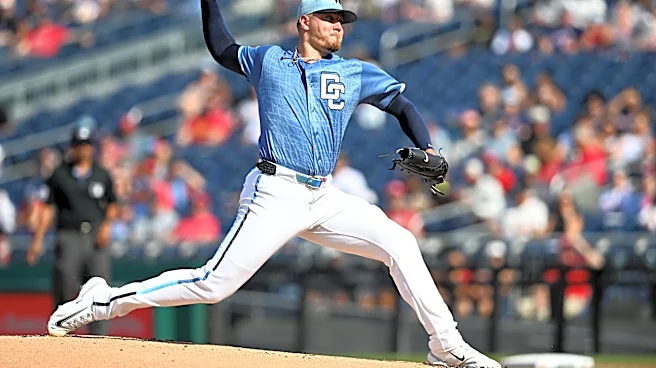
The 1924 World Series culminated in one of the most dramatic Game 7s in baseball history, a contest that saw the Washington Senators clinch their first-ever championship against the New York Giants. Played at Griffith Stadium in Washington, D.C., this deciding game was a nail-biting affair that stretched into extra innings and featured improbable plays, solidifying its place in sports lore. The Senators' victory marked a significant moment for the franchise
and the city, ending a hard-fought series that captivated fans.
The Eighth-Inning Turning Point
The Senators found themselves trailing the Giants 3–1 in the bottom of the eighth inning. The tension was palpable as Washington sought to mount a comeback. With bases loaded and two outs, Senators' manager Bucky Harris stepped up to the plate. What followed was a play that would become legendary. Harris hit a ground ball towards third base, a seemingly routine play that Giants third baseman Freddie Lindstrom was poised to handle. However, fate intervened when the ball reportedly struck a pebble on the field, causing it to take an unexpected "bad hop" over Lindstrom's head. This bizarre turn of events allowed two runners to score, tying the game at three runs apiece and injecting new life into the Senators' dugout and the home crowd.
Walter Johnson's Heroic Relief Appearance
Following the dramatic eighth-inning tie, the legendary Walter Johnson entered the game in relief for the Senators in the ninth inning. Johnson, at 36 years old and nearing the end of his illustrious career, was making his first World Series appearance. Despite having lost both of his previous starts in the series, he delivered a performance for the ages. Johnson held the Giants scoreless through the ninth inning and continued to dominate into extra innings, pitching four consecutive scoreless frames. His ability to shut down the Giants' offense under immense pressure was crucial in keeping Washington's championship hopes alive and set the stage for the eventual victory.
The Twelfth-Inning Decider
With the score still deadlocked at 3–3, the game extended into the twelfth inning. The Washington Senators came to bat, determined to end the marathon contest. With one out and runners on first and second, Earl McNeely hit another ground ball towards Giants third baseman Freddie Lindstrom. In a remarkable echo of the eighth inning, the ball once again took a bad hop, eluding Lindstrom. This second "bad hop" allowed Muddy Ruel to score the Series-winning run, securing the championship for the Senators. The dramatic conclusion, marked by these two unusual plays, cemented Game 7 as one of the most memorable and dramatic in World Series history.
A Historic Victory for Washington
The 1924 World Series victory was not just a triumph for the Washington Senators but also a historic moment for the city of Washington, D.C. It marked the first major professional sports championship ever won by a team based in the nation's capital. This achievement was particularly significant for Walter Johnson, who, despite his advanced age for a player, finally earned a World Series win in a relief role. The series also introduced the 2–3–2 home game pattern, which would become the permanent format for future World Series, further adding to its historical footprint. The Senators' only World Series championship during their time in Washington remains a cherished memory, a testament to resilience and a touch of unexpected luck.