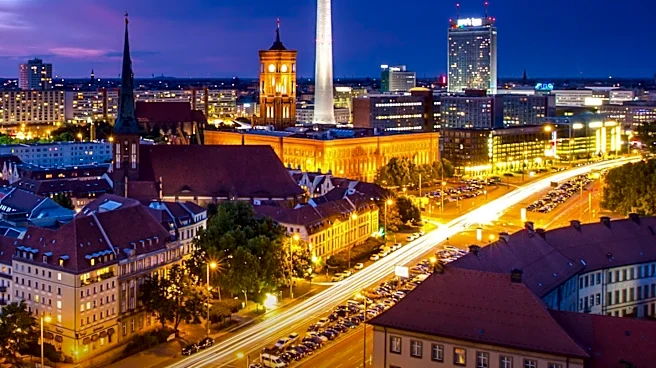






Berlin stands as a vibrant global city, renowned for its significant contributions to culture, education, and international diplomacy. Beyond its historical landmarks, the city is a dynamic center for learning, artistic expression, and interfaith dialogue, attracting people from across the globe. Its numerous universities, museums, and diplomatic missions underscore its role as a nexus of intellectual and cultural exchange, making it a truly international metropolis.
Academic Excellence and Cultural Institutions
Berlin is home to several prestigious universities, including Humboldt University of Berlin, Technische Universität Berlin, the Berlin University of the Arts, and the Free University of Berlin. These institutions contribute to the city's reputation as a leading center for research and higher education, drawing students and scholars worldwide. The city's commitment to knowledge extends to its numerous libraries, providing extensive resources for academic and public use.
Culturally, Berlin boasts an impressive array of institutions. Museum Island, a UNESCO World Heritage Site, houses five museums built between 1830 and 1930, offering a comprehensive journey through art, history, and archaeology. The Kulturforum, located west of Potsdamer Platz, further enriches Berlin's cultural landscape with institutions like the Gemäldegalerie, Neue Nationalgalerie, and the Berliner Philharmonie, home to the Berlin Symphony Orchestra. The city is also a significant hub for film, with Babelsberg Studio recognized as the world's first large-scale movie studio complex, and many films choosing Berlin as their setting.
Religious Diversity and International Presence
Berlin's cultural richness is complemented by its remarkable religious diversity. The city serves as the seat of the Roman Catholic archbishop of Berlin and the elected chairperson of EKBO (Evangelische Kirche Berlin-Brandenburg-schlesische Oberlausitz), who holds the title of bishop. Additionally, Berlin hosts many Orthodox cathedrals, such as the Cathedral of St. Boris the Baptist, one of the two seats of the Bulgarian Orthodox Diocese of Western and Central Europe, and the Resurrection of Christ Cathedral of the Diocese of Berlin (Patriarchate of Moscow). This demonstrates Berlin's role as a significant center for various Christian denominations.
Beyond Christianity, Berlin embraces a wide spectrum of faiths. The city is home to over eleven synagogues, several Buddhist temples, two Hindu temples, and seven mosque buildings, alongside 91 Islamic prayer rooms. The oldest mosque, the Wilmersdorfer Mosque, opened in 1928, while the largest, the Şehitlik Mosque, opened in 2005. Since 1999, Berlin has also been the seat of the Central Council of Jews in Germany, and its Jewish community is the largest in Germany, with over 12,000 members. The Baháʼí community, present since 1907, actively participates in interfaith dialogue, further highlighting Berlin's commitment to religious pluralism.
Global Diplomacy and Tourism
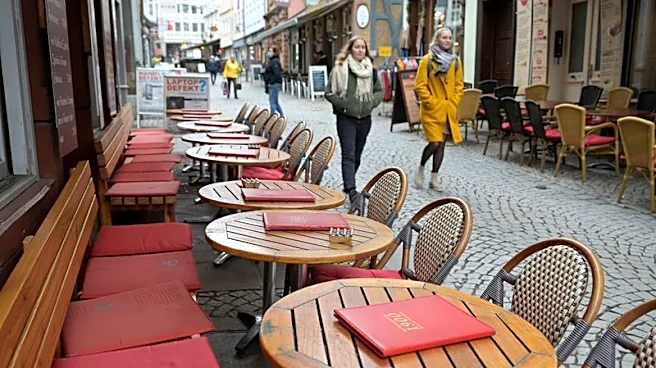
As the capital of Germany, Berlin plays a crucial role in international relations. In 2023, 158 states maintained their German embassy seats in Berlin, with many diplomatic representations located in the Tiergartenviertel. This concentration of diplomatic activity solidifies Berlin's position as an influential center in European politics. The city's global appeal is also evident in its thriving tourism sector. Berlin is one of the most visited centers for national and international city tourism, attracting over 12.7 million guests in 2024, resulting in approximately 30.5 million overnight stays. Visitors are drawn to its architecture, restaurants, historical sites, museums, festivals, shopping, nightlife, and large-scale events, making tourism a vital pillar of the regional economy.