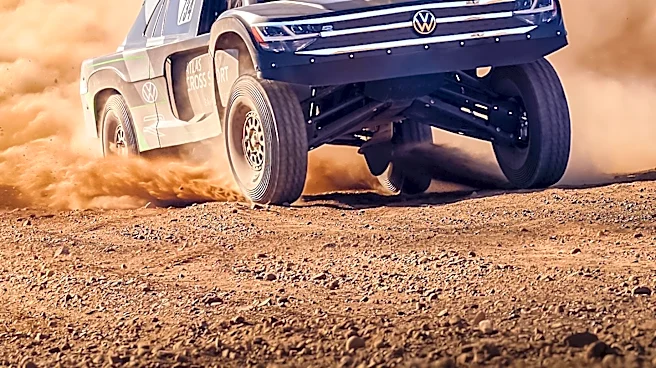




Trophy trucks have become synonymous with high-speed desert racing, showcasing incredible engineering and performance capabilities. Since their introduction in 1994, these vehicles have undergone significant transformations, evolving from modified production trucks to purpose-built racing machines. This article delves into the historical development of trophy trucks, highlighting key advancements and milestones that have shaped their evolution.
The Birth of Trophy Trucks
The
concept of trophy trucks emerged in 1994, marking a departure from the previous Class-8 rules that required competitors to use production frames. This new class offered racers greater freedom in vehicle design, allowing for innovative engineering solutions. The introduction of trophy trucks was a game-changer, as it enabled the development of full-tube chassis and advanced suspension systems, leading to unprecedented performance levels.
Initially, trophy truck designs varied widely, with no two trucks being the same. This period of experimentation and innovation laid the groundwork for the future of off-road racing. Engineering firms such as Geiser Brothers, Jimco, Racer Engineering, and ID Designs became known for producing successful trophy trucks, setting the stage for the rapid development that followed.
Technological Advancements
Over the years, trophy trucks have seen remarkable technological advancements, particularly in their chassis and suspension systems. Most trophy trucks now feature a 4130 chromoly steel tube-frame chassis covered by aerodynamically engineered composite bodies. This construction provides the necessary strength and durability to withstand the rigors of desert racing.
Suspension travel has also seen significant improvements, with trophy trucks now boasting around 24 inches of wheel travel in the front and 36 inches in the rear. This allows for better handling and stability on rough terrain. The use of independent A-arm front suspension designs and solid rear axles with three or four-link setups has become standard, enhancing the trucks' off-road capabilities.
Power and Performance
The powertrain of trophy trucks has evolved to deliver exceptional performance. Most trophy trucks are powered by large displacement V8 engines, typically producing over 1100 horsepower. These engines are naturally aspirated, with Ford and Chevrolet V8s being popular choices among competitors. Turbocharged diesel motors are also allowed, providing an alternative power source for racers.
Transmission options have expanded to include both three-speed automatic and six-speed sequential gearboxes. The three-speed TH400 gearbox remains popular due to its long gear ratios and ability to handle torque spikes, while the six-speed sequential gearbox offers quick gear changes, appealing to racers seeking versatility.
The evolution of trophy trucks has been marked by continuous innovation and technological advancements, transforming them into high-speed off-road machines capable of tackling the toughest desert races. As the sport continues to grow, trophy trucks remain at the forefront of off-road racing, pushing the boundaries of performance and engineering.