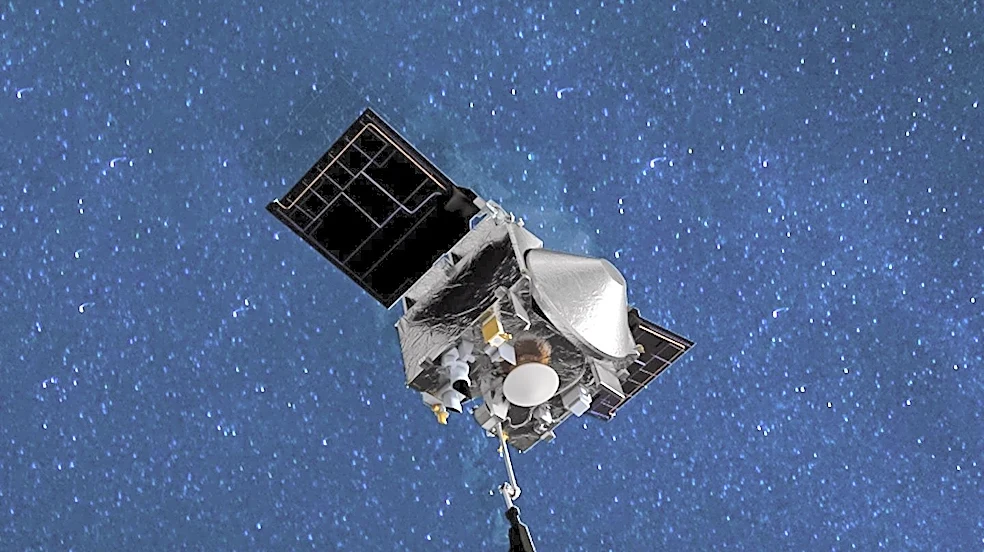





The OSIRIS-REx mission, a NASA initiative, embarked on a remarkable journey to asteroid 101955 Bennu, culminating in the successful return of asteroid samples to Earth. This mission, whose name stands for Origins, Spectral Interpretation, Resource Identification, Security, Regolith Explorer, was designed to provide scientists with direct access to material from the early solar system. From its launch in 2016 to its sample delivery in 2023 and its subsequent
extended mission, OSIRIS-REx has demonstrated advanced capabilities in space exploration and sample return technology.
Initial Phases: Launch, Earth Flyby, and Rendezvous with Bennu
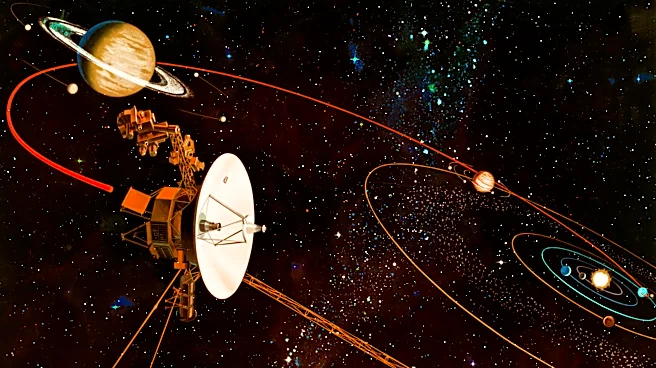
The OSIRIS-REx spacecraft was launched on September 8, 2016, marking the beginning of its seven-year primary mission. After its launch, the spacecraft performed a crucial Earth flyby on September 22, 2017. This maneuver was not merely a pass-by but a gravity assist, utilizing Earth's gravitational pull to alter the spacecraft's trajectory and gain speed, setting it on course for its ultimate destination. This slingshot effect was vital for conserving fuel and optimizing the travel time to Bennu.
Following its Earth flyby, OSIRIS-REx continued its deep space transit, eventually reaching asteroid Bennu on December 3, 2018. This rendezvous marked the end of the long cruise phase and the beginning of the intensive study period. Upon arrival, the spacecraft entered orbit around Bennu on December 31, 2018, at an unprecedented distance of approximately 1.75 kilometers. This was the closest a spacecraft had ever orbited a celestial object, surpassing the 7 kilometers achieved by the Rosetta probe around Comet 67P/Churyumov-Gerasimenko. At this altitude, it took the spacecraft 62 hours to complete one orbit around Bennu, allowing for detailed mapping and reconnaissance.
Detailed Survey and Sample Acquisition
For the next two years, OSIRIS-REx meticulously analyzed Bennu's surface. This extensive mapping and remote sensing campaign was critical for identifying a safe and scientifically valuable site for sample collection. The spacecraft's instruments gathered data to understand the asteroid's composition, topography, and surface features. This detailed survey revealed that Bennu's surface was more rugged than initially anticipated, requiring adjustments to the sample collection strategy.
On October 20, 2020, OSIRIS-REx executed its historic "Touch-And-Go" (TAG) maneuver, successfully collecting a sample from Bennu's surface. This complex operation involved briefly touching the asteroid with its sampling arm and releasing a burst of nitrogen gas to stir up surface material, which was then captured. After confirming the sample acquisition, OSIRIS-REx departed from Bennu on May 10, 2021, commencing its journey back to Earth. The sample return capsule, containing the asteroid material, successfully re-entered Earth's atmosphere and landed on September 24, 2023, bringing the primary mission to a triumphant close.
The Extended Mission: OSIRIS-APEX to Apophis
With its primary mission accomplished, the OSIRIS-REx spacecraft was not retired. Instead, it was given a new assignment: an extended mission named OSIRIS-APEX (OSIRIS-Apophis Explorer). This new phase involves a journey to study another near-Earth asteroid, 99942 Apophis. The spacecraft is expected to arrive at Apophis in April 2029. This extended mission leverages the spacecraft's existing capabilities and provides an opportunity to gather more data on different types of asteroids, further expanding our understanding of these celestial bodies and their role in the solar system's evolution.