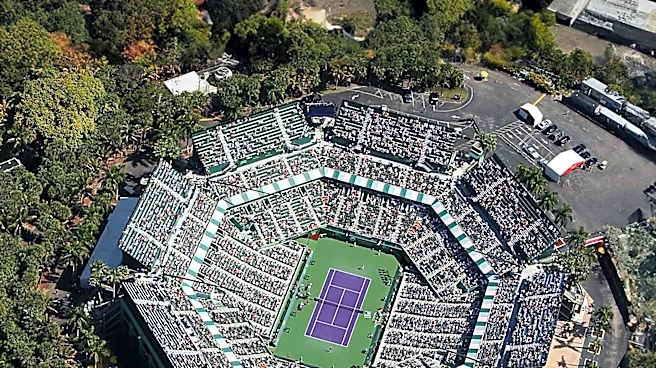





The 1938 U.S. National Championships, now recognized as the US Open, marked a pivotal moment in tennis history, primarily due to American player Don Budge's unprecedented achievement. This tournament, the 58th staging of the U.S. National Championships and the fourth Grand Slam event of the year, was held on the outdoor grass courts of the West Side Tennis Club in Forest Hills, New York. Beyond the athletic feats, the event also faced significant
challenges from nature, adding another layer to its historical narrative.
Don Budge's Historic Grand Slam
Don Budge etched his name into the annals of tennis by becoming the first player ever to achieve a Grand Slam. This remarkable feat involved winning all four major tennis tournaments—the Australian Championships, French Championships, Wimbledon Championships, and the U.S. National Championships—within a single calendar year. His victory in the men's singles title at Forest Hills solidified this historic accomplishment, setting a new benchmark for excellence in the sport. Budge's dominance wasn't limited to singles; he also secured victories in the men's doubles and mixed doubles events at the 1938 U.S. National Championships, showcasing his all-around prowess on the court.
His path to the men's singles title included a final match against fellow American Gene Mako, which Budge won with a score of 6–3, 6–8, 6–2, 6–1. This victory not only crowned him the U.S. National Champion but also completed his sweep of the year's major tournaments, a feat that had never been accomplished before. The significance of this achievement resonated throughout the tennis world, establishing Budge as a legendary figure and inspiring future generations of players.
Weather Challenges and Tournament Prolongation
The 1938 U.S. National Championships faced an unexpected and severe challenge from the weather. Originally scheduled to run from Thursday, September 8, until Saturday, September 17, the tournament was significantly prolonged due to the impact of the 1938 New England hurricane. This powerful storm caused poor weather conditions that disrupted the schedule, forcing organizers to extend the event until Saturday, September 24.
The hurricane's interference meant that players and officials had to contend with adverse conditions, which likely added an extra layer of difficulty to an already demanding competition. Despite these environmental obstacles, the tournament ultimately concluded, albeit later than planned. The resilience shown by the organizers and players in the face of such a natural disaster further highlights the memorable nature of the 1938 championships, demonstrating their commitment to completing the prestigious event despite the unforeseen circumstances.
Other Notable Champions and Tournament Details
While Don Budge's Grand Slam was the headline story, other champions also emerged from the 1938 U.S. National Championships. Alice Marble, another American tennis star, claimed the women's singles title. Her victory further cemented the strong performance of American players at their home Grand Slam event. Marble defeated Australia's Nancye Wynne Bolton in the women's singles final with a decisive score of 6–0, 6–3.
In addition to her singles triumph, Alice Marble also partnered with Don Budge to win the mixed doubles title, underscoring their combined dominance. She also secured the women's doubles title alongside Sarah Palfrey Cooke. The tournament itself was the 58th edition of the U.S. National Championships, held on grass courts, a surface that was common for major tennis events of that era. The event's location at the West Side Tennis Club in Forest Hills, New York, provided a classic setting for these historic matches, even as the weather presented its unique challenges.