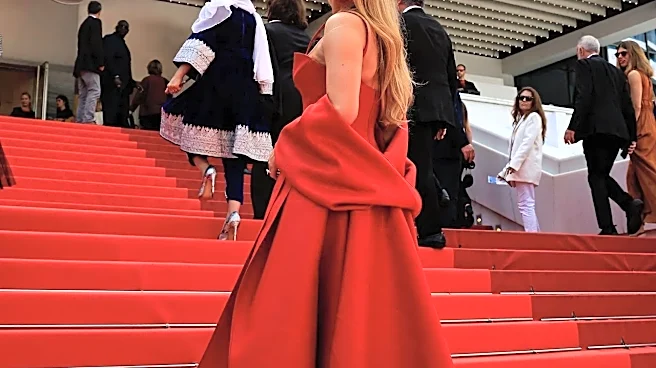









The von Restorff effect, a cornerstone in the study of memory, bears the name of its discoverer, Hedwig von Restorff. A German psychiatrist and pediatrician, von Restorff (1906–1962) made a significant contribution to psychology with her 1933 study, which first described what is also known as the isolation effect. Her work demonstrated a fundamental principle of human memory: items that stand out from their surroundings are more likely to be remembered.
This insight has had lasting implications for understanding how we process and recall information.
Von Restorff's Groundbreaking 1933 Study
Hedwig von Restorff's seminal 1933 study was pivotal in establishing the isolation effect. In her experiments, participants were presented with lists of items that were largely homogeneous, meaning they were categorically similar. Crucially, each list included one item that was distinctive or "isolated" from the rest. Von Restorff observed that memory for this unique, isolated item was consistently improved compared to the other, similar items on the list. This finding provided empirical evidence for the power of distinctiveness in enhancing recall.
The methodology employed in her study utilized what she termed the "isolation paradigm." This paradigm refers to the creation of a distinctive feature for an item within a list, causing it to differ from the others along a specific dimension. The distinctiveness could be generated by altering the meaningfulness or physical nature of the stimulus. Examples of such alterations include changes in size, shape, color, spacing, or underlining. Von Restorff's careful experimental design allowed her to isolate and measure the impact of these distinctive features on memory performance.
The Isolation Paradigm and Its Mechanisms
Von Restorff's use of the isolation paradigm was designed to further investigate interference effects in memory. Despite some contemporary criticism regarding the use of nonsense syllables in psychological research, von Restorff dedicated the first page of her published paper to defending her choice of these syllables. Her experiments involved presenting participants with three lists of items over a three-day period. On the first day, the items were unrelated and consisted of five different types of materials, ending with a total of eight pairs. Half of these pairs were nonsense syllables (homogeneous pairs), while the other half represented four other types of materials, such as numbers, words, letters, and symbols.
On the subsequent two days, participants received lists that contained one isolated item among otherwise homogeneous items. The isolated item was strategically placed, appearing at either the second or third position in the list. Participants were given specific memory instructions and were later tested on their recall of the items shown. This meticulous approach allowed von Restorff to systematically demonstrate that items that "stand out" are better retained than those that blend in with their surroundings. Her work laid the groundwork for future research into the cognitive processes that contribute to this enhanced memory for distinctive information.