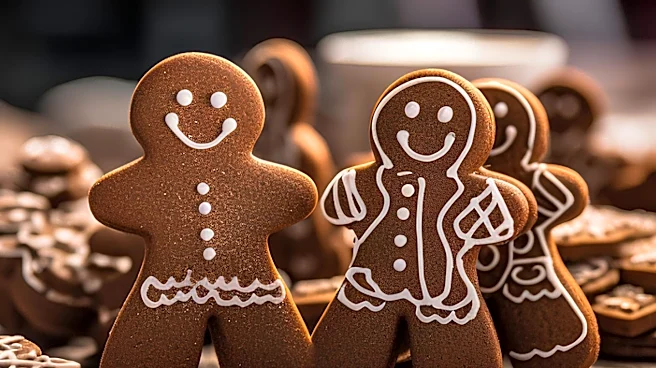






Gingerbread, a beloved category of baked goods, boasts a rich and extensive history that spans centuries and continents. Characterized by its distinctive flavor profile of ginger, cloves, nutmeg, and cinnamon, and sweetened with honey, sugar, or molasses, gingerbread has evolved from ancient honey cakes to the diverse forms we recognize today, including moist loaf cakes and crisp cookies. Its journey from medieval European culinary traditions to a staple
in American households reflects a fascinating cultural exchange and adaptation of ingredients and techniques.
Early Origins and European Spread
The roots of gingerbread can be traced back to ancient Rome, with records of honey cakes existing in antiquity. The modern form of gingerbread, however, largely descends from medieval European culinary traditions. A French legend attributes its introduction to Europe in 992 by the Armenian monk Gregory of Nicopolis, who reportedly taught priests and other Christians how to make it in Bondaroy, France. By the 13th century, gingerbread was being shaped into various forms by monks in Franconia, Germany. The craft of Lebkuchen baking, a type of gingerbread, was recorded as early as 1296 in Ulm and 1395 in Nuremberg, Germany. Nuremberg eventually earned the title of "Gingerbread Capital of the World" in the 17th century, as its guild began employing master bakers and skilled workers to create intricate gingerbread art.The custom of gingerbread making spread across Europe during the 13th century. German immigrants brought it to Sweden, with references from Vadstena Abbey indicating Swedish nuns baked gingerbread to aid indigestion as early as 1444. Medieval bakers often used carved boards to create elaborate designs, and gingerbread figurines date back to the 15th century. The 16th century saw the practice of figural biscuit-making, with Queen Elizabeth I of England famously having gingerbread figures made in the likeness of her important guests.
Gingerbread in the Americas: A New Chapter
When European settlers arrived in the Americas, they brought their gingerbread traditions with them. This marked a significant turning point for the confection, as molasses, being less expensive than sugar, quickly became a common ingredient. The incorporation of molasses led to a softer, cake-like gingerbread that became characteristic of American varieties. The first printed American cookbook, "American Cookery" by Amelia Simmons, published in 1796, featured seven different gingerbread recipes. Notably, her recipe for "Soft gingerbread to be baked in pans" is considered the first written recipe for the old-fashioned American gingerbread cake.In colonial North America, the tradition of gingerbread continued, with pastries baked as ginger snap cookies gaining popularity as Christmas tree decorations. German-speaking communities in Pennsylvania and Maryland maintained medieval gingerbread traditions well into the early 20th century, often consuming these pastries dipped in wine or other alcoholic beverages during winter months.
Regional Variations and Cultural Significance
Across Europe and beyond, gingerbread developed distinct regional variations and cultural significance. In England, gingerbread can refer to either a cake or a biscuit, with gingerbread men commonly served around Christmas. These figures were first attributed to Queen Elizabeth I's court. A soft gingerbread cake made with oatmeal and treacle, known as "parkin," is popular in northern England, particularly Yorkshire.In Germany, gingerbread comes in two main forms: a soft Lebkuchen and a harder, decorative version often found at carnivals and Christmas markets. These hard gingerbreads are shaped and adorned with sweets and icing. At Munich's Oktoberfest, it is customary for men to buy large heart-shaped gingerbread cookies with romantic phrases like "Ich liebe dich" (I love you) for their sweethearts. In the Nordic and Baltic countries, thin, brittle biscuits called pepperkaker or pepparkakor are popular, especially during Christmas, and are even used as window decorations. These diverse forms highlight gingerbread's enduring appeal and its deep integration into various cultural celebrations and culinary landscapes worldwide.