







"The Daily Show," an American satirical news program, first premiered on Comedy Central in 1996, marking the beginning of a long-running and influential series. Conceived by Lizz Winstead and Madeleine Smithberg, the show was initially marketed as a replacement for "Politically Incorrect," which had moved to ABC. Over its decades on air, "The Daily Show" has seen several hosts, each leaving their distinct mark and guiding the program through various
stylistic and thematic shifts, from its early days parodying conventional newscasts to its later focus on political commentary and media criticism.
The Kilborn Era: Early Satire and Character-Driven Humor
Craig Kilborn hosted "The Daily Show" from its debut on July 22, 1996, until December 17, 1998. During his tenure, the show aimed to parody traditional newscasts, featuring a comedic monologue of the day's headlines. It also included mockumentary-style on-location reports, in-studio segments, and debates from regular correspondents like Winstead, Brian Unger, Beth Littleford, and A. Whitney Brown. Common segments during this period included "This Day in Hasselhoff History" and "Last Weekend's Top-Grossing Films, Converted into Lira," which parodied entertainment news shows. Kilborn's interviews often concluded with a segment called "Five Questions," where guests answered a series of questions combining obscure facts and subjective opinions.
Initially, the show was recorded without a studio audience, relying on the laughter of its off-camera staff. A studio audience was incorporated for its second season and has remained since. The Kilborn era was characterized by a less political focus compared to later iterations, leaning more towards character-driven humor. Some critics, however, found the show during this period to be mean-spirited, particularly towards interview subjects in field pieces. There were also reports of backstage friction, notably between Kilborn and co-creator Lizz Winstead, who disagreed on the show's direction. Winstead preferred a news-driven focus, while the network pushed for a hybrid of entertainment and politics. Kilborn's departure in 1998 led him to host CBS's "The Late Late Show," and he claimed the "Five Questions" segment as intellectual property, preventing its use by future "Daily Show" hosts.
The Stewart Era: Political Focus and Critical Acclaim
Jon Stewart took over as host on January 11, 1999, and his tenure, which lasted until August 6, 2015, marked a significant shift in the show's direction. Retitled "The Daily Show with Jon Stewart," the program became much more strongly focused on politics and national media. Stewart initially retained much of the existing staff and talent, allowing for a smooth transition of many segments, though some evolved into new forms. The show's theme music, "Dog on Fire" by Bob Mould, was re-recorded by They Might Be Giants shortly after Stewart joined.
Under Stewart, and with the influence of former "The Onion" editor Ben Karlin, who joined as head writer, "The Daily Show" developed a sharper political edge. Stewart encouraged correspondents to have a political viewpoint and infuse their passion into their comedy. The show's coverage of the 2000 election recount, dubbed "Indecision 2000," is often cited as the point where it found its editorial voice. Following the September 11th attacks, Stewart's somber monologue upon the show's return resonated deeply, establishing him as a trusted national figure. The show gained popularity and critical respect, winning numerous Primetime Emmy Awards and Peabody Awards. Its ratings steadily increased, reaching nearly two million viewers per night by September 2008. Stewart's interviews with prominent political figures, including President Barack Obama, Vice President Joe Biden, and various presidential candidates, became notable events. He was also praised for his advocacy, such as his dedication of an entire broadcast to the James Zadroga 9/11 Health and Compensation Act, which contributed to its passage.
The Noah Era and Beyond: Adapting to a Changing Media Landscape
Trevor Noah succeeded Jon Stewart as host, with his tenure beginning on September 28, 2015, and concluding in 2022. Noah brought stylistic changes, including an updated set, new graphics, and a monologue sometimes delivered while standing. He also incorporated more millennial-based references, impersonations, and characterizations, reflecting his younger demographic and multilingual abilities. Noah's approach differed from Stewart's in that he avoided focusing heavily on Fox News, recognizing a broader and more fragmented media landscape. He noted that the news cycle had evolved beyond a 24-hour format, with online sources like Gawker and BuzzFeed playing a significant role, and that the challenge was to integrate all these elements rather than target a single source.
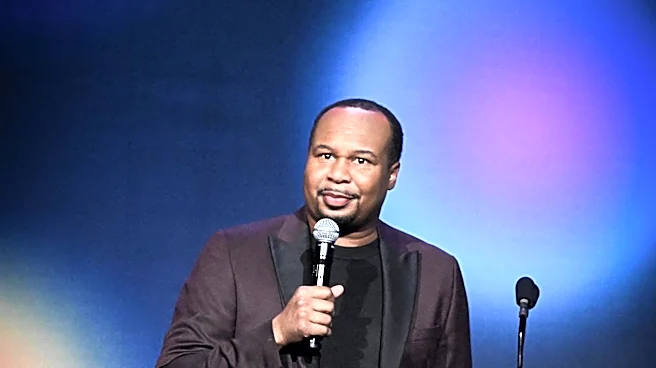
During Noah's time, the show introduced new correspondents like Roy Wood Jr., Desi Lydic, and Ronny Chieng. The program also adapted to external events, such as the COVID-19 pandemic, during which it transitioned to "The Daily Social Distancing Show," filmed from Noah's apartment. This format earned a Webby Award for Humor. Following Noah's departure, the show transitioned to a format featuring weekly rotating guest hosts starting in January 2023. Jon Stewart later returned in February 2024 to host the Monday night episodes, with correspondents hosting the other days of the week, indicating a continued evolution for this long-standing satirical news program.
Studio Evolution and Production Details
"The Daily Show" has seen several studio changes throughout its history. It relocated from its original New York studio in late 1998 to NEP Studio 54 in Hell's Kitchen, where it remained until 2005. It then moved to NEP Studio 52 at 733 11th Avenue, where a sleeker, more formal set was introduced, including a backdrop of three large projection screens. The traditional guests' couch, a feature since the show's premiere, was replaced by upright chairs, a change that initially sparked a "Bring Back the Couch" campaign among fans. A new set debuted in 2007, featuring a large global map behind Stewart and a J-shaped desk. Trevor Noah's debut in 2015 also brought a new set, with a second on-stage 'jumbo-tron' and lighter colors, along with revamped graphics and theme music. The show typically tapes four new episodes a week, Monday through Thursday, for forty-two weeks a year, broadcasting at 11 PM Eastern/10 PM Central, a time slot that often precedes most other late-night comedy programs.