





In the world of "Leave It to Beaver," the Cleaver family's house was more than just a setting; it was an integral part of their suburban life, witnessing countless misadventures and heartwarming moments. The series, which followed the lives of Theodore "Beaver" Cleaver, his older brother Wally, and their parents Ward and June, established a quintessential American suburban backdrop. The house, with its familiar facade and interior, became a symbol
of stability and the idealized family life portrayed in the sitcom. Its presence was so central that even changes to its address within the fictional town of Mayfield marked a notable point in the show's narrative.
A Change of Address and Enduring Presence on the Universal Lot
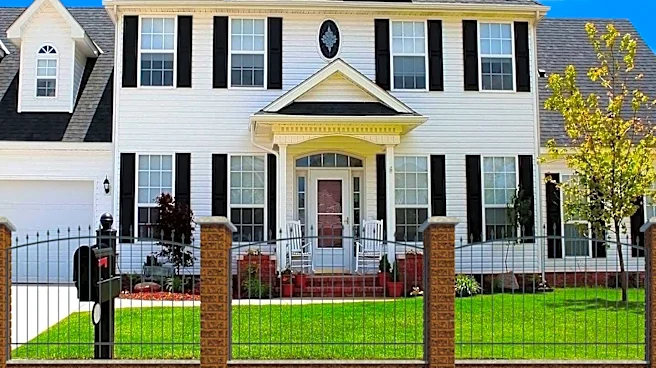
For the first two seasons of "Leave It to Beaver," the Cleaver family resided at 485 Mapleton Drive. However, with the start of season three, they moved to a new address: 211 Pine Street, also located in the fictional town of Mayfield. This change of residence, though a minor detail in the grand scheme of the show, provided a fresh backdrop for the family's ongoing stories. The house at 211 Pine Street became the iconic image associated with the Cleavers for the remainder of the series' run.
Remarkably, the physical set of the Cleaver house had a life beyond "Leave It to Beaver." In 1969, just six years after the sitcom concluded, the house was reused for another successful Universal-produced television series, "Marcus Welby, M.D." This demonstrates the practical and enduring value of studio sets in Hollywood production. The house, or at least its location, can still be seen at Universal Studios today, a testament to its historical significance in television history.
Architectural Evolution and Cinematic Transformations
The Cleaver house, while maintaining its recognizable form, underwent several transformations over the years. The original facade of the house, which viewers knew from "Leave It to Beaver" and "Marcus Welby, M.D.," was replaced in 1988. This alteration was made for the production of the 1989 film "The 'Burbs." The original facade was not discarded but rather placed in storage elsewhere on the Universal lot, preserving a piece of television history.
Further changes were made to the house's appearance for the 1997 "Leave It to Beaver" movie adaptation. This continuous evolution of the set highlights how iconic locations in film and television are often adapted and reimagined for new productions, while still retaining a connection to their past. The Cleaver house, in its various iterations, stands as a tangible link to the enduring legacy of the classic sitcom and its subsequent interpretations in other media.