





Arkansas offers a unique opportunity to step back in time through its numerous historic house museums and living history sites. These institutions preserve not just buildings, but also the stories, lifestyles, and material culture of past eras. From grand Victorian mansions to humble log cabins and reconstructed pioneer villages, these sites provide tangible connections to the state's rich history, allowing visitors to experience domestic life, community
structures, and significant historical periods firsthand.
Preserving Domestic Life and Architecture
Many of Arkansas's historic house museums focus on the domestic lives of notable individuals or typical families from specific periods. The Clayton House in Fort Smith, for example, is a Victorian Renaissance baroque mansion operated by the Fort Smith Heritage Foundation, offering a look into the opulent lifestyle of the late 19th century. In contrast, the Clinton House Museum in Fayetteville preserves the early home of Bill and Hillary Clinton, providing a biographical insight into their formative years. The Drennen-Scott House in Van Buren is another historic house that offers a glimpse into a different era.
Further illustrating diverse domestic settings, the Headquarters House Museum in Fayetteville is an 1853 period home with exhibits related to a Civil War battle, operated by the Washington County Historical Society. The McCollum-Chidester House in Camden, operated by the Ouachita County Historical Society, is a mid-19th-century period house. The Peel Mansion Museum & Heritage Gardens in Bentonville showcases an 1870s period mansion. For a more rustic perspective, the Jacob Wolf House in Norfork is recognized as the oldest public structure in Arkansas, a two-story log house that speaks to early frontier life. The Potts Inn Museum in Pottsville is an 1850s home and stagecoach station on the Butterfield Overland mail route, combining domestic history with transportation history.
Open-Air Museums and Reconstructed Communities
Beyond individual homes, Arkansas features several open-air museums and sites that reconstruct entire communities or significant historical settings, offering a broader view of past life. Historic Washington State Park, also known as Old Washington Historic State Park, boasts over 30 historic buildings, creating an immersive experience of a 19th-century town. The Desha County Museum in Dumas is an open-air museum that includes period business displays, an 1828 church, a stocked country store, a building with period farm machinery and equipment, and an 1850 log house, providing a comprehensive look at rural life.
The Museum of the Arkansas Grand Prairie in Stuttgart is another open-air museum focusing on pioneer and farm life, agriculture, tractors, store displays, and collections of antiques, duck calls, and decoys, complete with a schoolhouse and firehouse. The Plantation Agriculture Museum in Scott, operated by the state, specifically details cotton agriculture and plantation farming life, offering insights into a crucial aspect of Arkansas's economic and social history. These sites allow visitors to walk through reconstructed environments, gaining a deeper understanding of how communities functioned and evolved over time.
Unique Historical Residences and Biographical Sites
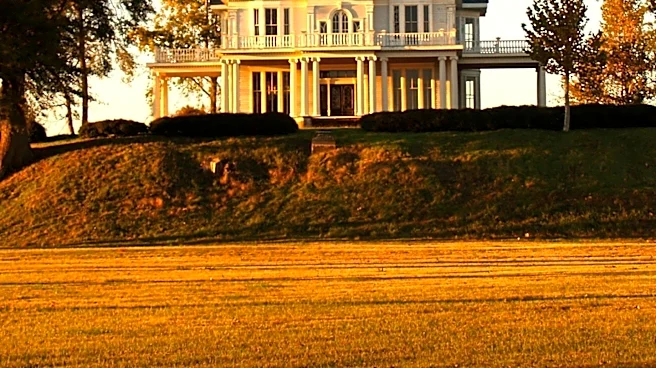
Some historic houses in Arkansas are notable for their unique architectural styles or their association with famous figures. Quigley's Castle in Eureka Springs is a mid-20th-century house uniquely covered in small stones, showcasing an individual's distinctive vision. The Hemingway-Pfeiffer Museum and Educational Center in Piggott includes the barn-studio associated with author Ernest Hemingway and the family home of his second wife, Pauline Pfeiffer, focusing on area life and literature in the 1920s and 1930s. The Lakeport Plantation in Lake Village stands as the only remaining Arkansas Antebellum Plantation Home on the Mississippi River, owned and operated by Arkansas State University, offering a significant historical perspective on the antebellum South. These diverse historic homes and open-air museums collectively form a vital part of Arkansas's cultural heritage, preserving the physical remnants and stories of its past for future generations.