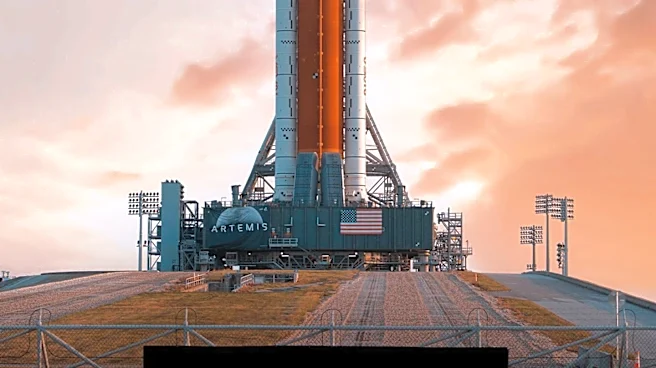







In the realm of human spaceflight, prototypes play an indispensable role in validating designs and gathering crucial data before full-scale missions. The Ares I-X, launched on October 28, 2009, served precisely this purpose for NASA's ambitious Constellation program. As a first-stage prototype and design concept demonstrator for the Ares I launch system, it was engineered to closely mimic the shape, mass, and size of the future Ares I vehicles, even
though its internal hardware was largely dissimilar. This test flight was a significant step in developing the next generation of U.S. human spaceflight capabilities after the Space Shuttle's planned retirement, aiming to launch Orion crew exploration vehicles.
Engineering a Test Vehicle: Simulating the Future
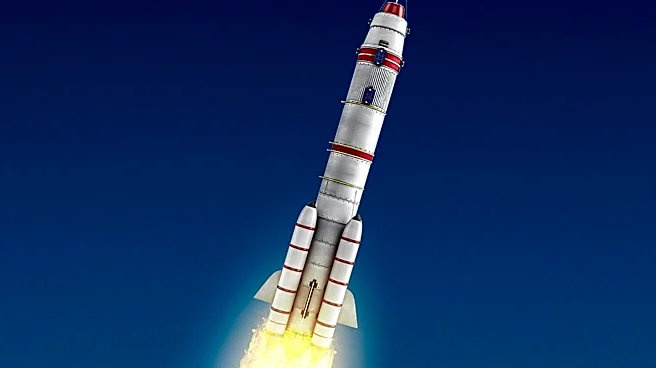
The Ares I-X was a marvel of engineering designed to simulate the flight characteristics of the full Ares I rocket. It comprised a functional four-segment solid rocket booster (SRB) stage, which was directly sourced from Space Shuttle inventory. However, much of the rest of the vehicle was a simulator. A fifth segment mass simulator was included to match the length and mass of the Ares I's intended five-segment motor. Above this, an upper-stage simulator (USS) was crafted to replicate the shape and be heavier than the actual upper stage, as the real hardware wasn't ready for the test flight. This USS was built from eleven steel segments, each 9.5 feet tall by 18 feet wide, due to transportation limitations like bridge heights. It was designed to simulate the shape, mass, and center of gravity of the Ares I from the interstage to the top of the Orion Crew exploration vehicle's service module. Steel ballast plates were used within the USS to simulate the centers of mass for the liquid hydrogen and liquid oxygen tanks of the actual upper stage.
Further up, a simulated Orion crew module (CM) and launch abort system (LAS) completed the vehicle's profile. This CM/LAS simulator was built with high fidelity to ensure its hardware components accurately reflected the shape and physical properties used in computer analyses and wind tunnel tests. This precision was vital for NASA to confidently compare flight performance with preflight predictions. The USS and the CM/LAS mass simulators were not recovered after splashdown in the Atlantic Ocean, but the first stage, including the fifth segment mass simulator, was recovered to retrieve flight data recorders and reusable equipment. The overall project cost for this critical demonstrator was $445 million.
Flight Objectives and Data Collection
The primary goal of the Ares I-X flight was to verify the performance and dynamics of the Ares I solid rocket booster in a "single stick" arrangement, a configuration distinct from the Space Shuttle's "double-booster" setup. The flight profile was meticulously planned to approximate the conditions the Ares I would experience through Mach 4.5, at an altitude of about 130,000 feet, and through a maximum dynamic pressure of approximately 800 pounds per square foot. This allowed engineers to gather data on how the vehicle would behave under realistic flight stresses.
To achieve its objectives, the Ares I-X was equipped with an extensive array of sensors. Approximately 720 thermal, acceleration, acoustic, and vibration sensors were distributed throughout the vehicle as part of its developmental flight instrumentation. The CM/LAS simulator alone housed about 150 sensors, recording thermal, aerodynamic, acoustic, and vibration data. This data was transmitted to the ground via telemetry and also stored in the First Stage Avionics Module (FSAM), located in the empty fifth segment. Aerodynamic data from the CM/LAS sensors were particularly important for measuring vehicle acceleration and angle of attack, as the way the rocket's tip slices through the atmosphere significantly influences airflow over the entire vehicle. Despite a parachute anomaly during descent, where one of the three parachutes failed to open and another opened only partially, causing the booster to splash down harder and suffer structural damage, the launch successfully accomplished all its primary test objectives.
Advanced Systems and Avionics
Several advanced systems were integrated into the Ares I-X to ensure a successful test flight. The vehicle's flight control relied on avionics hardware from the Atlas V Evolved Expendable Launch Vehicle (EELV), including the Fault Tolerant Inertial Navigation Unit (FTINU) and Redundant Rate Gyro Units (RRGUs). The first stage utilized heritage hardware from existing Space Shuttle systems, with a new electronics box, the Ascent Thrust Vector Controller (ATVC), acting as a translator between the Atlas-based flight computer and the solid rocket booster's thrust vector control system. This ATVC was the only new avionics box, with other components being existing or off-the-shelf units.
A crucial component for stability was the active roll control system (RoCS), necessary because the test vehicle had a tendency to roll around its axis of forward motion. The RoCS consisted of two modules, each containing engines originally from Peacekeeper missiles, placed on opposite sides of the Upper Stage Simulator. These modules used hypergolic propellants and two nozzles to provide controlling roll torque. The RoCS performed two key functions: rolling the vehicle 90 degrees after liftoff to emulate the Ares I's roll attitude at launch, and maintaining a constant roll attitude during ascent until stage separation. The avionics were developed by Lockheed-Martin, a subcontractor to Jacobs Engineering, and managed by Marshall Space Flight Center. The ground-based portion of the avionics included a ground control, command, and communications (GC3) unit installed on Mobile Launcher Platform-1 at Launch Complex 39B, enabling the flight control system to interface with ground computers. The vehicle flew autonomously, controlled by the FTINU, which was mounted for stability on the underside of the lower ballast plates within the USS.