



"Meet the Press" stands as a monumental fixture in American television history, holding the distinction of being the longest-running program on the air. First broadcast on November 6, 1947, this weekly Sunday morning talk show on NBC has consistently provided a platform for interviews with prominent leaders. Its focus spans critical issues such as politics, economics, foreign policy, and other public affairs, making it a vital source of information
and discussion for generations of viewers. The show's enduring presence underscores its significance in the landscape of American media.
Origins and Early Evolution
The roots of "Meet the Press" actually predate its television debut, tracing back to radio. The program originated in 1945 on the Mutual Broadcasting System as "American Mercury Presents: Meet the Press." This radio show was initially conceived to promote *The American Mercury*, a magazine owned by Lawrence Spivak. Journalist Martha Rountree played a pivotal role in its creation, developing the concept after Spivak asked her to critique plans for a new radio show. She named her creation "The American Mercury," which first aired on October 5, 1945.
In 1947, while still a radio program, General Foods acquired the television rights. This led to the show's debut on the NBC television network on November 6, 1947, under the shortened title "Meet the Press." The radio version subsequently adopted this new name. Although Spivak is sometimes credited with the program's creation, Rountree developed the idea independently, with Spivak joining as a co-producer and business partner after the show had already launched. Martha Rountree also served as the program's first host, a role she held until November 1, 1953, making her the only female moderator until 2023.
Format Changes and Notable Moderators
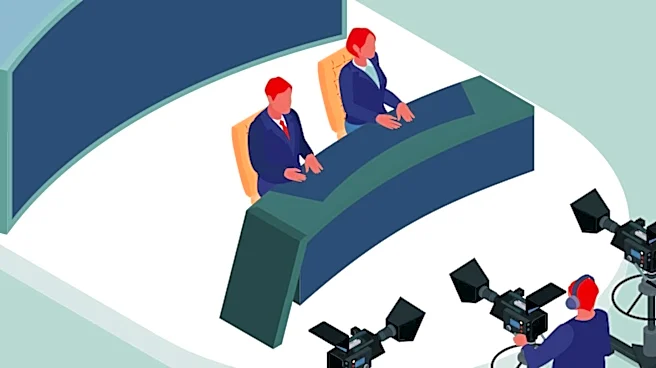
Initially, "Meet the Press" was presented as a 30-minute press conference, featuring a single guest and a panel of journalists who posed questions. Its very first guest was James Farley, who had served as Postmaster General, Democratic National Committee chairman, and campaign manager for Franklin Delano Roosevelt during the first two terms of the New Deal Administration. This format remained consistent for the first 45 years of its history.
The show underwent a significant change in 1992 when its runtime was expanded from a half-hour to a full 60 minutes, starting with the broadcast on September 20 of that year. This expansion allowed for more in-depth discussions and a broader range of topics. Over its long history, "Meet the Press" has seen twelve different moderators. Following Martha Rountree, Ned Brooks took over, moderating until his retirement in 1965. Lawrence Spivak, who had been a permanent panelist, became moderator on January 1, 1966, and retired in 1975. Other notable moderators include Tim Russert, who began his tenure in 1991 and whose name was even incorporated into the show's title, and Chuck Todd, who served until 2023. Kristen Welker assumed the role of moderator in September 2023, marking a new chapter in the program's storied history.
Modern Era and Continued Relevance
In January 2021, the production of "Meet the Press" relocated to NBC's bureau on Capitol Hill in Washington, D.C., emphasizing its connection to the nation's political center. The program continues to air on Sundays from 9:00 a.m. to 10:00 a.m. ET on NBC, with a later slot in New York and Washington. Beyond its primary broadcast, the show is syndicated by Westwood One to various radio stations across the United States and is also featured on C-SPAN Radio as part of its replays of Sunday morning talk shows. This multi-platform presence ensures its continued reach and influence in public discourse. The show's format now often includes an extended one-on-one interview with the host, sometimes followed by a roundtable discussion or a one-on-two interview with figures holding adversarial positions, such as Congressional members from opposing parties or political commentators. This dynamic approach allows for comprehensive analysis and diverse perspectives on current events.